
Online Gaming Law 2025: What You Must Know
Author- The Lawscape Team
September 3, 2025
Introduction
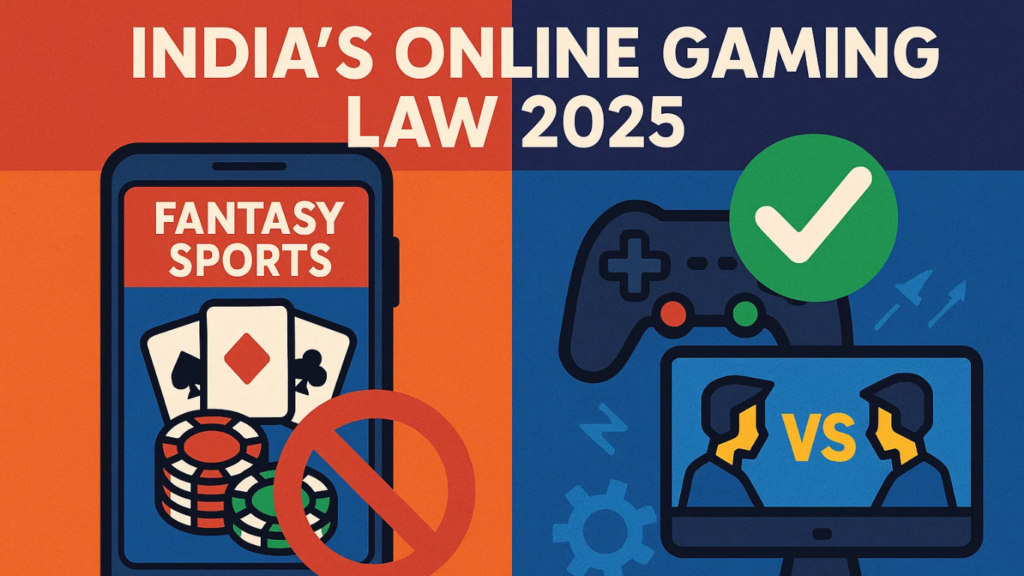
In August 2025, India passed the Promotion and Regulation of Online Gaming Act, 2025, bringing sweeping changes to how online games can operate. The law imposes a nationwide ban on real-money online games—think fantasy sports, poker, rummy—regardless of whether they’re based on skill or chance . At the same time, it paves the way for the growth of e-sports and social gaming under a regulated framework. These shifts touch game playback, developers, sponsors, and users across India.
1. What’s Banned—and Why
- Ban on Real-Money Gaming (RMG)
The law prohibits any gaming service that involves stakes or monetary rewards. This includes fantasy sports platforms like Dream11, poker, rummy, betting apps, and lotteries. - Reasons Behind the Ban
The government argues that RMG led to addiction, financial ruin, fraud, money laundering, psychological distress, and even suicide in some cases.
2. What’s Allowed—and Encouraged
- E-Sports
Officially recognized as a competitive sport. The Ministry of Sports will develop guidelines, set up training academies, conduct awareness programs, and support research center. - Social & Educational Games
Non-monetary games—those meant for casual fun, learning, or cultural development—are allowed and encouraged.
3. Enforcement, Regulation & Penalties
- New Regulatory Authority
A central body—under the Ministry of Electronics and IT, often called the National Online Gaming Commission (NOGC)—will oversee licensing, classification of games, registration, grievance mechanisms, and enforcement. - Penalties
Operators running real-money games can face up to 3 years’ imprisonment and ₹1 crore in fines, with harsher penalties (3–5 years and up to ₹2 crore) for repeat offenses. Advertising such games can lead to 2 years’ jail or ₹50 lakh fine, and facilitating payments also incurs similar liability.
4. Real-World Impact So Far
- Shut Downs and Revenue Losses
Major platforms like Dream11, MPL, Zupee, and Flutter’s Junglee have already ceased real-money operations. - Economic Shock
Dream11 reported 95% revenue loss overnight, and MPL laid off 60% of its Indian staff (~300 jobs). - Legal Pushback
A23 filed the first legal challenge in the Karnataka High Court, calling the ban unconstitutional—since it also targets games of skill. - Cricket Sponsorship Fallout
Dream11’s contract as the national cricket team sponsor was terminated due to the ban. BCCI is now seeking new sponsors while barring companies involved in gaming or crypto.
5. What This Means for You
- For Students
This law is a live case study for constitutional rights (freedom of trade), regulatory design, and policy-making balancing public welfare vs innovation. - For Gamers
Real-money games are gone—but e-sports and social games are safer alternatives with growing institutional support. - For Industry Professionals
If you work in games, media, education, or policy, it’s time to pivot toward formats that comply: e-sports, casual learning apps, or global markets.
Conclusion
The Promotion and Regulation of Online Gaming Act, 2025 marks a full reset in India’s online gaming world. Real-money gaming is banned. In its place, a regulated, user-safe ecosystem for skill, sports, and social gaming is rising. The law aims to protect citizens, curb misuse, and foster innovation. Courts and industry are already responding. For students, gamers, and professionals alike, this is a pivotal moment to watch how law meets fast-changing tech and culture.
The Lawscape — clear, practical legal insight for students and future lawyers.