Spotify Wrapped and Privacy in India: Annual Music Report or Data Trojan Horse?
Author- Japjot Singh
B.A. LL.B. (Hons.), 4th Year, Jaipur National University
November 22, 2025
Introduction
Every December, Spotify releases its much-awaited Wrapped feature—a colourful snapshot of your year in music. It feels fun, personal, and perfectly crafted for social media. But behind the excitement lies a deeper question: how much data does Spotify collect throughout the year, and what does it do with it? This blog explores the technology, privacy concerns, and Indian legal implications behind Spotify Wrapped, beyond the bright graphics and viral playlists.
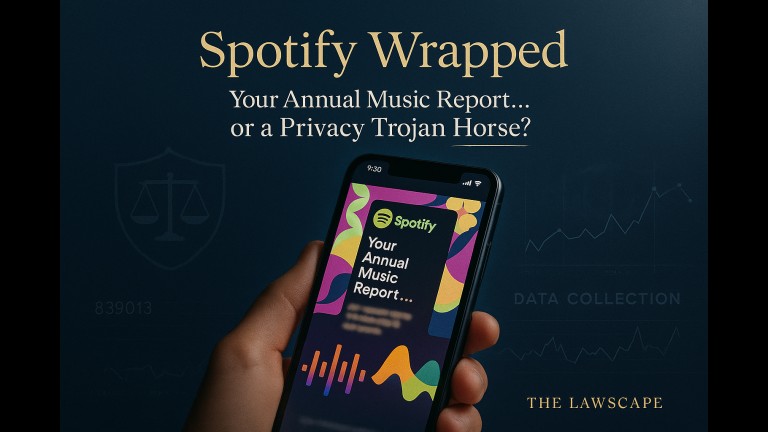
Spotify Wrapped: Your Annual Music Report or a Privacy Trojan Horse?
Every December, Spotify plays its smartest trick. Millions of users excitedly open their Spotify Wrapped, a colorful, personalized summary of their year in music. It feels like a gift: your top songs, favorite artists, listening hours, all wrapped up in shareable graphics perfect for social media bragging rights. But what if this “gift” is actually a carefully designed data trap? What if Wrapped is less about celebrating your music taste and more about keeping you hooked to the platform while quietly profiling your behavior? Behind the cheerful animations and personalized playlists lies a sophisticated system designed for one primary goal: making you spend more time on the app.
What is Spotify Wrapped?
Spotify Wrapped is an annual feature that shows users their listening statistics: top tracks, most-played artists, total minutes streamed, and even quirky insights like your “audio aura.” Launched in 2016, it’s become a viral sensation, with users proudly sharing their results across Instagram, Twitter, and WhatsApp. The feature offers a glimpse into the music that shaped their year and invites them to explore even more content tailored to their tastes.
But Wrapped isn’t just a fun recap—it’s the public face of Spotify’s year-long data collection operation, packaged to make data tracking feel celebratory. Every statistic you see represents a data point Spotify has been collecting, analyzing, and using to understand not just what you like, but how to keep you streaming longer.
The Trojan Horse: How Spotify Uses Your Data
Here’s what most users don’t realize: Wrapped is built on user data collected throughout the year as part of the platform’s regular functioning. Every song you play, every track you skip, every time you replay that one heartbreak anthem at 2 AM—Spotify records it all. This data doesn’t just create your year-end summary; it trains sophisticated algorithms designed to keep you engaged for as long as possible.
Spotify’s recommendation engine learns what makes you click “play next” instead of closing the app. It identifies which songs keep you engaged, which moods make you binge-listen, and precisely when you’re most likely to discover new music. But here’s the crucial part: this isn’t only about helping you find music you’ll love, it’s often prioritizing content designed to increase engagement and app usage.
The ultimate goal is maximizing your listening time. More time on the app means more subscription retention for premium users and more ad impressions for free-tier users. Spotify’s algorithms are often served in ways that encourage continued listening, extending your sessions and building habitual usage patterns.
Wrapped presents this long-term data collection in a celebratory format—turning what is essentially continuous monitoring into something fun, viral, and shareable.
Privacy Concerns Under Indian Law
For Indian users, Spotify’s data practices raise serious legal questions under the Digital Personal Data Protection Act, 2023 (DPDPA). The Act requires companies to obtain explicit consent before processing personal data and to clearly inform users about how their data will be used. While Spotify’s terms of service may technically comply, the gamified nature of Wrapped obscures the reality of continuous surveillance designed to influence future behavior.
Why Music Data Matters
Music listening patterns reveal more than taste. They hint at:
- Daily routines
- Emotional states
- Mental health indicators
- Lifestyle choices
- Location-based habits
While not expressly classified as “sensitive personal data” under DPDPA, these patterns can reveal highly personal behavioural insights.
Under the IT Act, companies must implement proper safeguards and obtain informed consent before collecting and processing such data. Many users are unaware of their rights under the DPDPA—including access, correction, and erasure rights.
The Algorithm Manipulation Problem: Engineering Your Time
Spotify doesn’t just reflect your taste, it shapes it. The platform’s algorithms are designed to maximize engagement. Wrapped gives the illusion of control—“Look, these are your top songs!”—but those songs became your favorites partly because of recommendation loops you may not notice.
This creates a subtle feedback cycle:
- you listen
- Spotify analyzes what keeps you engaged
- it recommends similar content
- you listen more
- your Wrapped reflects these patterns as if they were purely organic
These practices raise important questions under the DPDPA’s transparency expectations. Users cannot meaningfully consent when they do not fully understand how platform design influences their listening patterns.
Psychological Hooks: The Dopamine Effect
Wrapped uses design psychology to keep users emotionally connected to Spotify:
- nostalgia
- accomplishment bias
- social validation
- FOMO
- identity reinforcement
High listening hours feel like achievements—encouraging even more listening the next year.
Should Indian Users Be Worried?
Yes—but awareness is the first step. Users should:
- Understand what they’re sharing
- Exercise legal rights under the DPDPA
- Question algorithm-driven choices
- Be mindful of time spent
- Read privacy policies
- Push for stronger enforcement
The Bottom Line
Spotify Wrapped is brilliant marketing wrapped around a powerful data engine. It turns a year of behavioural tracking into viral content. Under Indian law, users have rights that could challenge these practices—but those rights matter only if people understand what’s happening behind the scenes.
Wrapped may feel like a gift, but it comes with commercial strings attached, encouraging deeper engagement and longer usage. The platform’s commercial goals naturally emphasise engagement and listening time.
The next time Wrapped arrives, ask yourself: Are you celebrating your musical journey—or applauding how well an algorithm has learned your behaviour?
** Disclaimer: The views expressed in this article are those of the author and do not necessarily reflect the views of The Lawscape.
The Lawscape — clear, practical legal insight for students and future lawyers.