Articles

The Green Constitution

The Green Constitution Author: Priyanka Khawale Student, MUMBAI UNIVERSITY ————————————————————————————- 3 Quick Takeaways India’s Constitution evolved from being environmentally silent to building a robust framework of ecological protection through the 42nd Amendment of 1976, which introduced Article 48A and Article 51A(g), creating a shared constitutional duty between the State and its citizens. The Supreme Court’s […]

The Green Constitution Read More »

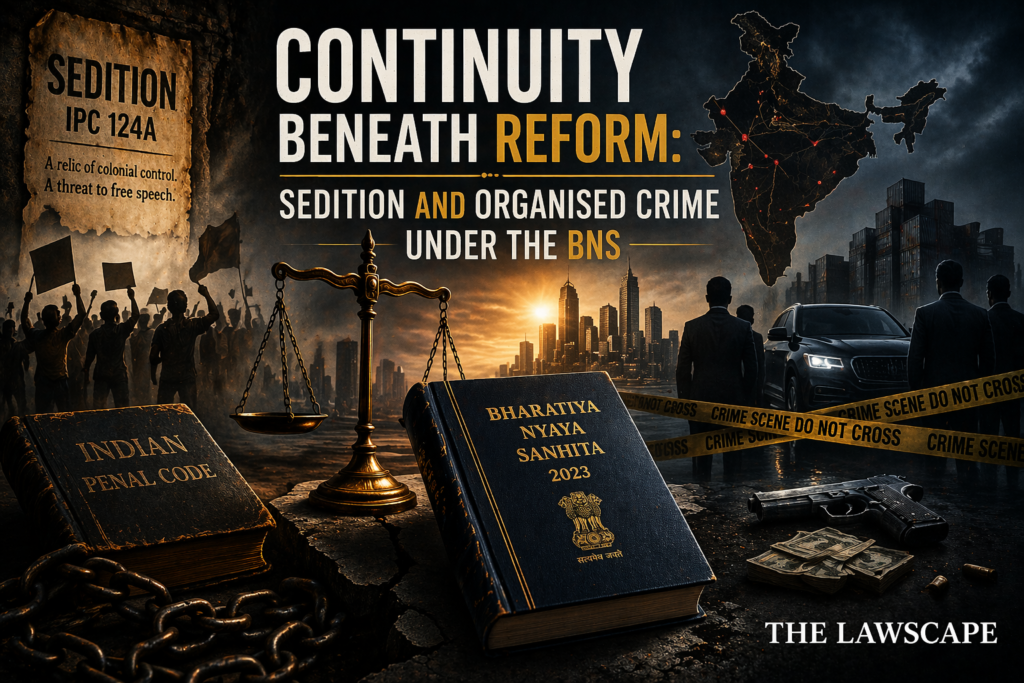
Continuity Beneath Reform: Sedition and Organised Crime under the BNS

Continuity Beneath Reform: Sedition and Organised Crime under the BNS Author: Shama Parveen Shaikh Student, KES Shri jayanti Lal H patel law college ————————————————————————————- 3 Quick Takeaways The Bharatiya Nyaya Sanhita, 2023 replaces the Indian Penal Code, 1860 in name and structure, but its treatment of sedition and organised crime reflects consolidation and expansion of

Continuity Beneath Reform: Sedition and Organised Crime under the BNS Read More »

Born Unwanted: Understanding the Legal and Socio-Cultural Roots of Female Infanticide

Born Unwanted: Understanding the Legal and Socio-Cultural Roots of Female Infanticide Author: Niharika Mishra Student, KES’s Shri Jayantilal H. Patel Law College, Mumbai ————————————————————————————- 3 Quick Takeaways Female infanticide and sex-selective practices are not merely cultural relics but active constitutional violations, breaching the right to life under Article 21, equality under Article 14, and India’s

Born Unwanted: Understanding the Legal and Socio-Cultural Roots of Female Infanticide Read More »

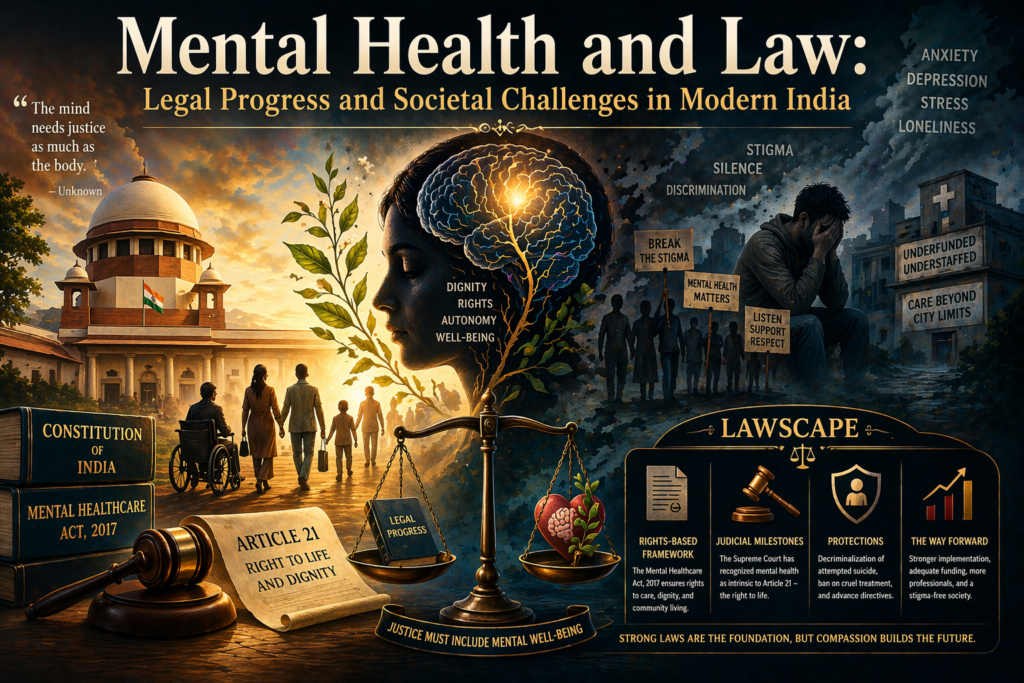
Mental Health and Law: Legal Progress and Societal Challenges in Modern India

Mental Health and Law: Legal Progress and Societal Challenges in Modern India Author: Bhumika Kiran Dubey Student, KES’s Shri Jayantilal H. Patel Law College, Mumbai ————————————————————————————- 3 Quick Takeaways India’s mental health legal framework has transformed from custodial control to a rights-based model, culminating in the Supreme Court recognising mental health as a fundamental right

Mental Health and Law: Legal Progress and Societal Challenges in Modern India Read More »

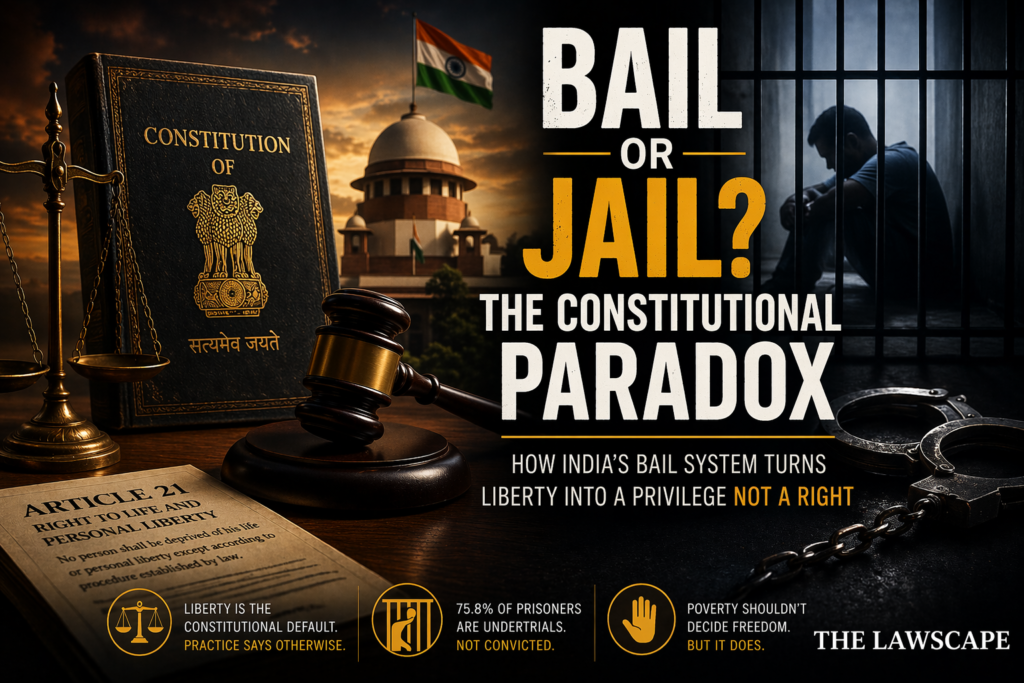
Bail is the Rule, But for Whom? Poverty, Pre-trial Detention, and the Constitutional Illusion of Equal Liberty

Bail is the Rule, But for Whom? Poverty, Pre-trial Detention, and the Constitutional Illusion of Equal Liberty Author: Mitali Shankar Manore ————————————————————————————- 3 Quick Takeaways The constitutional promise that bail is the rule and jail the exception has long been recognised by the Supreme Court, notably in State of Rajasthan v. Balchand, (1977) 4 S.C.C.

Bail is the Rule, But for Whom? Poverty, Pre-trial Detention, and the Constitutional Illusion of Equal Liberty Read More »

Doctrine of Supervening Impossibility: Meaning, Application, Effects, and Suggestions

Doctrine of Supervening Impossibility: Meaning, Application, Effects, and Suggestions Author: Md. Kibria NurStudent, Southern University Bangladesh —————————————————————————————————————- 3 Quick Takeaways 1. Under Section 56 of the Indian Contract Act, 1872, a contract becomes void when its performance becomes impossible or unlawful due to an event that neither party could have prevented or foreseen at the

Doctrine of Supervening Impossibility: Meaning, Application, Effects, and Suggestions Read More »

Undue Influence under the Indian Contract Act, 1872: Ensuring Fairness in Contractual Consent

Undue Influence under the Indian Contract Act, 1872: Ensuring Fairness in Contractual Consent Author: Yashoda RajputStudent, Sage University Bhopal —————————————————————————————————————- 3 Quick Takeaways 1. Undue influence under Section 16 doesn’t require threats — it operates through relationships of trust and authority where one party dominates the other’s decision-making. 2. Once a dominant relationship and an

Undue Influence under the Indian Contract Act, 1872: Ensuring Fairness in Contractual Consent Read More »

Doctrine of Unconscionability in Standard Form Contracts

Doctrine of Unconscionability in Standard Form Contracts Author: Akansha AlangeStudent, Amity university, Mumbai —————————————————————————————————————- KEY TAKEAWAYS ABSTRACT Standard form contracts are universally used in modern commercial transactions. These contracts provide efficiency and consistency by saving time, resources, and legal expenses. However, the lack of negotiation means the party possessing greater bargaining power frames the terms

Doctrine of Unconscionability in Standard Form Contracts Read More »

Specific Performance of Contract: Legal Remedies & Requirements in India

Specific Performance of Contract: Legal Remedies & Requirements in India Author: Shreya JaiswalStudent, Usha Martin University —————————————————————————————————————- KEY TAKEAWAYS ABSTRACT When a party to a contract fails to perform their contractual obligation, the other party has two options: to insist on the actual performance of the contract, or to seek compensation for its non-performance. The

Specific Performance of Contract: Legal Remedies & Requirements in India Read More »

RESTITUTION IN CONTRACT LAW: FILLING THE GAPS LEFT BY DAMAGES

RESTITUTION IN CONTRACT LAW: FILLING THE GAPS LEFT BY DAMAGES Author: Rashneet KaurStudent, Apex University, Jaipur —————————————————————————————————————- KEY TAKEAWAYS ABSTRACT Contract law usually treats damages as the primary response to breach, while restitution is discussed only in limited contexts. This approach creates difficulties in cases where a contract never comes into force, becomes void, or

RESTITUTION IN CONTRACT LAW: FILLING THE GAPS LEFT BY DAMAGES Read More »