Articles

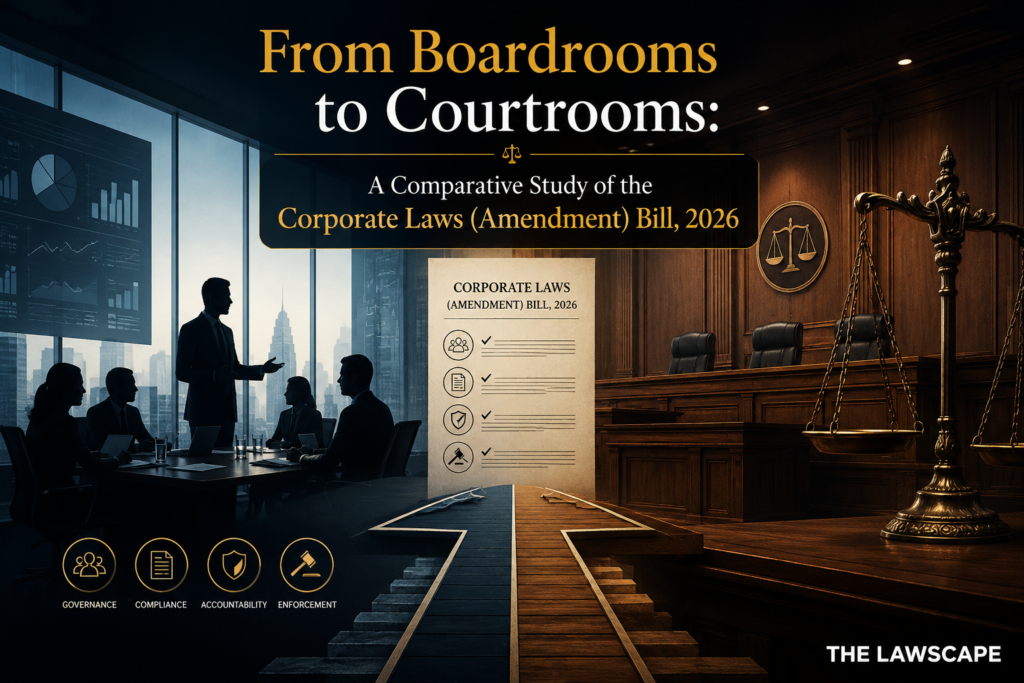
From Boardrooms to Courtrooms: A Comparative Study of the Corporate Laws (Amendment) Bill, 2026

From Boardrooms to Courtrooms: A Comparative Study of the Corporate Laws (Amendment) Bill, 2026 Author: Prapti VoraStudent, Symbiosis Law School Nagpur ——————————————————————————– 💡 3 Quick Takeaways 1. The Corporate Laws (Amendment) Bill, 2026 seeks to modernise India’s corporate governance framework through digitalisation, compliance reforms, and extensive decriminalisation. 2. While the Bill promotes ease of doing […]
From Boardrooms to Courtrooms: A Comparative Study of the Corporate Laws (Amendment) Bill, 2026 Read More »

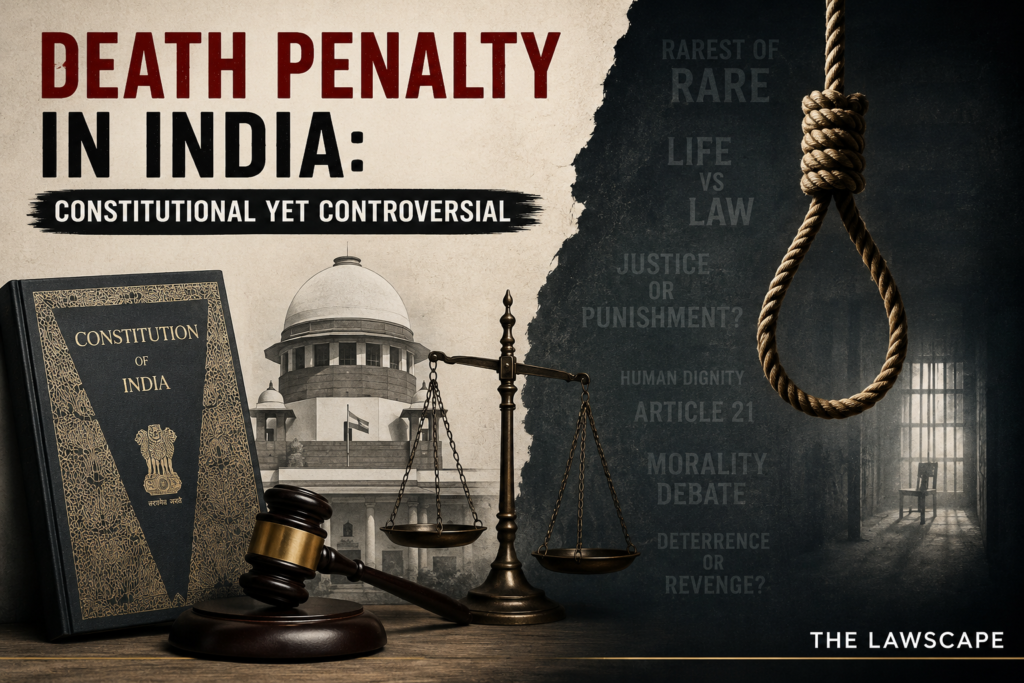
Death Penalty in India: Constitutional Yet Controversial

Death Penalty in India: Constitutional Yet Controversial Author: Bhavya SumanStudent, Lloyd Law College ———————————————————– 💡 3 Quick Takeaways 1. The Supreme Court has upheld the constitutional validity of the death penalty while restricting its application to the “rarest of rare” cases. 2. The continuing debate centres on balancing societal interests with the constitutional guarantees of

Death Penalty in India: Constitutional Yet Controversial Read More »

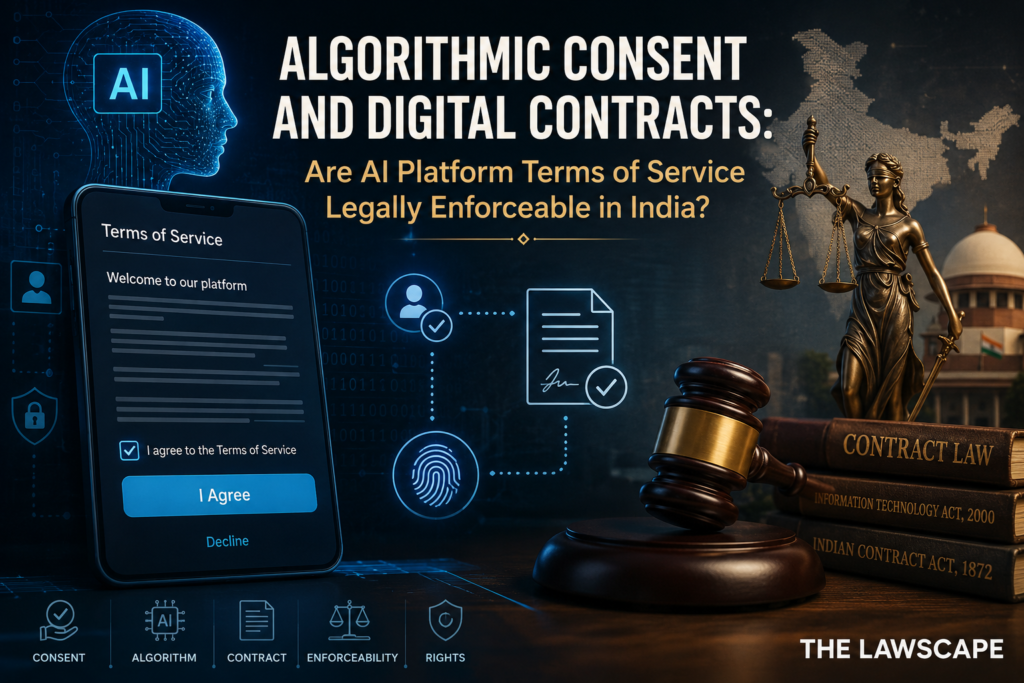
Algorithmic Consent and Digital Contracts: Are AI Platform Terms of Service Legally Enforceable in India?

Algorithmic Consent and Digital Contracts: Are AI Platform Terms of Service Legally Enforceable in India? Author: Shravani BhanuseCo-Author: Shrushti BhaltadakStudent, Maharashtra National Law University, Mumbai ———————————————————————————————————————– 💡 3 Quick Takeaways 1. AI platforms increasingly rely on broad Terms of Service to justify new forms of data use that users neither expected nor expressly consented to.

Algorithmic Consent and Digital Contracts: Are AI Platform Terms of Service Legally Enforceable in India? Read More »

Trial by Media: Balancing Press Freedom and the Right to a Fair Trial

Trial by Media: Balancing Press Freedom and the Right to a Fair Trial Author: Simran SinghStudent, Bharati Vidyapeeth, New law college, Pune ——————————————————————————————————- 💡 3 Quick Takeaways 1. Trial by media threatens the constitutional principle that every accused person is presumed innocent until proven guilty.2. Freedom of the press under Article 19(1)(a) must be balanced

Trial by Media: Balancing Press Freedom and the Right to a Fair Trial Read More »

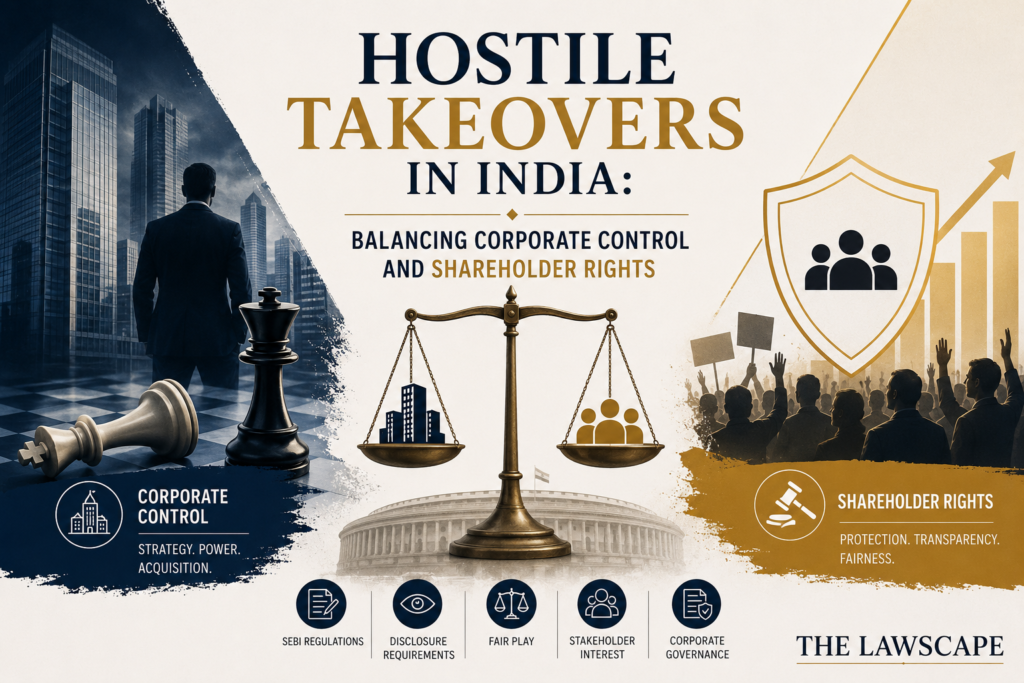
Hostile Takeovers in India: Balancing Corporate Control and Shareholder Rights

Hostile Takeovers in India: Balancing Corporate Control and Shareholder Rights Author: Aafreen KamilStudent, Andaman Law College, Sri Vijaya Puram ——————————————————————————————————— 💡 3 Quick Takeaways 1. Hostile takeovers remain uncommon in India due to promoter-driven ownership structures, regulatory safeguards, and market realities.2. The SEBI Takeover Regulations, 2011 provide the principal legal framework governing substantial acquisitions and

Hostile Takeovers in India: Balancing Corporate Control and Shareholder Rights Read More »

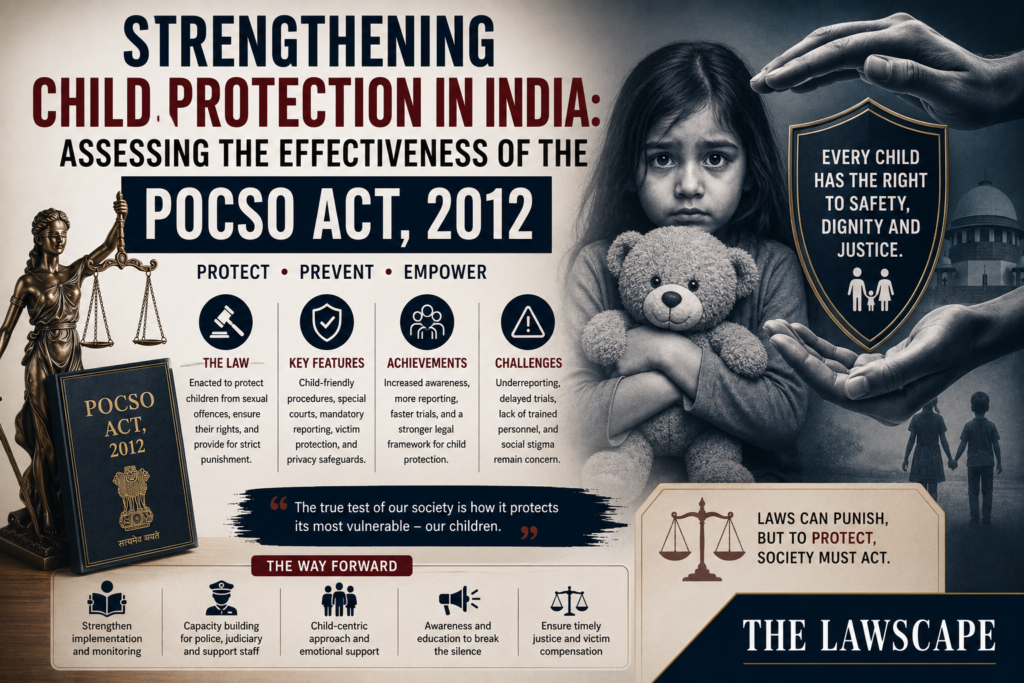
Strengthening Child Protection in India: Assessing the Effectiveness of the POCSO Act, 2012

Strengthening Child Protection in India: Assessing the Effectiveness of the POCSO Act, 2012 Author: Devika KrishnaStudent, SREE NARAYANA GURU college of Legal studies ———————————————————————————————————- 💡 3 Quick Takeaways Introduction “We owe our children a life free of violence and fear.” — Nelson Mandela Children constitute one of the most vulnerable sections of society and require

Strengthening Child Protection in India: Assessing the Effectiveness of the POCSO Act, 2012 Read More »

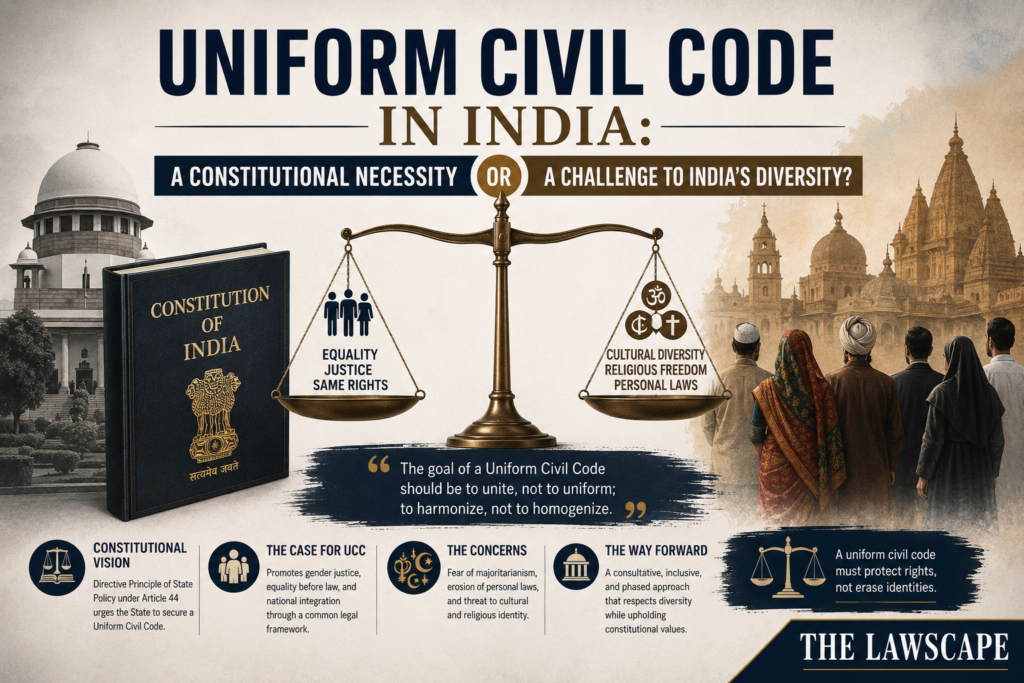
Uniform Civil Code in India: A Constitutional Necessity or a Challenge to India’s Diversity?

Uniform Civil Code in India: A Constitutional Necessity or a Challenge to India’s Diversity? Author: Sanskriti MishraStudent, NIMS School of Law, NIMS University, Jaipur ——————————————————————————————————— 💡 3 Quick Takeaways Introduction The debate surrounding the Uniform Civil Code (UCC) remains one of the most contested issues in Indian constitutional discourse. Supporters argue that a common civil

Uniform Civil Code in India: A Constitutional Necessity or a Challenge to India’s Diversity? Read More »

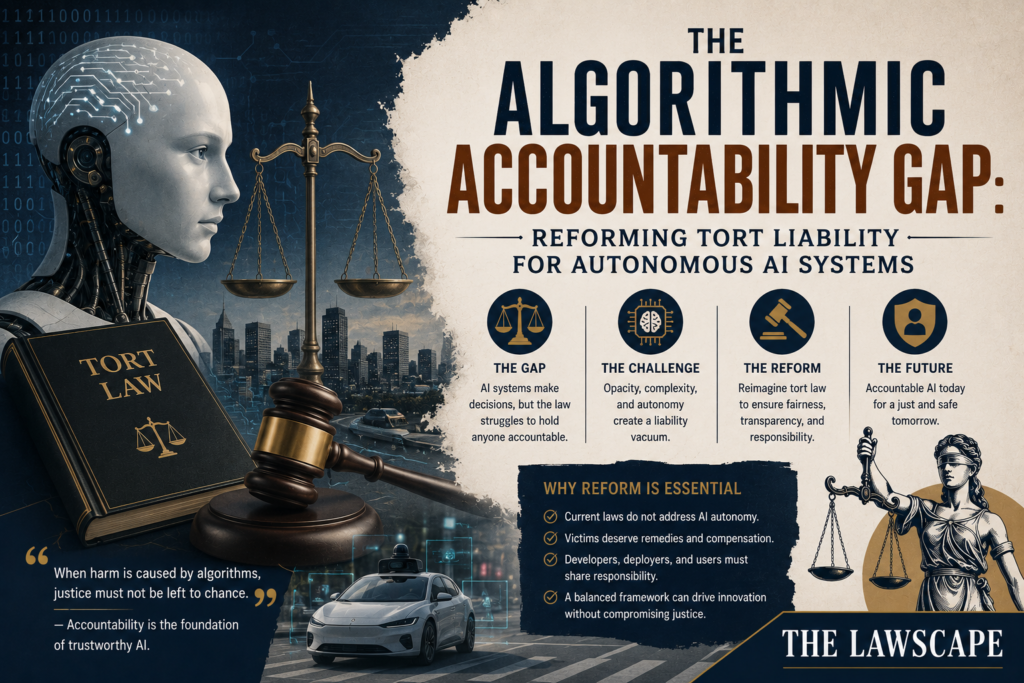
The Algorithmic Accountability Gap: Reforming Tort Liability for Autonomous AI Systems

The Algorithmic Accountability Gap: Reforming Tort Liability for Autonomous AI Systems Author: Justice BeckswhiteStudent, University of Jos ———————————————————– 💡 3 Quick Takeaways Introduction As artificial intelligence (AI) evolves from a mere assistive technology into a more autonomous decision-making system, traditional tort law faces increasing challenges. Across sectors such as healthcare, finance, transportation, and public administration,

The Algorithmic Accountability Gap: Reforming Tort Liability for Autonomous AI Systems Read More »

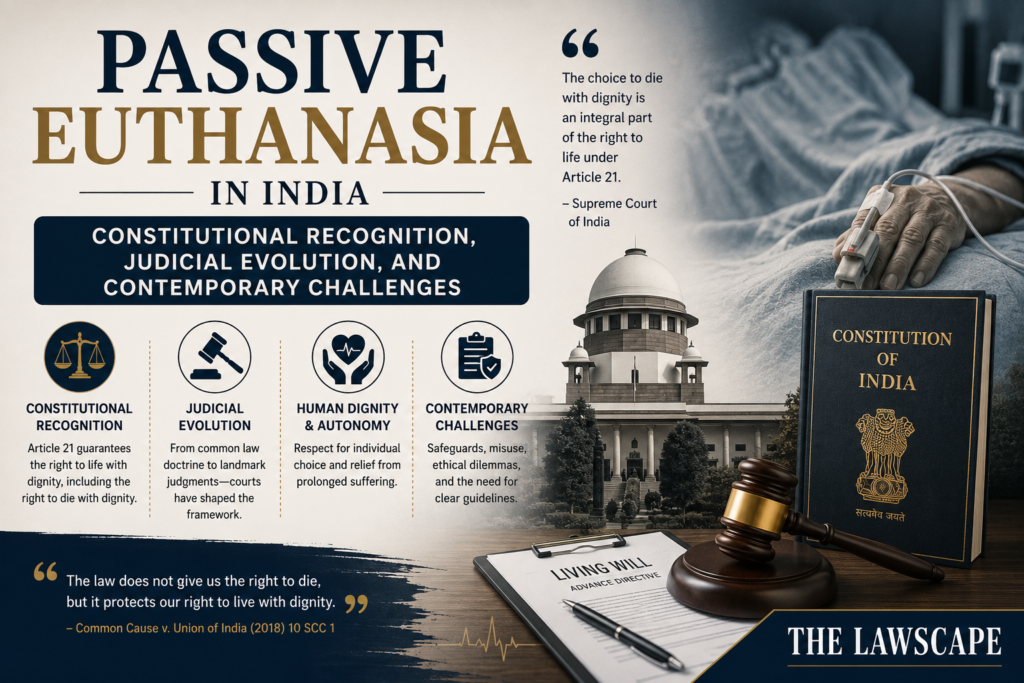
Passive Euthanasia in India: Constitutional Recognition, Judicial Evolution, and Contemporary Challenges

Passive Euthanasia in India: Constitutional Recognition, Judicial Evolution, and Contemporary Challenges Author: Jyothika K GStudent, Mar Gregorios College of Law, Thiruvananthapuram ————————————————————————————————————————- 💡 3 Quick Takeaways Introduction Passive euthanasia is one of the most debated and sensitive issues in contemporary constitutional and medical jurisprudence. The concept concerns the withdrawal or withholding of life-sustaining medical treatment

Passive Euthanasia in India: Constitutional Recognition, Judicial Evolution, and Contemporary Challenges Read More »

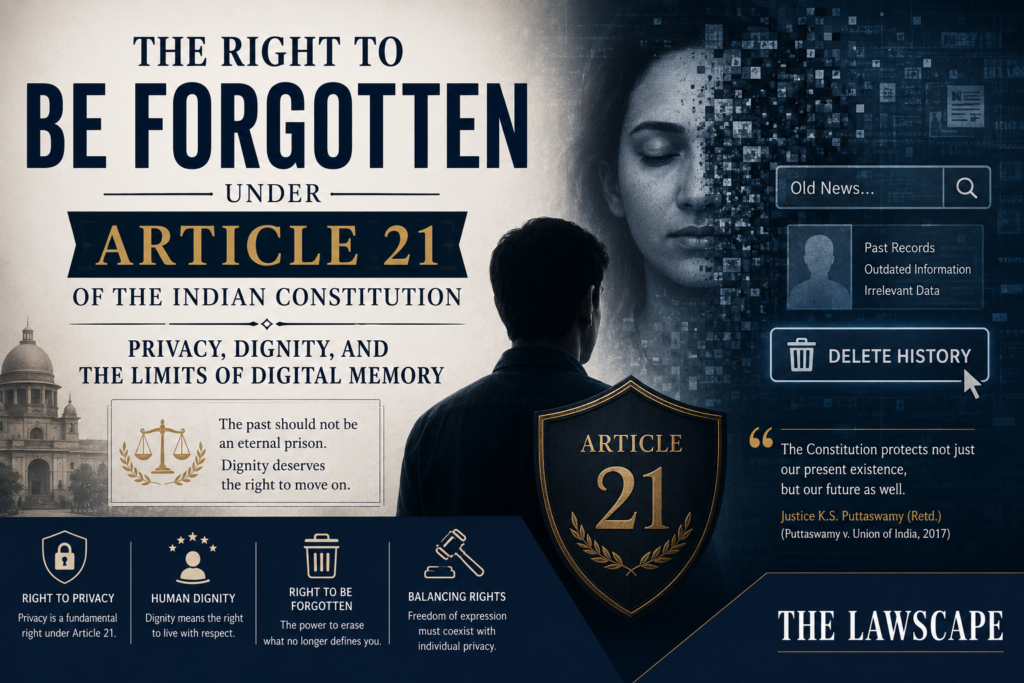
The Right to Be Forgotten Under Article 21 of the Indian Constitution: Privacy, Dignity, and the Limits of Digital Memory

The Right to Be Forgotten Under Article 21 of the Indian Constitution: Privacy, Dignity, and the Limits of Digital Memory Author: Rupesh RangaStudent MDU Centre for Professional and Allied Studies, Gurugram —————————————————————————————– 💡 3 Quick Takeaways Introduction In the pre-digital era, human memory naturally faded with time. Personal disputes, mistakes, and unfortunate incidents gradually disappeared

The Right to Be Forgotten Under Article 21 of the Indian Constitution: Privacy, Dignity, and the Limits of Digital Memory Read More »