Cases

Vishaka & Ors. v. State of Rajasthan & Ors. (1997): How the Supreme Court Filled a Legal Void and Protected Women at Work

Vishaka & Ors. v. State of Rajasthan & Ors. (1997): How the Supreme Court Filled a Legal Void and Protected Women at Work Author: Disha Vinay PendurkarStudent, KES’ Shri Jayantilal H. Patel Law College —————————————————————————————— 💡 3 Quick Takeaway 1. In the absence of any domestic legislation on workplace sexual harassment, the Supreme Court invoked […]
Vishaka & Ors. v. State of Rajasthan & Ors. (1997): How the Supreme Court Filled a Legal Void and Protected Women at Work Read More »

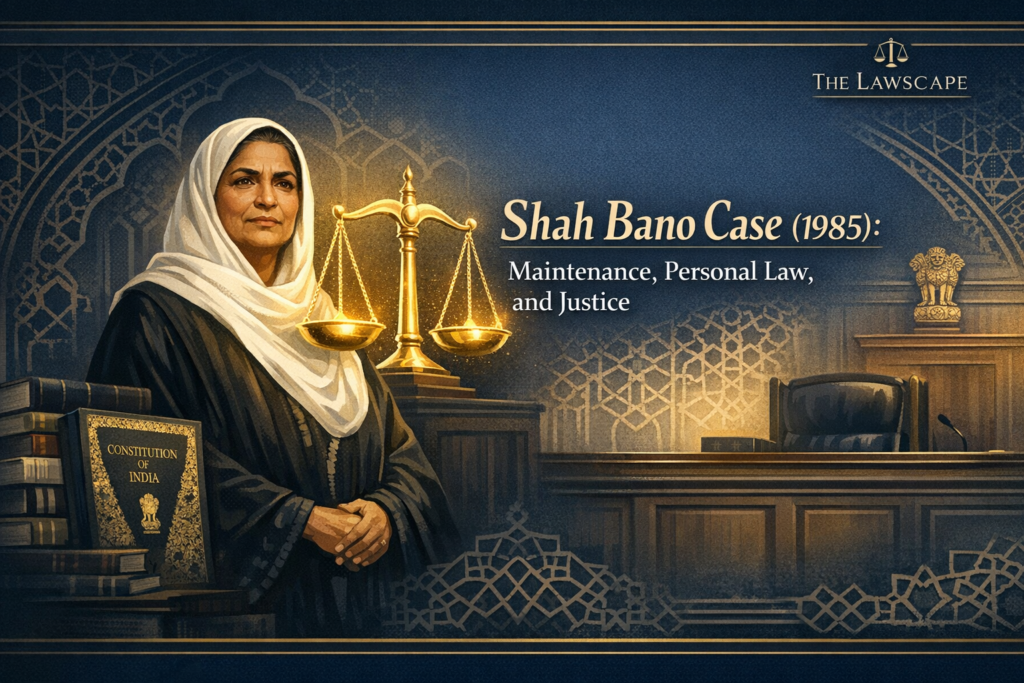
Muhammad Ahmed Khan v. Shah Bano Begum (1985): Maintenance, Personal Law, and the Secular Reach of Section 125 CrPC

Muhammad Ahmed Khan v. Shah Bano Begum (1985): Maintenance, Personal Law, and the Secular Reach of Section 125 CrPC Author: Priyanka Kiran KhawaleStudent, Mumbai University ———————————————————- 💡 3 Quick Takeaways 1. The Supreme Court held that Section 125 of the Code of Criminal Procedure, 1973 is a secular provision applicable to all citizens irrespective of

Muhammad Ahmed Khan v. Shah Bano Begum (1985): Maintenance, Personal Law, and the Secular Reach of Section 125 CrPC Read More »

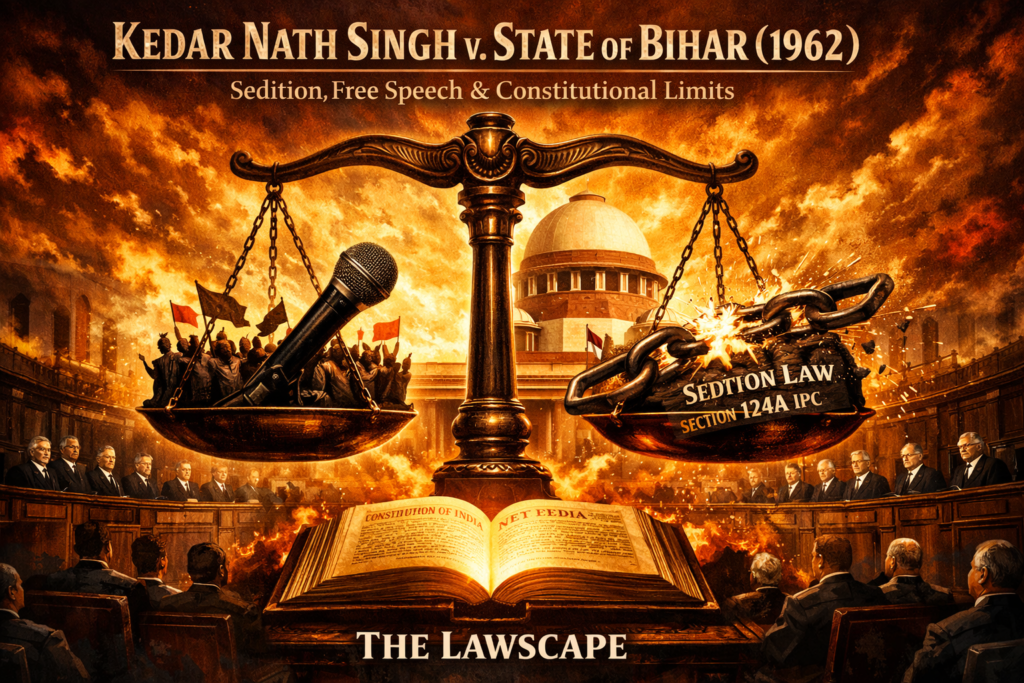
Kedar Nath Singh v. State of Bihar (1962): Sedition, Free Speech, and the Constitutional Line Between Dissent and Disorder

Kedar Nath Singh v. State of Bihar (1962): Sedition, Free Speech, and the Constitutional Line Between Dissent and Disorder Author: Shaikh Shama ParveenStudent, KES Shri Jayantilal H. Patel Law College ——————————————————————————————- 💡 3 Quick Takeaways 1. The Supreme Court upheld Section 124A IPC but decisively narrowed its scope — sedition applies only to speech that

Kedar Nath Singh v. State of Bihar (1962): Sedition, Free Speech, and the Constitutional Line Between Dissent and Disorder Read More »

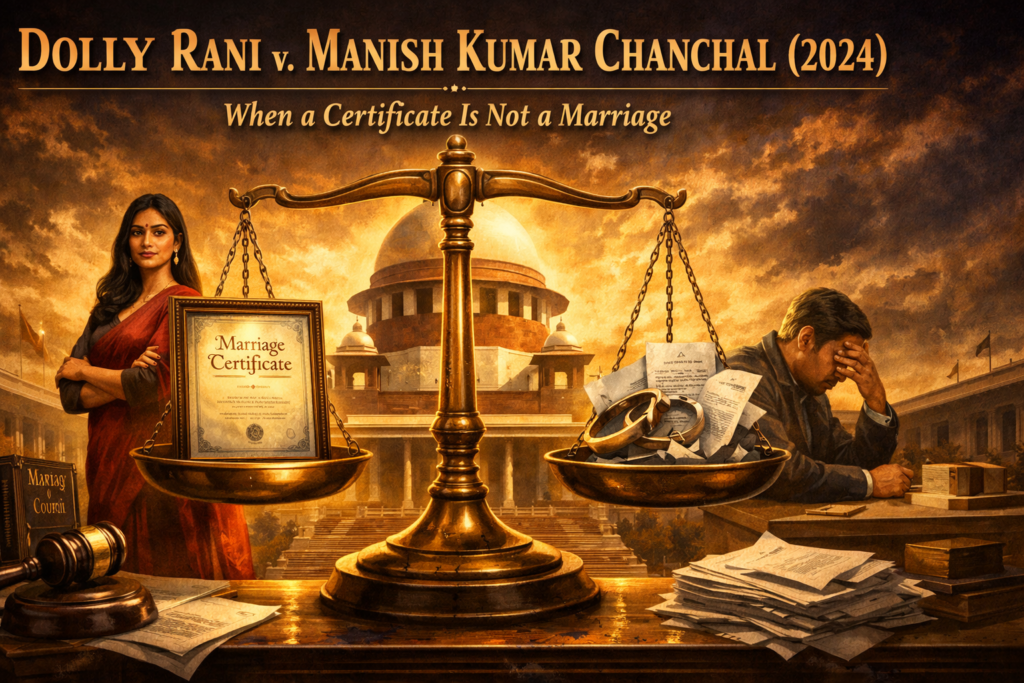
Dolly Rani v. Manish Kumar Chanchal (2024): When a Certificate Is Not a Marriage

Dolly Rani v. Manish Kumar Chanchal (2024): When a Certificate Is Not a Marriage Author: Niharika MishraStudent, KES Shri Jayantilal H. Patel Law College —————————————————————————– 💡 3 Quick Takeaways 1. A Hindu marriage is not valid unless the essential ceremonies under Section 7 of the Hindu Marriage Act, 1955 are performed — a certificate from

Dolly Rani v. Manish Kumar Chanchal (2024): When a Certificate Is Not a Marriage Read More »

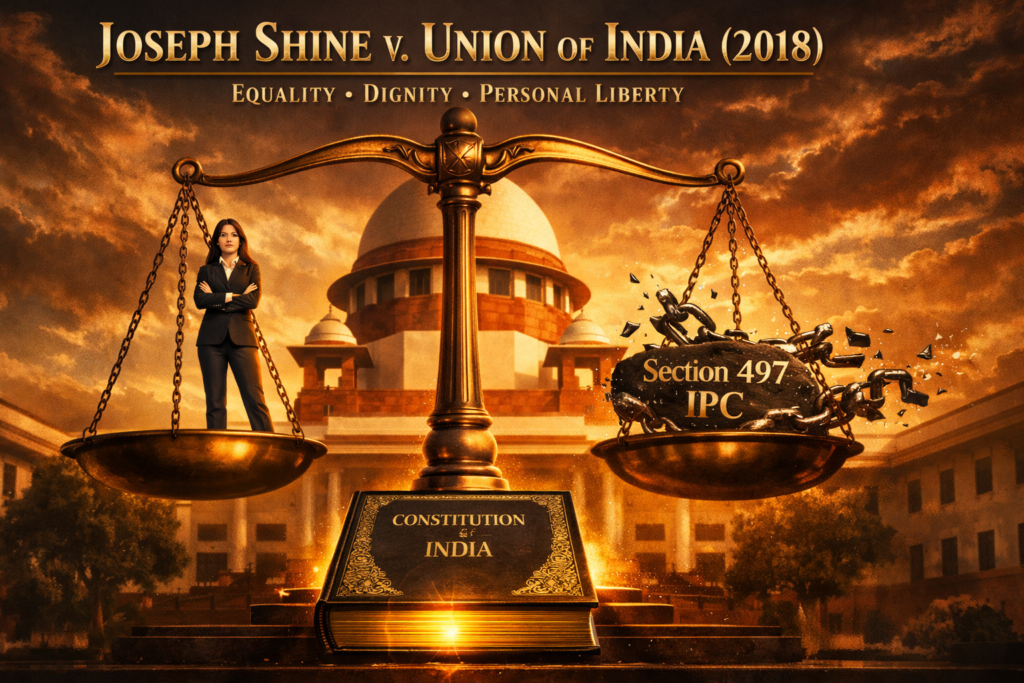
Joseph Shine v. Union of India (2018): Striking Down the Adultery Law as a Violation of Constitutional Dignity

Joseph Shine v. Union of India (2018): Striking Down the Adultery Law as a Violation of Constitutional Dignity Author: Bhumika Kiran Dubey Student, KES Shri Jayantilal H. Patel Law College ———————————————————————————————————————————– 💡 3 Quick Takeaways 1. The Supreme Court unanimously struck down Section 497 of the Indian Penal Code, 1860 as unconstitutional — holding that

Joseph Shine v. Union of India (2018): Striking Down the Adultery Law as a Violation of Constitutional Dignity Read More »

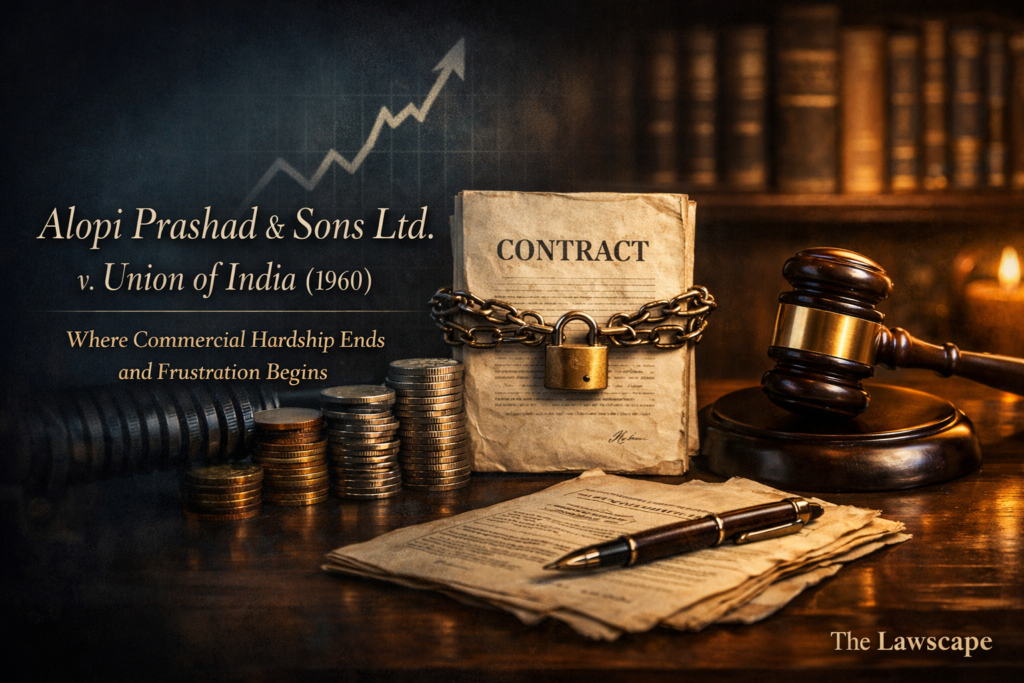
Alopi Prashad & Sons Ltd. v. Union of India (1960): Where Commercial Hardship Ends and Frustration Begins

Alopi Prashad & Sons Ltd. v. Union of India (1960): Where Commercial Hardship Ends and Frustration Begins Author: RashiStudent, Symbiosis Law School, Noida —————————————————————————– 💡 3 Quick Takeaways 1. The Supreme Court held that commercial hardship, price escalation, and financial loss do not amount to frustration under Section 56 of the Indian Contract Act, 1872

Alopi Prashad & Sons Ltd. v. Union of India (1960): Where Commercial Hardship Ends and Frustration Begins Read More »

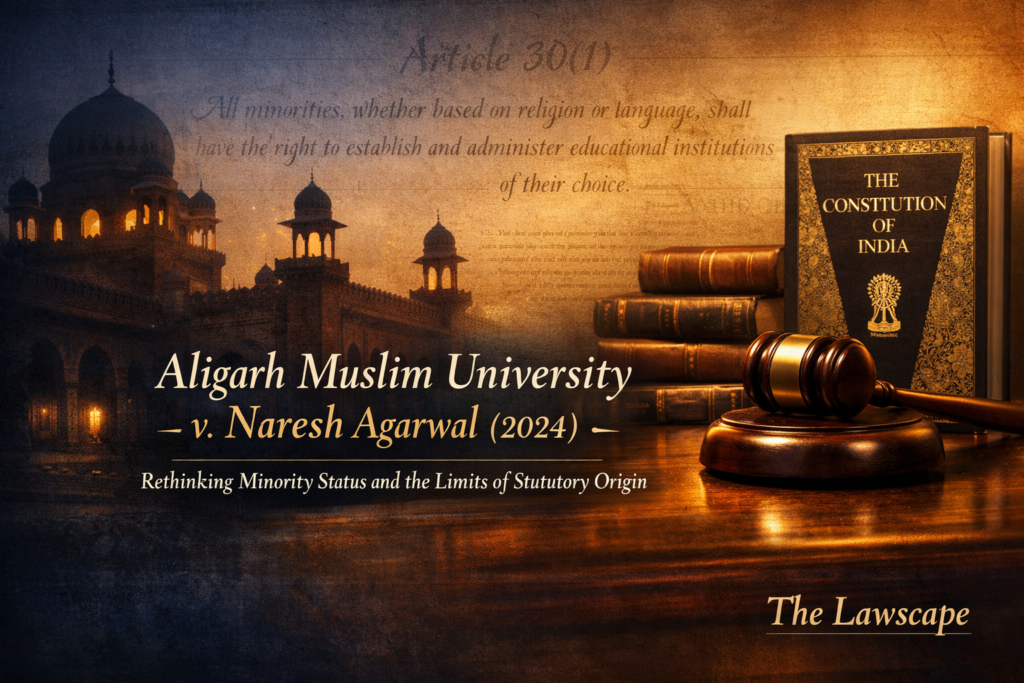
Aligarh Muslim University v. Naresh Agarwal (2024): Rethinking Minority Status and the Limits of Statutory Origin

Aligarh Muslim University v. Naresh Agarwal (2024): Rethinking Minority Status and the Limits of Statutory Origin Author: Syed Mohd MuazStudent, Aligarh Muslim University —————————————————————————– 💡 3 Quick Takeaways 1. The Supreme Court’s seven-judge Constitution Bench held by a 4:3 majority that the mere fact of statutory incorporation does not disqualify an institution from being recognised

Aligarh Muslim University v. Naresh Agarwal (2024): Rethinking Minority Status and the Limits of Statutory Origin Read More »

Mohori Bibee v. Dharmodas Ghose (1903): Decoding the Statutory Framework Behind a Minor’s Contractual Incapacity

Mohori Bibee v. Dharmodas Ghose (1903): Decoding the Statutory Framework Behind a Minor’s Contractual Incapacity Author: Md. Kibria NurStudent, Southern University Bangladesh ————————————————————————- 💡 3 Quick Takeaways 1. A minor’s agreement is void ab initio under the Indian Contract Act, 1872 — it has no legal existence from inception, and neither Section 64 nor Section

Mohori Bibee v. Dharmodas Ghose (1903): Decoding the Statutory Framework Behind a Minor’s Contractual Incapacity Read More »

Donoghue v. Stevenson [1932]: The Case That Built the Modern Law of Negligence

Donoghue v. Stevenson [1932]: The Case That Built the Modern Law of Negligence Author: Yashoda RajputStudent, SAGE University Bhopal ————————————————————– 💡 3 Quick Takeaways 1. Donoghue v. Stevenson established that a manufacturer owes a duty of care to the ultimate consumer even in the absence of any contractual relationship — liability in tort is independent

Donoghue v. Stevenson [1932]: The Case That Built the Modern Law of Negligence Read More »

Smt. Sushila Devi and Another v. Hari Singh and Others (AIR 1971 SC 1756): Frustration, Partition, and the Limits of Contractual Obligation

Smt. Sushila Devi and Another v. Hari Singh and Others (AIR 1971 SC 1756): Frustration, Partition, and the Limits of Contractual Obligation Author: Akansha AlangeStudent, Amity University, Mumbai ————————————————————————– 💡 3 Quick Takeaways 1. Section 56 of the Indian Contract Act, 1872 applies to executory contracts — including agreements to lease — but not to

Smt. Sushila Devi and Another v. Hari Singh and Others (AIR 1971 SC 1756): Frustration, Partition, and the Limits of Contractual Obligation Read More »