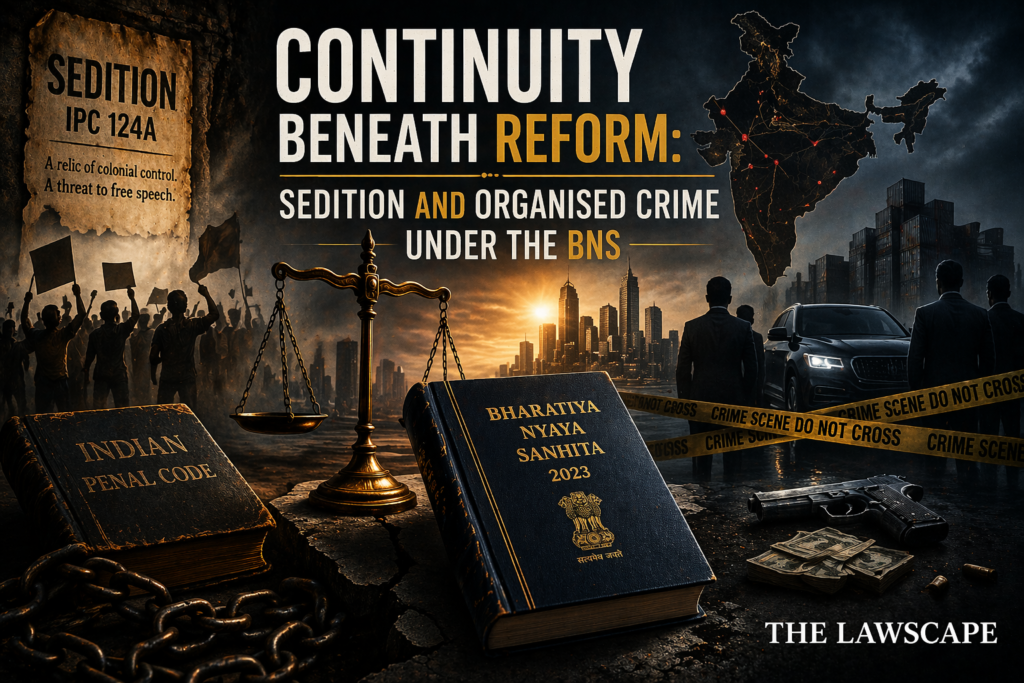
Continuity Beneath Reform: Sedition and Organised Crime under the BNS

Continuity Beneath Reform: Sedition and Organised Crime under the BNS Author: Shama Parveen Shaikh Student, KES Shri jayanti Lal H patel law college ————————————————————————————- 3 Quick Takeaways The Bharatiya Nyaya Sanhita, 2023 replaces the Indian Penal Code, 1860 in name and structure, but its treatment of sedition and organised crime reflects consolidation and expansion of

Continuity Beneath Reform: Sedition and Organised Crime under the BNS Read More »

Born Unwanted: Understanding the Legal and Socio-Cultural Roots of Female Infanticide

Born Unwanted: Understanding the Legal and Socio-Cultural Roots of Female Infanticide Author: Niharika Mishra Student, KES’s Shri Jayantilal H. Patel Law College, Mumbai ————————————————————————————- 3 Quick Takeaways Female infanticide and sex-selective practices are not merely cultural relics but active constitutional violations, breaching the right to life under Article 21, equality under Article 14, and India’s

Born Unwanted: Understanding the Legal and Socio-Cultural Roots of Female Infanticide Read More »

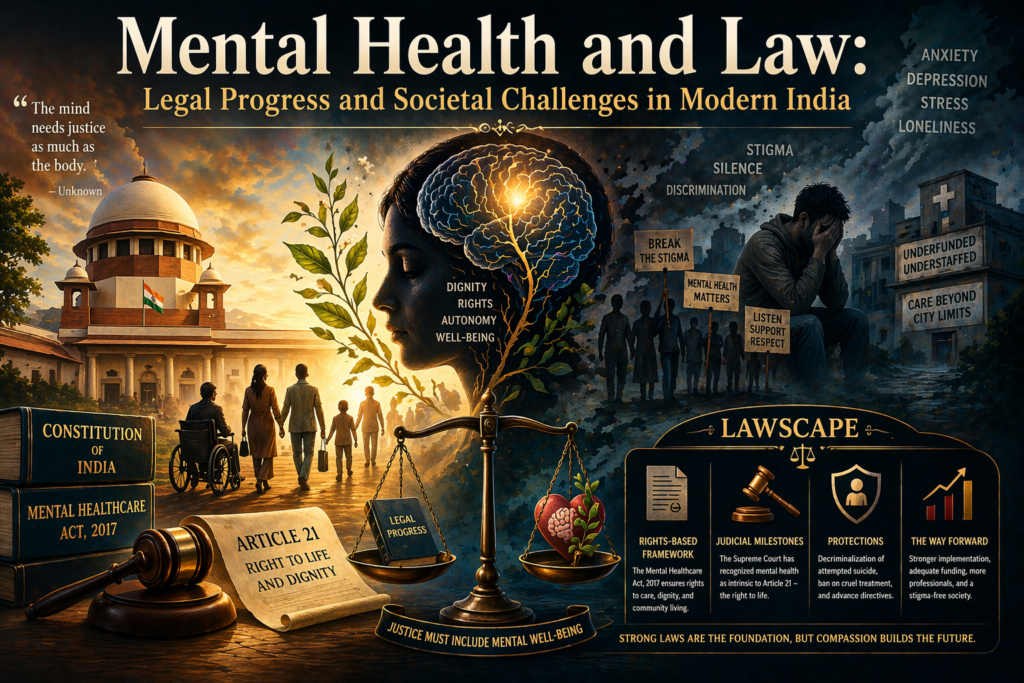
Mental Health and Law: Legal Progress and Societal Challenges in Modern India

Mental Health and Law: Legal Progress and Societal Challenges in Modern India Author: Bhumika Kiran Dubey Student, KES’s Shri Jayantilal H. Patel Law College, Mumbai ————————————————————————————- 3 Quick Takeaways India’s mental health legal framework has transformed from custodial control to a rights-based model, culminating in the Supreme Court recognising mental health as a fundamental right

Mental Health and Law: Legal Progress and Societal Challenges in Modern India Read More »

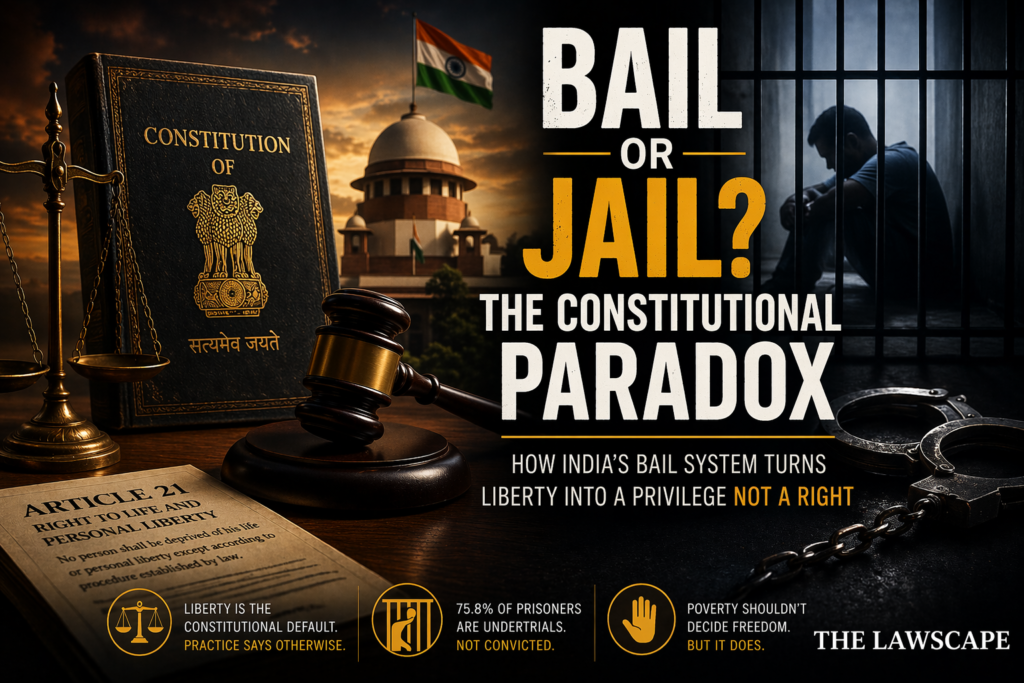
Bail is the Rule, But for Whom? Poverty, Pre-trial Detention, and the Constitutional Illusion of Equal Liberty

Bail is the Rule, But for Whom? Poverty, Pre-trial Detention, and the Constitutional Illusion of Equal Liberty Author: Mitali Shankar Manore ————————————————————————————- 3 Quick Takeaways The constitutional promise that bail is the rule and jail the exception has long been recognised by the Supreme Court, notably in State of Rajasthan v. Balchand, (1977) 4 S.C.C.

Bail is the Rule, But for Whom? Poverty, Pre-trial Detention, and the Constitutional Illusion of Equal Liberty Read More »

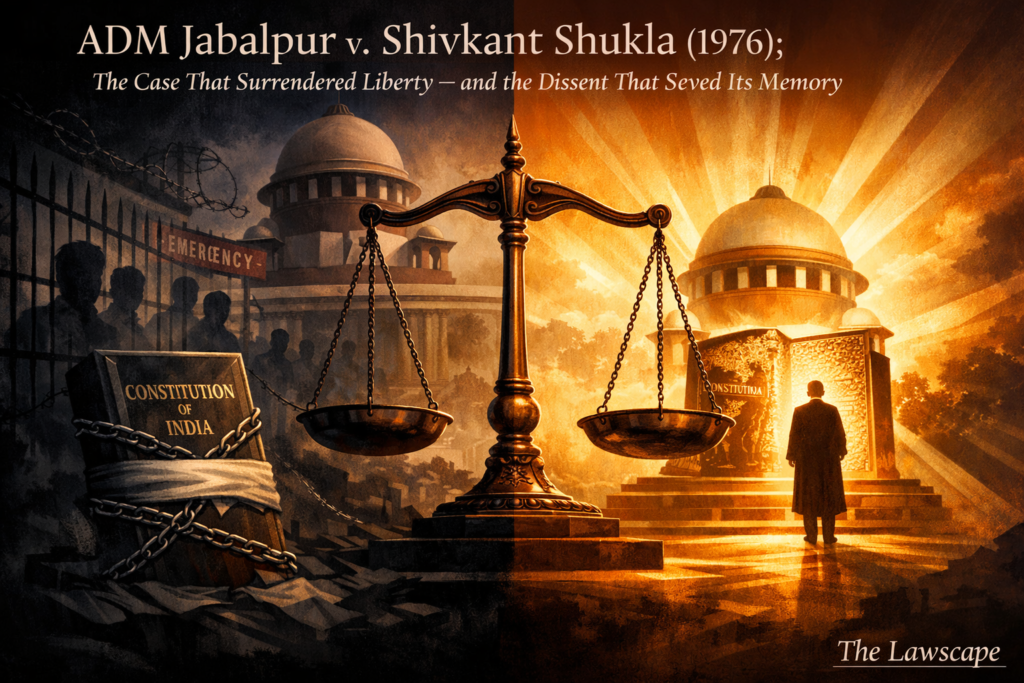
ADM Jabalpur v. Shivkant Shukla (1976): The Case That Surrendered Liberty — and the Dissent That Saved Its Memory

ADM Jabalpur v. Shivkant Shukla (1976): The Case That Surrendered Liberty — and the Dissent That Saved Its Memory Author: Mitali Shankar ManoreStudent, KES’ Shri Jayantilal H. Patel Law College ————————————————————————————- 💡 3 Quick Takeaways 1. By a 4:1 majority, the Supreme Court held that during the 1975 Emergency, no detainee could approach any court

ADM Jabalpur v. Shivkant Shukla (1976): The Case That Surrendered Liberty — and the Dissent That Saved Its Memory Read More »

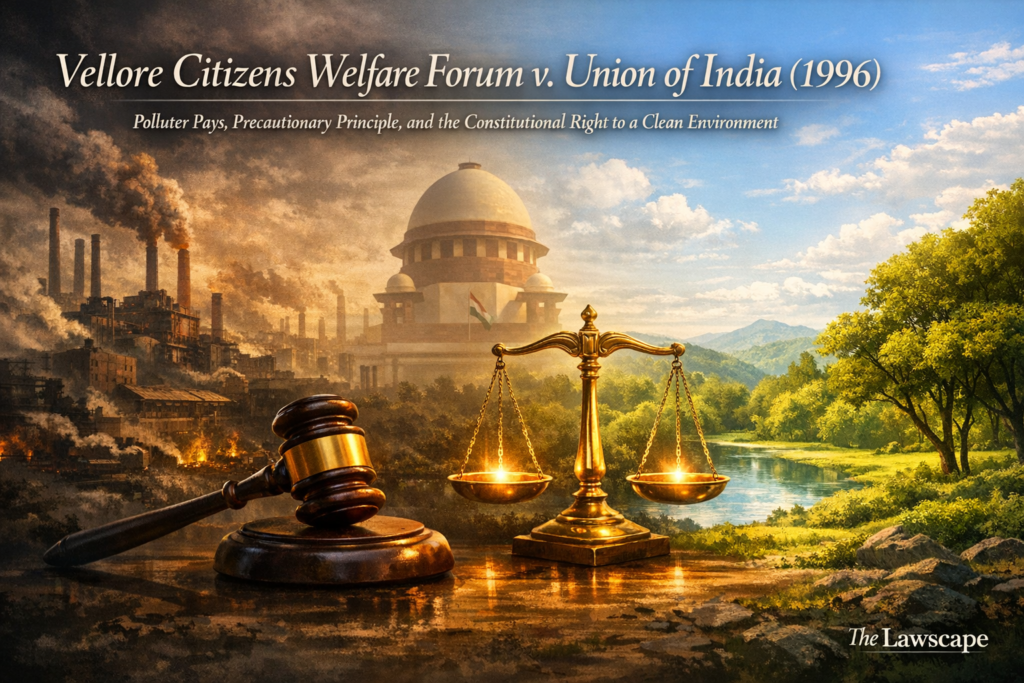
Vellore Citizens Welfare Forum v. Union of India (1996): Polluter Pays, Precautionary Principle, and the Constitutional Right to a Clean Environment

Vellore Citizens Welfare Forum v. Union of India (1996): Polluter Pays, Precautionary Principle, and the Constitutional Right to a Clean Environment Author: VikasStudent, KCC Institute of Legal and Higher Education, Noida —————————————————————————————————– 💡 3 Quick Takeaways 1. The Supreme Court held that the right to a clean and healthy environment is an integral part of

Vellore Citizens Welfare Forum v. Union of India (1996): Polluter Pays, Precautionary Principle, and the Constitutional Right to a Clean Environment Read More »

Mukesh v. State (NCT of Delhi) (2017): Procedural Due Process, Capital Punishment, and the Eight-Year Road to Execution

Mukesh v. State (NCT of Delhi) (2017): Procedural Due Process, Capital Punishment, and the Eight-Year Road to Execution Author: Netra Gayatri Rajesh Bhagadia  Student, KES’ Shri Jayantilal H. Patel Law College ——————————————————————————– 💡 3 Quick Takeaways 1. The Supreme Court upheld the death sentence for all four convicts by applying the “rarest of rare” doctrine

Mukesh v. State (NCT of Delhi) (2017): Procedural Due Process, Capital Punishment, and the Eight-Year Road to Execution Read More »

Vishaka & Ors. v. State of Rajasthan & Ors. (1997): How the Supreme Court Filled a Legal Void and Protected Women at Work

Vishaka & Ors. v. State of Rajasthan & Ors. (1997): How the Supreme Court Filled a Legal Void and Protected Women at Work Author: Disha Vinay PendurkarStudent, KES’ Shri Jayantilal H. Patel Law College —————————————————————————————— 💡 3 Quick Takeaway 1. In the absence of any domestic legislation on workplace sexual harassment, the Supreme Court invoked

Vishaka & Ors. v. State of Rajasthan & Ors. (1997): How the Supreme Court Filled a Legal Void and Protected Women at Work Read More »

Muhammad Ahmed Khan v. Shah Bano Begum (1985): Maintenance, Personal Law, and the Secular Reach of Section 125 CrPC

Muhammad Ahmed Khan v. Shah Bano Begum (1985): Maintenance, Personal Law, and the Secular Reach of Section 125 CrPC Author: Priyanka Kiran KhawaleStudent, Mumbai University ———————————————————- 💡 3 Quick Takeaways 1. The Supreme Court held that Section 125 of the Code of Criminal Procedure, 1973 is a secular provision applicable to all citizens irrespective of

Muhammad Ahmed Khan v. Shah Bano Begum (1985): Maintenance, Personal Law, and the Secular Reach of Section 125 CrPC Read More »

Kedar Nath Singh v. State of Bihar (1962): Sedition, Free Speech, and the Constitutional Line Between Dissent and Disorder

Kedar Nath Singh v. State of Bihar (1962): Sedition, Free Speech, and the Constitutional Line Between Dissent and Disorder Author: Shaikh Shama ParveenStudent, KES Shri Jayantilal H. Patel Law College ——————————————————————————————- 💡 3 Quick Takeaways 1. The Supreme Court upheld Section 124A IPC but decisively narrowed its scope — sedition applies only to speech that

Kedar Nath Singh v. State of Bihar (1962): Sedition, Free Speech, and the Constitutional Line Between Dissent and Disorder Read More »