
Articles

When Courts Are Not Enough: How Alternative Dispute Resolution Is Quietly Reshaping Justice

When Courts Are Not Enough: How Alternative Dispute Resolution Is Quietly Reshaping Justice Author: Muskan KashyapStudent, DEEN DAYAL UPADAHYAY UNIVERSITY GORAKHPUR UTTAR PRADESH ———————————————————————————————————————————- 💡 3 Quick Takeaways Abstract Courts across the world are struggling under the weight of mounting case backlogs. With more than 50 million cases pending in India alone and similar delays […]

When Courts Are Not Enough: How Alternative Dispute Resolution Is Quietly Reshaping Justice Read More »

Uniform Civil Code in India: Constitutional Aspiration and Socio-Legal Challenges

Uniform Civil Code in India: Constitutional Aspiration and Socio-Legal Challenges Author: Hrishikesh DeokarStudent, ———————————————— 💡 3 Quick Takeaways Keywords: Uniform Civil Code, Personal Laws, Secularism, Fundamental Rights, Gender Justice Introduction The Uniform Civil Code (UCC) remains one of the most debated constitutional and socio-legal issues in India. Article 44 of the Constitution directs the State

Uniform Civil Code in India: Constitutional Aspiration and Socio-Legal Challenges Read More »

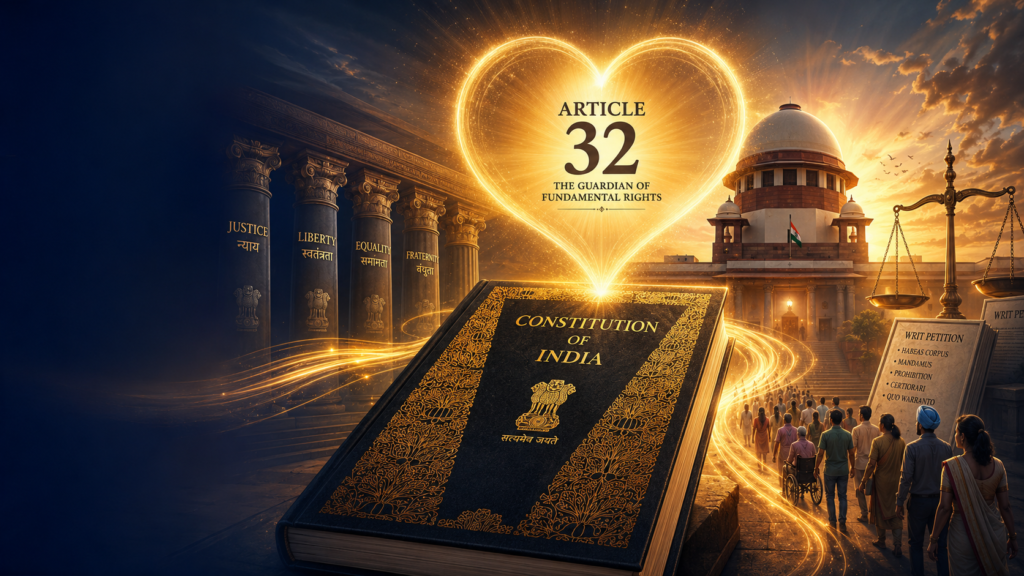
Article 32: The Heart and Soul of the Indian Constitution

Article 32: The Heart and Soul of the Indian Constitution Author: Shristi SinghStudent, R.D. University, Jabalpur (Madhya Pradesh) 💡 3 Quick Takeaways “If I was asked to name any particular article in this Constitution as the most important, an article without which this Constitution would be a nullity, I could not refer to any other

Article 32: The Heart and Soul of the Indian Constitution Read More »

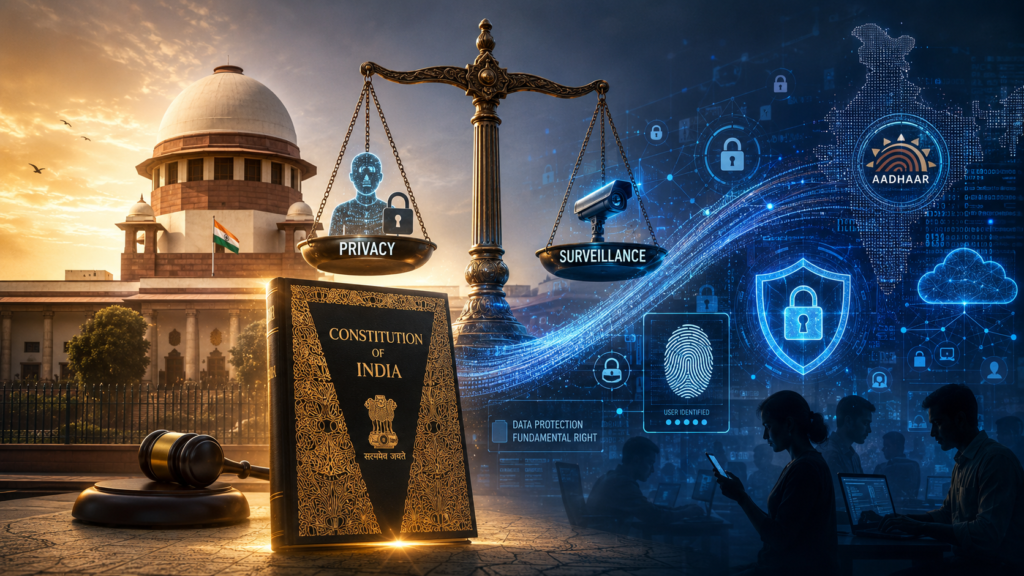
Privacy in the Digital Age: Is Indian Law Doing Enough? Author: Lisa Vipin KhonaStudent, D.M. Harish School of Law (DMHSL), Worli ————————————————————————————— 💡 3 Quick Takeaways 1. The recognition of privacy as a fundamental right in *Justice K.S. Puttaswamy v. Union of India* transformed India’s constitutional approach to digital rights. 2. Surveillance powers must operate

Read More »

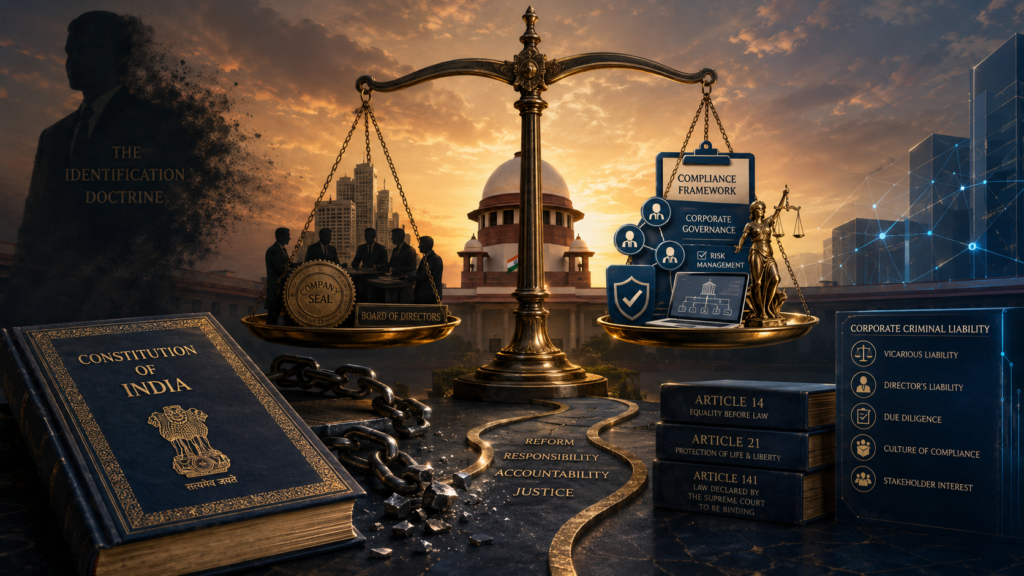
The Identification Doctrine’s Twilight: Reforming Corporate Criminal Liability in India

The Identification Doctrine’s Twilight: Reforming Corporate Criminal Liability in India Author: Anitta Lilly JosephStudent, Kochi —————————————— 💡 3 Quick Takeaways Abstract Corporate criminal liability in India continues to rest on the identification doctrine—a principle requiring courts to locate a singular “directing mind” whose mental state can be attributed to the company. Conceived in early twentieth-century

The Identification Doctrine’s Twilight: Reforming Corporate Criminal Liability in India Read More »

Bail is the Rule, Jail is the Exception: How UAPA Inverts the Constitutional Promise of Liberty

Bail is the Rule, Jail is the Exception: How UAPA Inverts the Constitutional Promise of Liberty Author: Yadu Krishna K GStudent, Bharata Mata School of Legal Studies, Aluva, Kerala —————————————————————————————————– 💡 3 Quick Takeaways Abstract The Unlawful Activities (Prevention) Act, 1967 (UAPA), through Section 43D(5), has effectively reversed one of the foundational principles of Indian

Bail is the Rule, Jail is the Exception: How UAPA Inverts the Constitutional Promise of Liberty Read More »

The Invisible Victims: Challenging Patriarchal Assumptions and Legal Gaps in Protection for Male Survivors of Sexual Violence

The Invisible Victims: Challenging Patriarchal Assumptions and Legal Gaps in Protection for Male Survivors of Sexual Violence Author: Yashasvi JaiswalStudent, Sage University, Indore —————————————————– 💡 3 Quick Takeaways Sexual violence is often perceived as a crime committed by men against women. However, this assumption is not merely an oversimplification; it is a deeply entrenched belief

The Invisible Victims: Challenging Patriarchal Assumptions and Legal Gaps in Protection for Male Survivors of Sexual Violence Read More »

Working Together: How Human Rights and Transitional Justice Help Societies Heal 

Working Together: How Human Rights and Transitional Justice Help Societies Heal  Author: Abrham Seife MulunehStudent, Bahirdar University ———————————————————————————————————- 💡 3 Quick Takeaways Human rights law and transitional justice are not competing frameworks — they are deeply interdependent: human rights law provides the legal foundation and the duties, while transitional justice provides the practical tools to

Working Together: How Human Rights and Transitional Justice Help Societies Heal  Read More »

Pakistan’s 27th Amendment: A Comparative Analysis 

Pakistan’s 27th Amendment: A Comparative Analysis  Author: Alina IjazStudent, National Defence University, Islamabad ———————————————————————————————————- 💡 3 Quick Takeaways Pakistan’s Constitution (Twenty-seventh Amendment) Act, 2025 restructures both the judicial hierarchy and military command architecture — creating a Federal Constitutional Court, weakening judicial transfer protections, and constitutionally entrenching military authority in ways that transform informal power into

Pakistan’s 27th Amendment: A Comparative Analysis  Read More »

FROM SEDITION TO SOVEREIGNTY: FREE SPEECH AND NATIONAL SECURITY UNDER THE BHARATIYA NYAYA SANHITA, 2023

FROM SEDITION TO SOVEREIGNTY: FREE SPEECH AND NATIONAL SECURITY UNDER THE BHARATIYA NYAYA SANHITA, 2023 Author: Pooja Bujji Shridharla Student, KES Shri Jayantilal H Patel Law College, Mumbai ————————————————————————————- 💡 3 Quick Takeaways 1. The Bharatiya Nyaya Sanhita (BNS), 2023, replaces the colonial “sedition” (Section 124A IPC) with Section 152, shifting the focus from protecting

FROM SEDITION TO SOVEREIGNTY: FREE SPEECH AND NATIONAL SECURITY UNDER THE BHARATIYA NYAYA SANHITA, 2023 Read More »