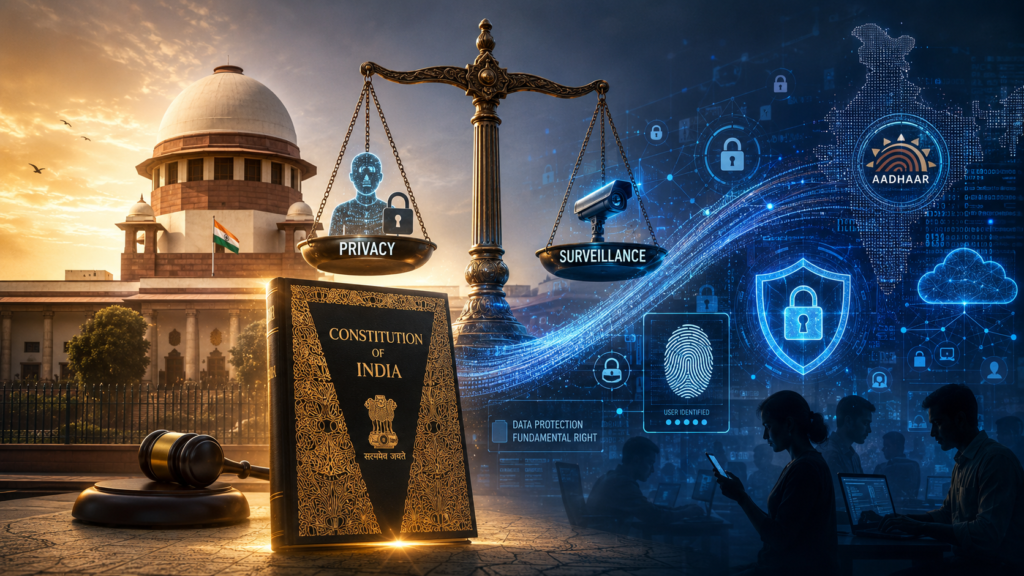
Privacy in the Digital Age: Is Indian Law Doing Enough? Author: Lisa Vipin KhonaStudent, D.M. Harish School of Law (DMHSL), Worli ————————————————————————————— 💡 3 Quick Takeaways 1. The recognition of privacy as a fundamental right in *Justice K.S. Puttaswamy v. Union of India* transformed India’s constitutional approach to digital rights. 2. Surveillance powers must operate
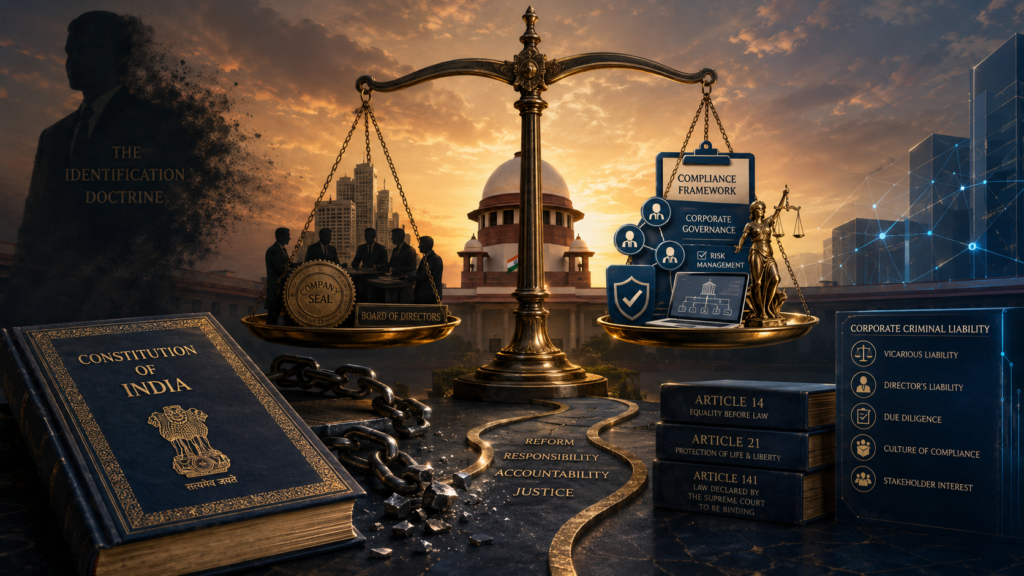
The Identification Doctrine’s Twilight: Reforming Corporate Criminal Liability in India
The Identification Doctrine’s Twilight: Reforming Corporate Criminal Liability in India Author: Anitta Lilly JosephStudent, Kochi —————————————— 💡 3 Quick Takeaways Abstract Corporate criminal liability in India continues to rest on the identification doctrine—a principle requiring courts to locate a singular “directing mind” whose mental state can be attributed to the company. Conceived in early twentieth-century
The Identification Doctrine’s Twilight: Reforming Corporate Criminal Liability in India Read More »
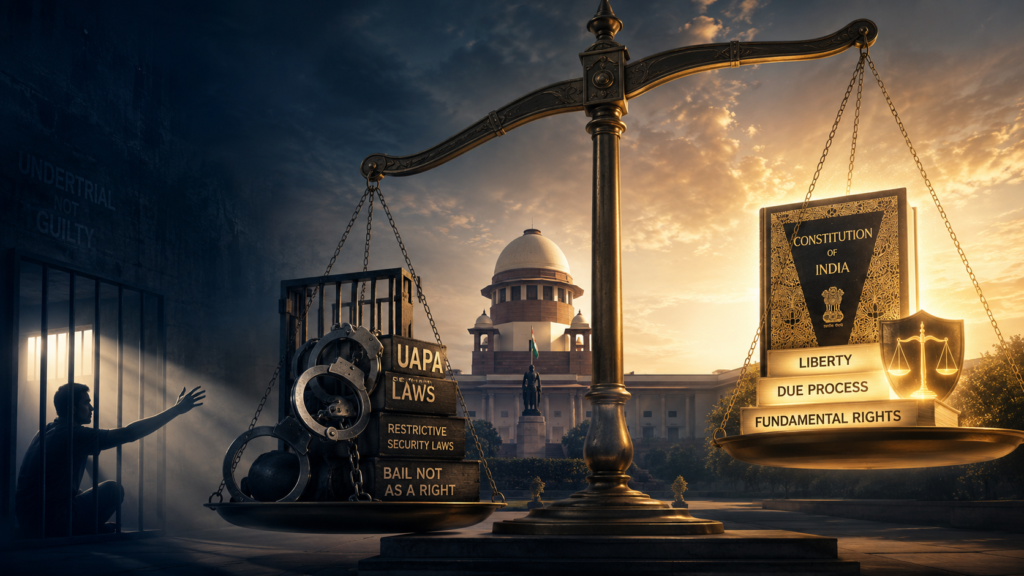
Bail is the Rule, Jail is the Exception: How UAPA Inverts the Constitutional Promise of Liberty
Bail is the Rule, Jail is the Exception: How UAPA Inverts the Constitutional Promise of Liberty Author: Yadu Krishna K GStudent, Bharata Mata School of Legal Studies, Aluva, Kerala —————————————————————————————————– 💡 3 Quick Takeaways Abstract The Unlawful Activities (Prevention) Act, 1967 (UAPA), through Section 43D(5), has effectively reversed one of the foundational principles of Indian
The Invisible Victims: Challenging Patriarchal Assumptions and Legal Gaps in Protection for Male Survivors of Sexual Violence
The Invisible Victims: Challenging Patriarchal Assumptions and Legal Gaps in Protection for Male Survivors of Sexual Violence Author: Yashasvi JaiswalStudent, Sage University, Indore —————————————————– 💡 3 Quick Takeaways Sexual violence is often perceived as a crime committed by men against women. However, this assumption is not merely an oversimplification; it is a deeply entrenched belief
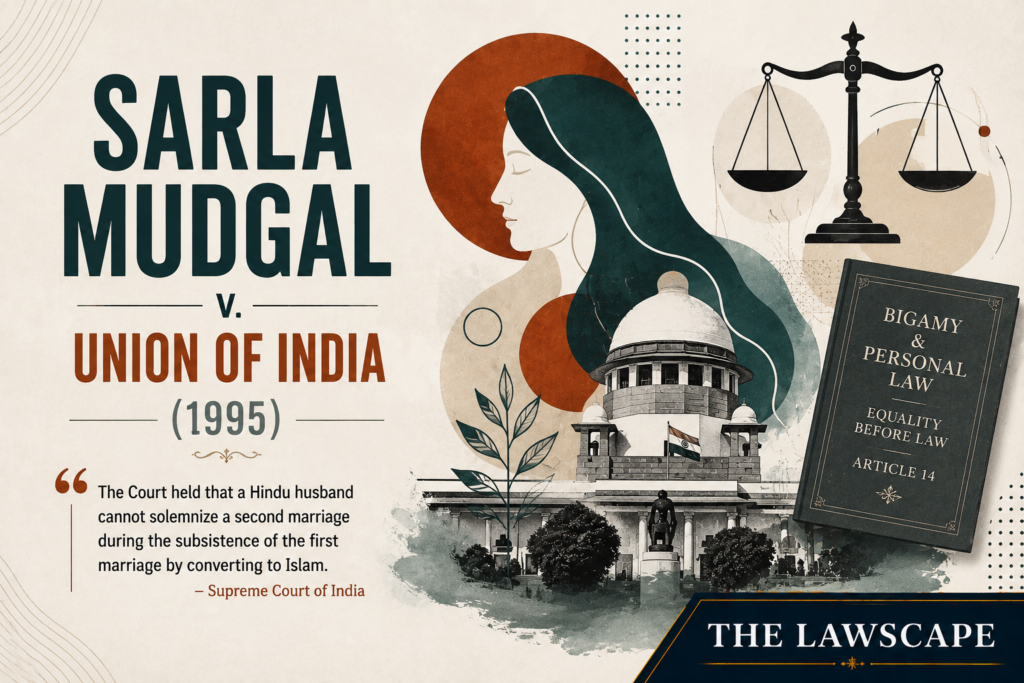
Sarla Mudgal v. Union of India (1995)
Sarla Mudgal v. Union of India (1995): Religious Conversion, Bigamy, and the Quest for a Uniform Civil Code AUTHOR – Yashasvi JaiswalStudent at Sage University, IndoreSage University,Indore —————————————————————————————— Court: Supreme Court of India Bench: Justice Kuldip Singh and Justice R.M. Sahai Case Citation: Sarla Mudgal v. Union of India, AIR 1995 SC 1531. Introduction The
Sarla Mudgal v. Union of India (1995) Read More »
Jus Novum 2026 — AU Nationwide Law Fest
Jus Novum – AU Nationwide Law Fest, 2026 The Lawscape Proudly Partners as E-Learning Partner The Lawscape is pleased to collaborate as the E-Learning Partner for Jus Novum 2026, the AU Nationwide Law Fest organized by Apex School of Law, Apex University, Jaipur. Jus Novum 2026 is a multi-event national law fest bringing together students
Jus Novum 2026 — AU Nationwide Law Fest Read More »
Beyond Litigation — ADR Masterclass 2026
Beyond Litigation — ADR Masterclass 2026 A 2-Day ADR intensive workshop on Arbitration, Mediation & the Future of Dispute Resolution. Learn from India’s top ADR experts on 4th & 5th July 2026. Register Now → https://pages.razorpay.com/beyondlitigation ABOUT THE EVENT The Lawscape proudly presents Beyond Litigation — an exclusive 2-Day ADR Masterclass designed to help law
Beyond Litigation — ADR Masterclass 2026 Read More »
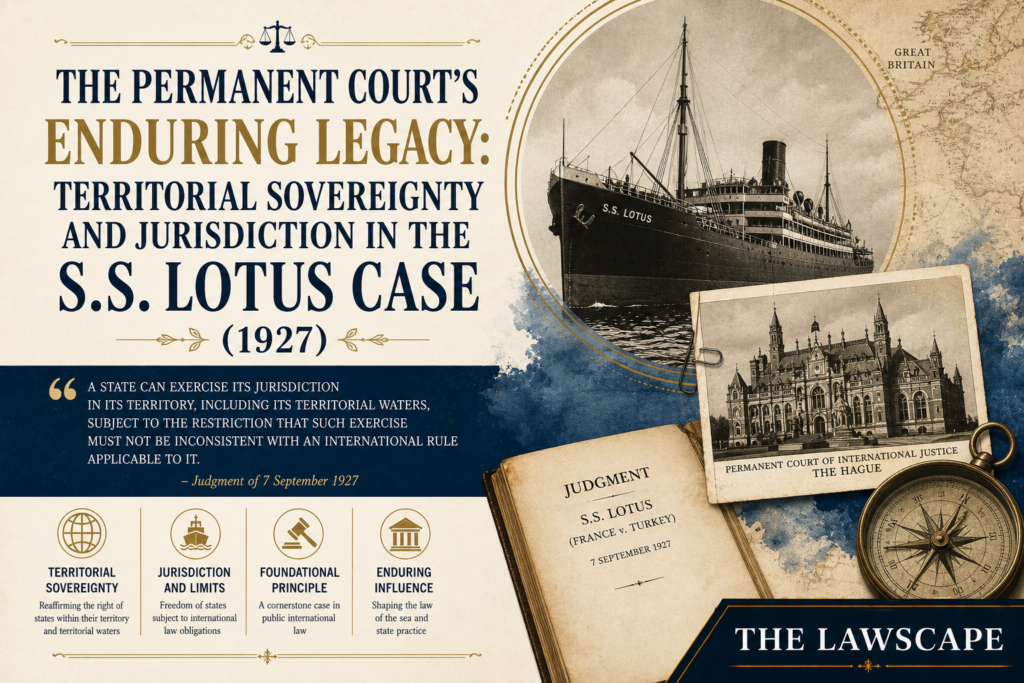
The Permanent Court’s Enduring Legacy: Territorial Sovereignty and Jurisdiction in the S.S. Lotus Case (1927)
The Permanent Court’s Enduring Legacy: Territorial Sovereignty and Jurisdiction in the S.S. Lotus Case (1927) Author: Abrham Seife MulunehStudent, Bahirdar University —————————————————————————————— 💡 3 Quick Takeaways 1. The PCIJ established the “Lotus principle” — that states enjoy broad freedom to exercise jurisdiction unless specifically prohibited by international law — a permissive conception that inverted the
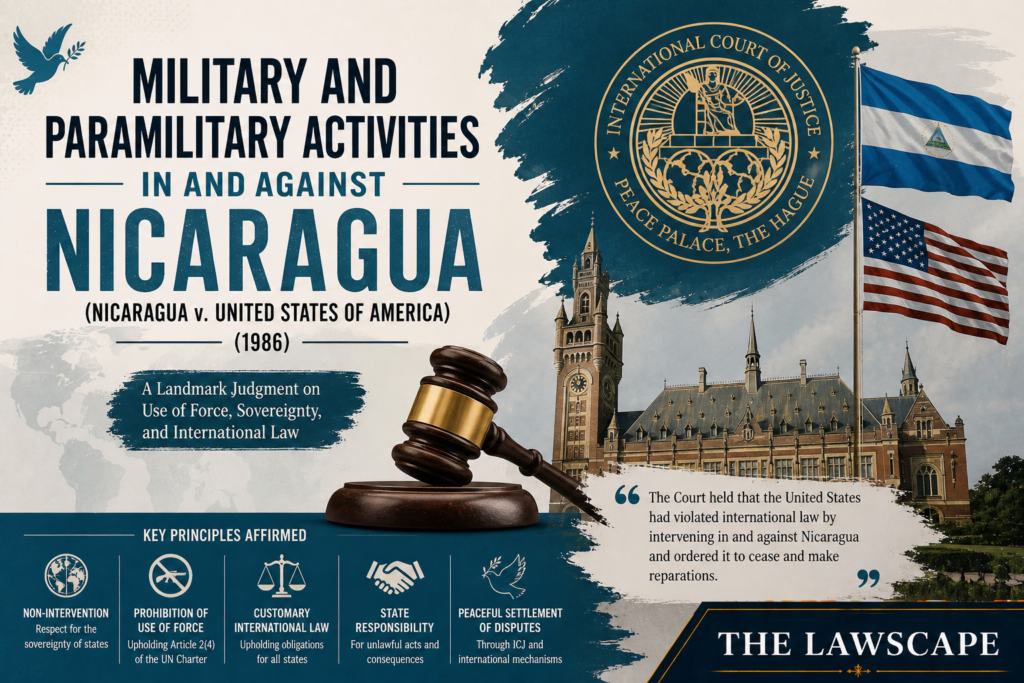
Military and Paramilitary Activities in and against Nicaragua (Nicaragua v. United States of America) (1986):
Military and Paramilitary Activities in and against Nicaragua (Nicaragua v. United States of America) (1986) Author: Alina IjazStudent, National Defense University, Islamabad —————————————————————————————— 💡 3 Quick Takeaways 1. The ICJ held that the United States violated customary international law by mining Nicaragua’s ports, supporting the Contras, and interfering in Nicaragua’s internal affairs — finding that
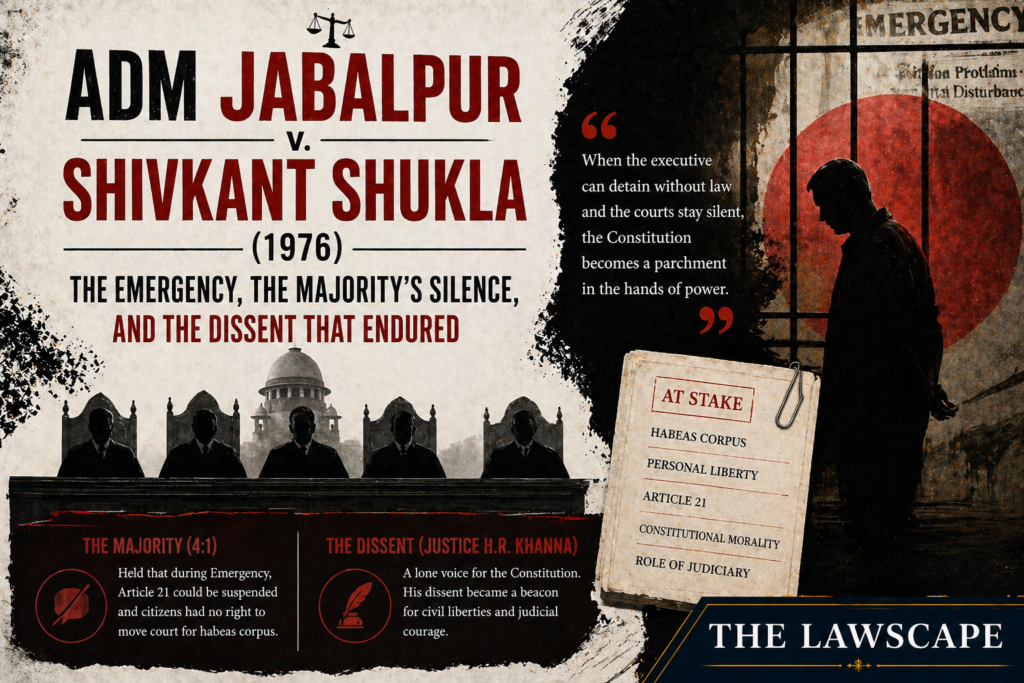
ADM Jabalpur v. Shivkant Shukla (1976): The Emergency, the Majority’s Silence, and the Dissent That Endured
ADM Jabalpur v. Shivkant Shukla (1976): The Emergency, the Majority’s Silence, and the Dissent That Endured Author: Shubham UpadhyayStudent, Faculty of Legal Sciences, Shoolini University, Solan Co-Author: Mrs. Richika MehtaAssistant Professor (IPR), Faculty of Legal Sciences, Shoolini University —————————————————————————————— 💡 3 Quick Takeaways 1. By a 4:1 majority, the Supreme Court held that during the