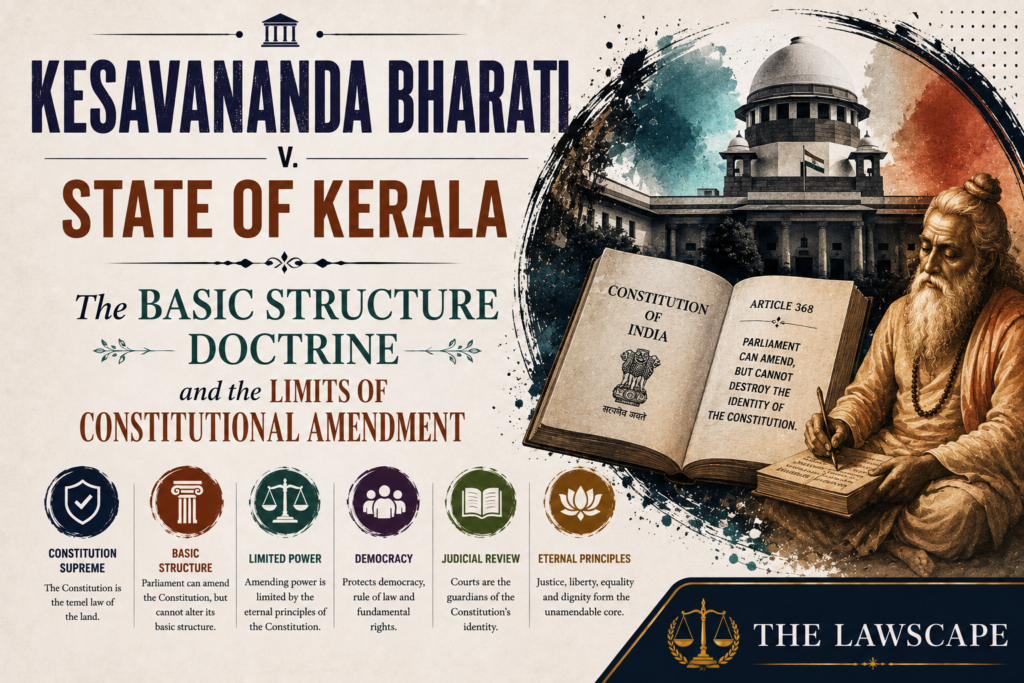
Kesavananda Bharati v. State of Kerala: The Basic Structure Doctrine and the Limits of Constitutional Amendment

Kesavananda Bharati v. State of Kerala: The Basic Structure Doctrine and the Limits of Constitutional Amendment Author: Natasha NayakStudent, KIIT School Of Law, Bhubaneswar —————————————————————————————— 💡 3 Quick Takeaways 1. Kesavananda Bharati v. State of Kerala is the landmark judgment in which the Supreme Court evolved the Basic Structure Doctrine to limit Parliament’s amending power […]
Kesavananda Bharati v. State of Kerala: The Basic Structure Doctrine and the Limits of Constitutional Amendment Read More »

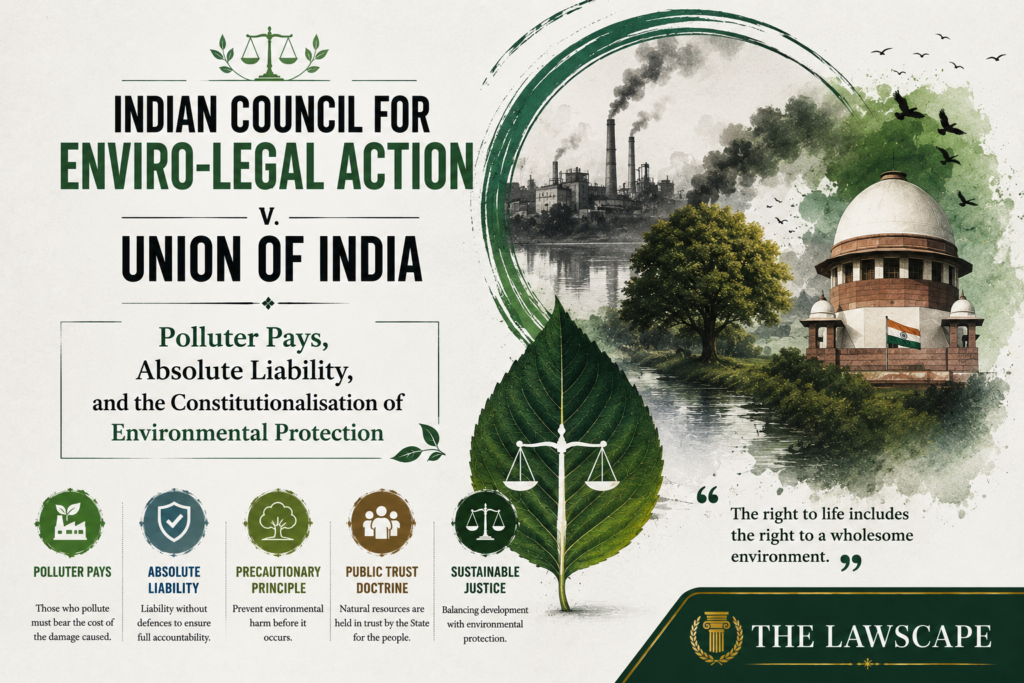
Indian Council for Enviro-Legal Action v. Union of India: Polluter Pays, Absolute Liability, and the Constitutionalisation of Environmental Protection

Indian Council for Enviro-Legal Action v. Union of India: Polluter Pays, Absolute Liability, and the Constitutionalisation of Environmental Protection Author: Aayushi ChaudharyStudent, Asian Law College, Noida ————————————————————— 💡 3 Quick Takeaways 1. Indian Council for Enviro-Legal Action v. Union of India is a landmark environmental law judgment in which the Supreme Court firmly applied the

Indian Council for Enviro-Legal Action v. Union of India: Polluter Pays, Absolute Liability, and the Constitutionalisation of Environmental Protection Read More »

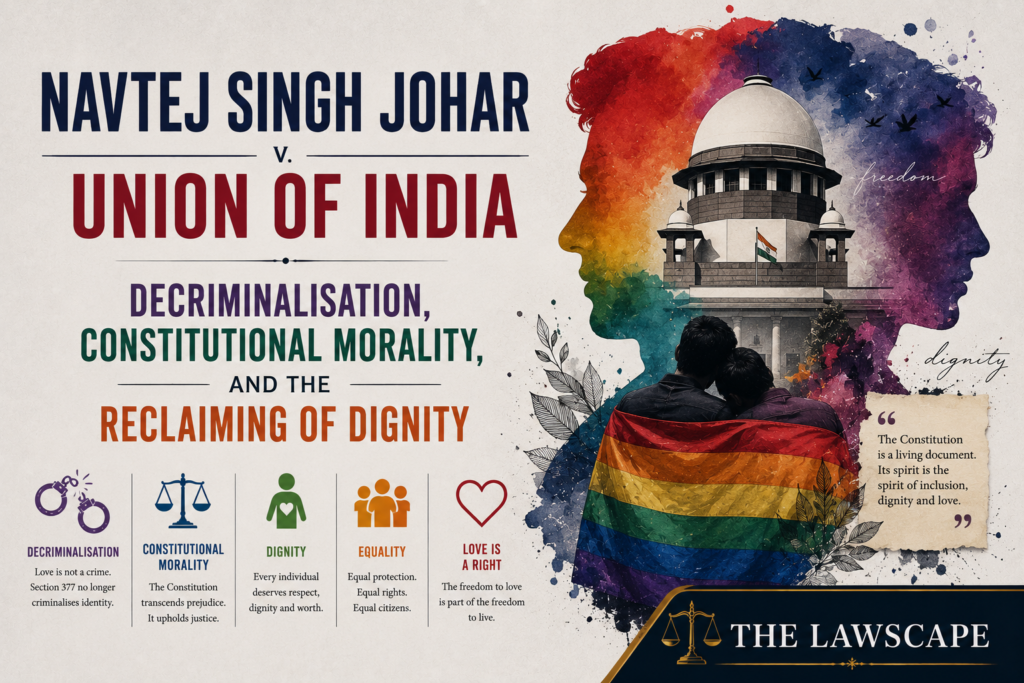
Navtej Singh Johar v. Union of India: Decriminalisation, Constitutional Morality, and the Reclaiming of Dignity

Navtej Singh Johar v. Union of India: Decriminalisation, Constitutional Morality, and the Reclaiming of Dignity Author: Hitesh BhootraStudent, Aishwarya College of Education (Law) —————————————————————————————— 💡 3 Quick Takeaways 1. Navtej Singh Johar v. Union of India partially struck down Section 377 of the Indian Penal Code to decriminalise consensual same-sex relations between adults.2. The Supreme

Navtej Singh Johar v. Union of India: Decriminalisation, Constitutional Morality, and the Reclaiming of Dignity Read More »

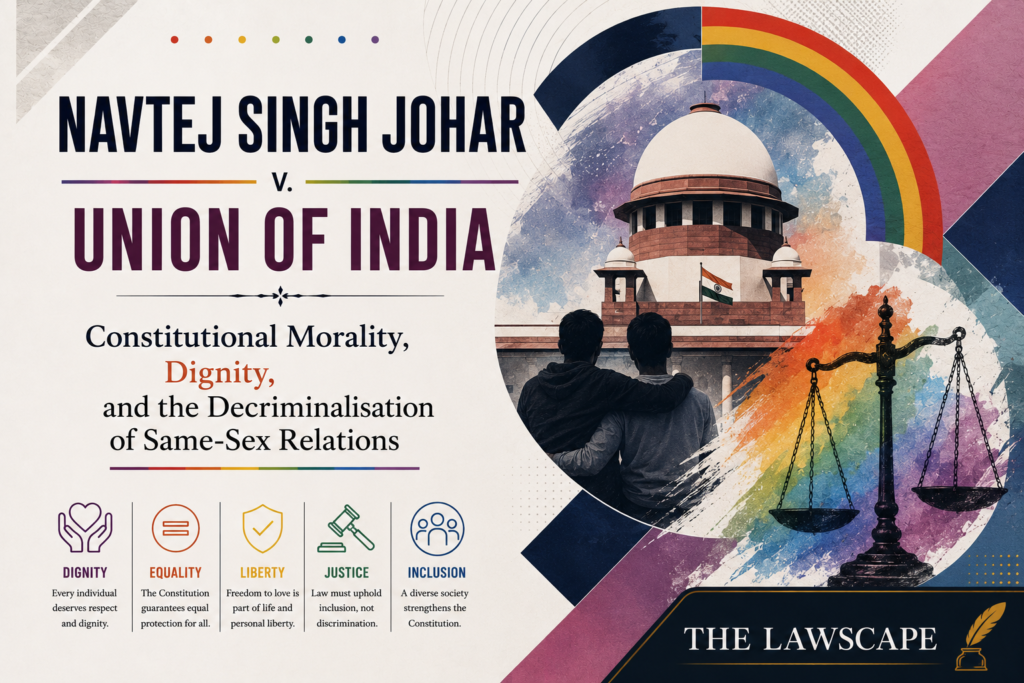
Navtej Singh Johar v. Union of India: Constitutional Morality, Dignity, and the Decriminalisation of Same-Sex Relations

Navtej Singh Johar v. Union of India: Constitutional Morality, Dignity, and the Decriminalisation of Same-Sex Relations Author: Bhavya SumanStudent, Llyod law college ———————————————————– 💡 3 Quick Takeaways 1. Navtej Singh Johar v. Union of India partially struck down Section 377 of the Indian Penal Code by decriminalising consensual same-sex relations between adults in private.2. The

Navtej Singh Johar v. Union of India: Constitutional Morality, Dignity, and the Decriminalisation of Same-Sex Relations Read More »

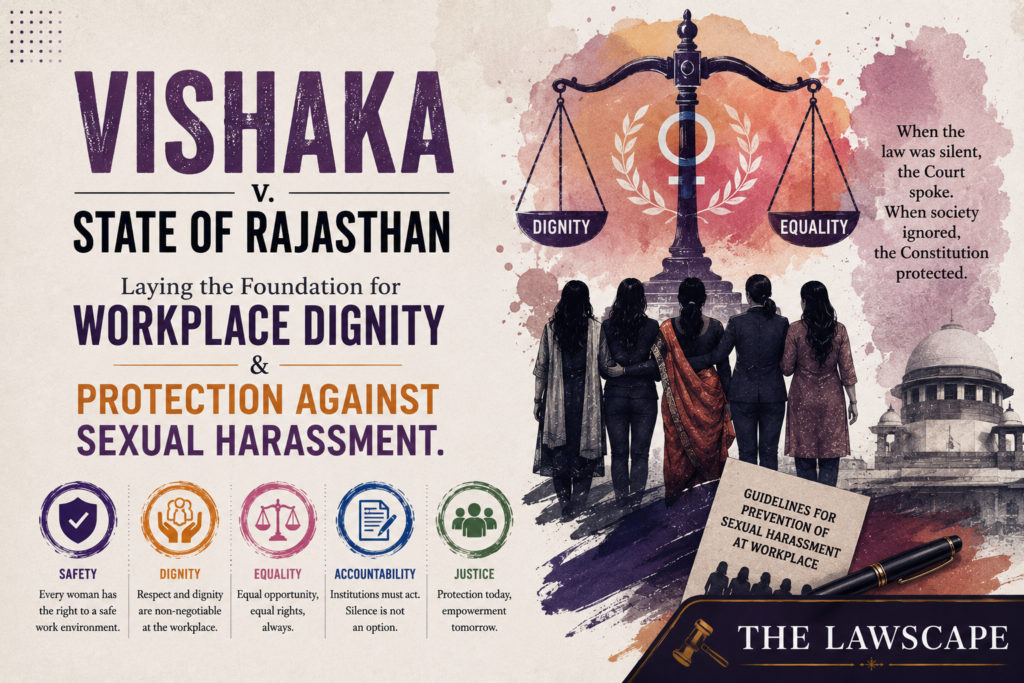
Vishaka v. State of Rajasthan: Laying the Foundation for Workplace Dignity and Protection Against Sexual Harassment

Vishaka v. State of Rajasthan: Laying the Foundation for Workplace Dignity and Protection Against Sexual Harassment Author: Anjel Shristi MinzStudent, Viniba Bhave University, University Law College, Hazaribagh, Jharkhand 💡 3 Quick Takeaways 1. Vishaka v. State of Rajasthan recognised sexual harassment at the workplace as a violation of women’s fundamental rights under Articles 14, 15,

Vishaka v. State of Rajasthan: Laying the Foundation for Workplace Dignity and Protection Against Sexual Harassment Read More »

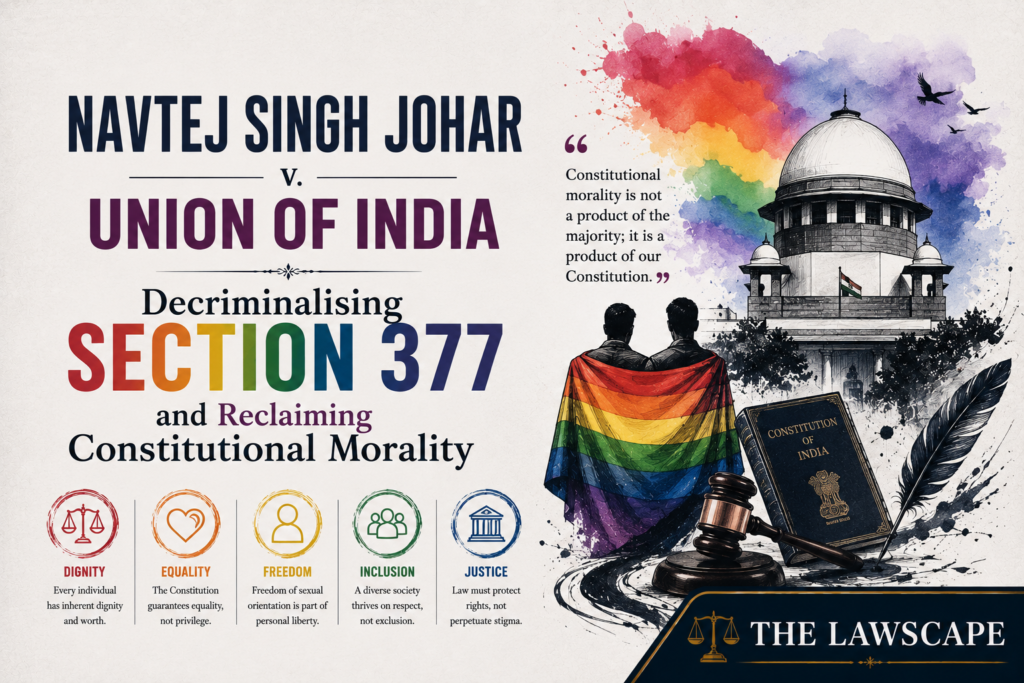
Navtej Singh Johar v. Union of India: Decriminalising Section 377 and Reclaiming Constitutional Morality

Navtej Singh Johar v. Union of India: Decriminalising Section 377 and Reclaiming Constitutional Morality Author: Mallika KumariStudent, Amity University Patna ———————————————————————– 💡 3 Quick Takeaways 1. Navtej Singh Johar v. Union of India marked a constitutional turning point by partially striking down Section 377 of the Indian Penal Code and decriminalising consensual same-sex relations between

Navtej Singh Johar v. Union of India: Decriminalising Section 377 and Reclaiming Constitutional Morality Read More »

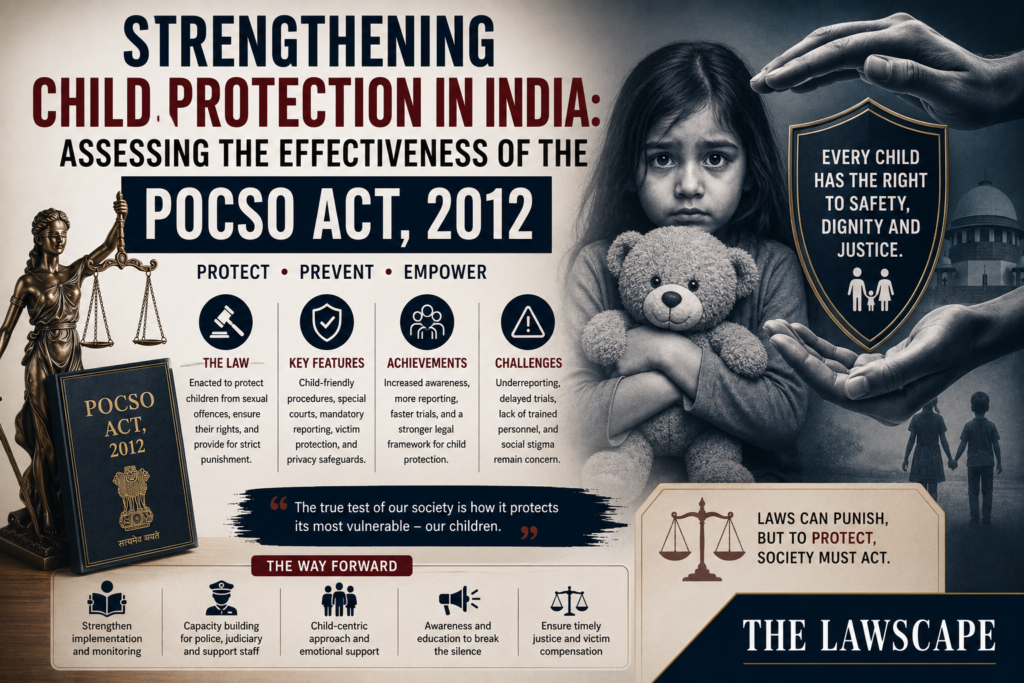
Strengthening Child Protection in India: Assessing the Effectiveness of the POCSO Act, 2012

Strengthening Child Protection in India: Assessing the Effectiveness of the POCSO Act, 2012 Author: Devika KrishnaStudent, SREE NARAYANA GURU college of Legal studies ———————————————————————————————————- 💡 3 Quick Takeaways Introduction “We owe our children a life free of violence and fear.” — Nelson Mandela Children constitute one of the most vulnerable sections of society and require

Strengthening Child Protection in India: Assessing the Effectiveness of the POCSO Act, 2012 Read More »

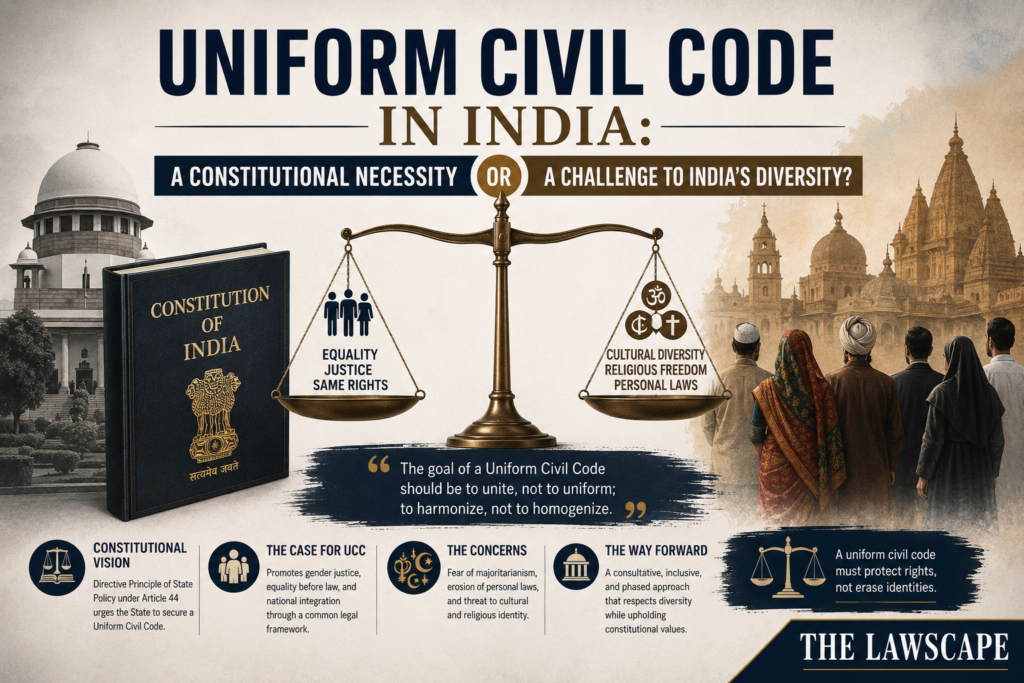
Uniform Civil Code in India: A Constitutional Necessity or a Challenge to India’s Diversity?

Uniform Civil Code in India: A Constitutional Necessity or a Challenge to India’s Diversity? Author: Sanskriti MishraStudent, NIMS School of Law, NIMS University, Jaipur ——————————————————————————————————— 💡 3 Quick Takeaways Introduction The debate surrounding the Uniform Civil Code (UCC) remains one of the most contested issues in Indian constitutional discourse. Supporters argue that a common civil

Uniform Civil Code in India: A Constitutional Necessity or a Challenge to India’s Diversity? Read More »

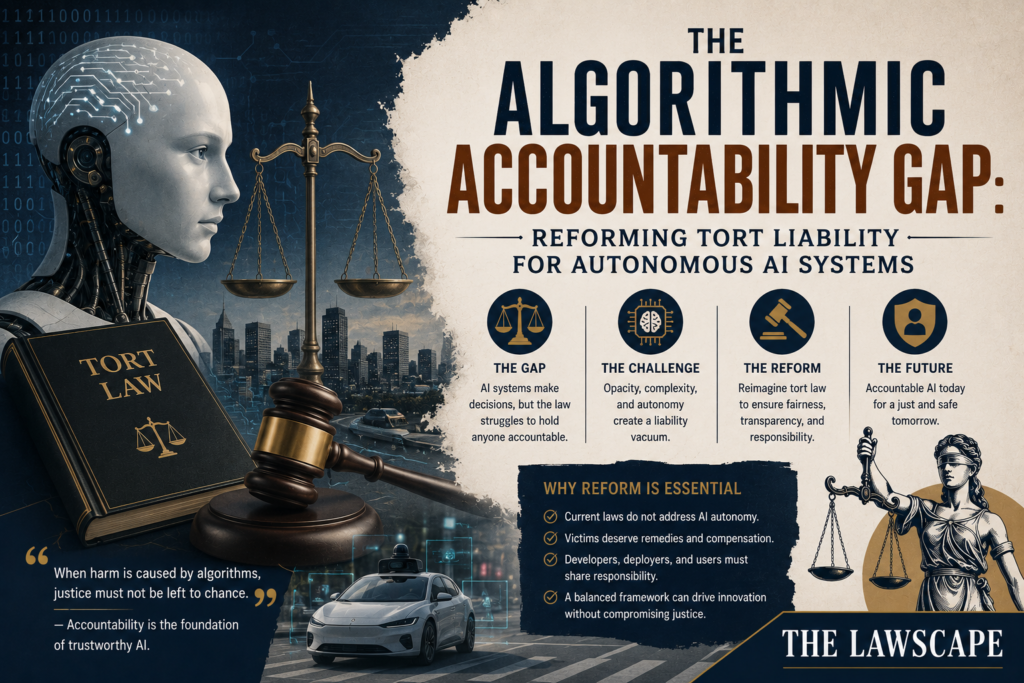
The Algorithmic Accountability Gap: Reforming Tort Liability for Autonomous AI Systems

The Algorithmic Accountability Gap: Reforming Tort Liability for Autonomous AI Systems Author: Justice BeckswhiteStudent, University of Jos ———————————————————– 💡 3 Quick Takeaways Introduction As artificial intelligence (AI) evolves from a mere assistive technology into a more autonomous decision-making system, traditional tort law faces increasing challenges. Across sectors such as healthcare, finance, transportation, and public administration,

The Algorithmic Accountability Gap: Reforming Tort Liability for Autonomous AI Systems Read More »

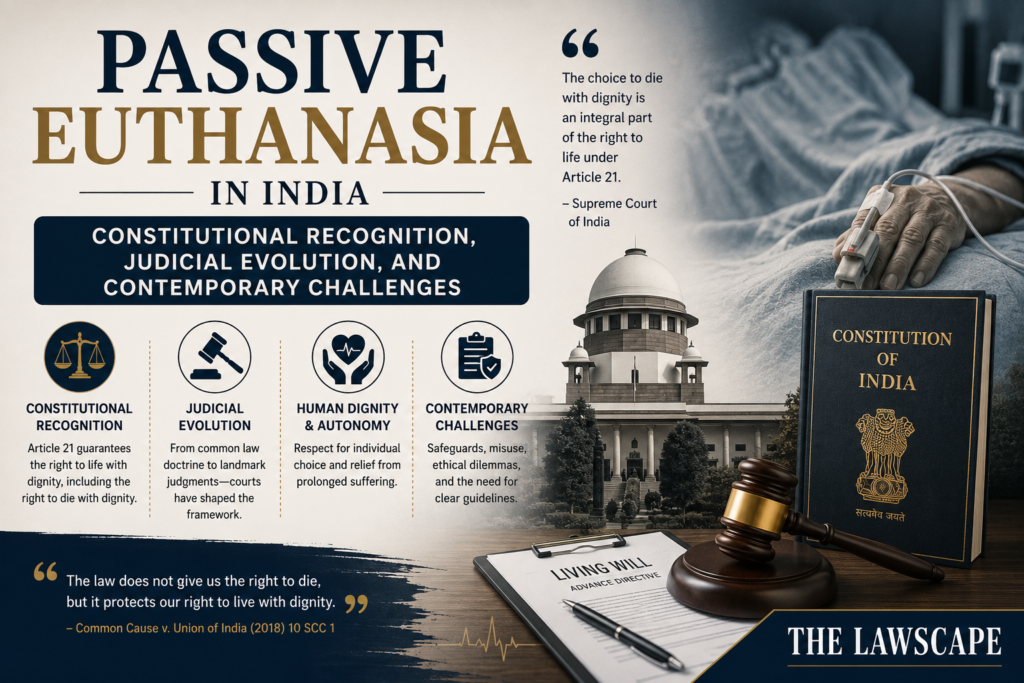
Passive Euthanasia in India: Constitutional Recognition, Judicial Evolution, and Contemporary Challenges

Passive Euthanasia in India: Constitutional Recognition, Judicial Evolution, and Contemporary Challenges Author: Jyothika K GStudent, Mar Gregorios College of Law, Thiruvananthapuram ————————————————————————————————————————- 💡 3 Quick Takeaways Introduction Passive euthanasia is one of the most debated and sensitive issues in contemporary constitutional and medical jurisprudence. The concept concerns the withdrawal or withholding of life-sustaining medical treatment

Passive Euthanasia in India: Constitutional Recognition, Judicial Evolution, and Contemporary Challenges Read More »