The Right to Be Forgotten Under Article 21 of the Indian Constitution: Privacy, Dignity, and the Limits of Digital Memory

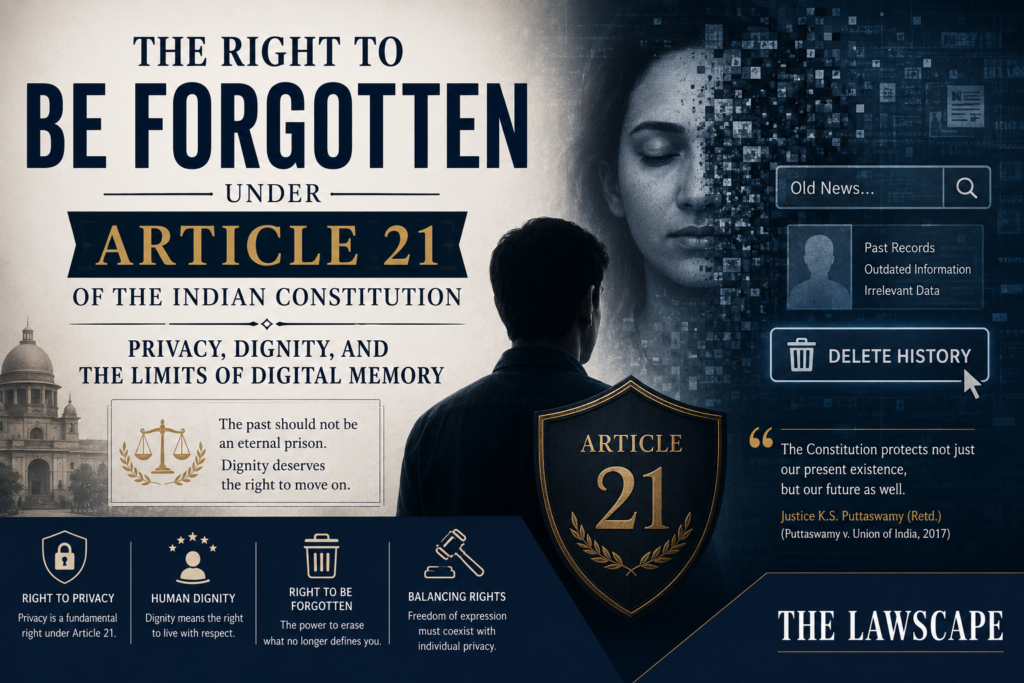
The Right to Be Forgotten Under Article 21 of the Indian Constitution: Privacy, Dignity, and the Limits of Digital Memory Author: Rupesh RangaStudent MDU Centre for Professional and Allied Studies, Gurugram —————————————————————————————– 💡 3 Quick Takeaways Introduction In the pre-digital era, human memory naturally faded with time. Personal disputes, mistakes, and unfortunate incidents gradually disappeared […]

The Right to Be Forgotten Under Article 21 of the Indian Constitution: Privacy, Dignity, and the Limits of Digital Memory Read More »

The Legality of Restaurant Service Charges in India: From Trade Custom to Consumer Rights Protection

The Legality of Restaurant Service Charges in India: From Trade Custom to Consumer Rights Protection Author: Komal Ramdayal SatweStudent, Indian Institute Of Management Rohtak, Nagpur —————————————————————————————————————- 💡 3 Quick Takeaways Introduction The relationship between pricing and consumer consent has long occupied a central position within consumer protection law. In India’s hospitality sector, one of the

The Legality of Restaurant Service Charges in India: From Trade Custom to Consumer Rights Protection Read More »

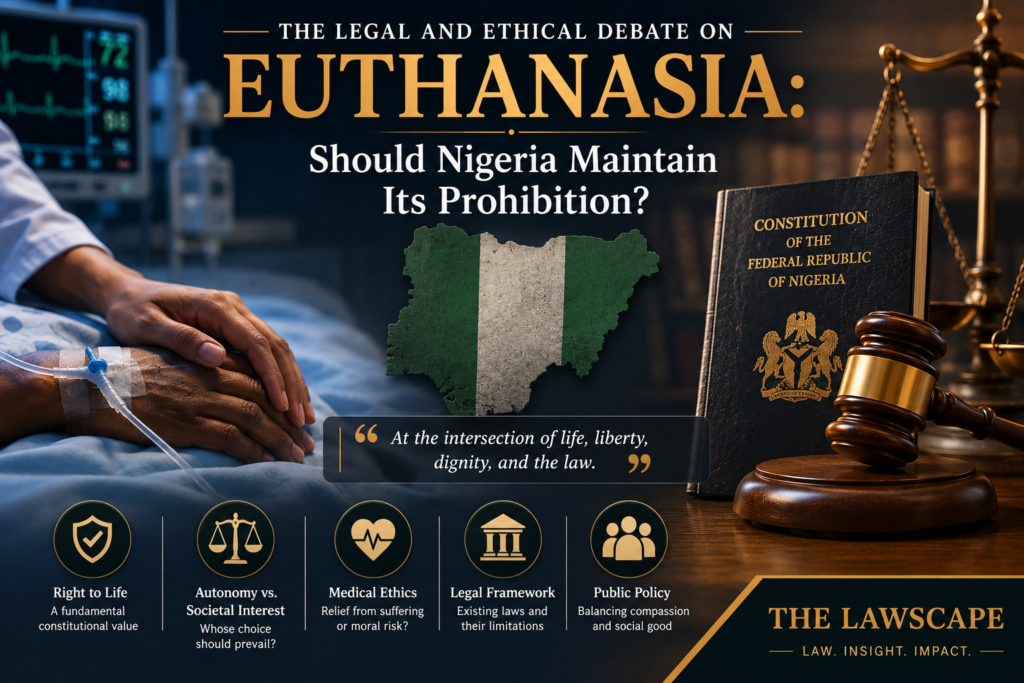
The Legal and Ethical Debate on Euthanasia: Should Nigeria Maintain Its Prohibition?

The Legal and Ethical Debate on Euthanasia: Should Nigeria Maintain Its Prohibition? Author: Dondavis ChisomStudent, Nnamdi Azikiwe University (Akwa, Nigeria) ———————————————————————————————- 💡 3 Quick Takeaways Introduction The question of whether individuals possess a legal “right to die” through euthanasia or physician-assisted suicide remains one of the most difficult issues in contemporary legal and ethical discourse.

The Legal and Ethical Debate on Euthanasia: Should Nigeria Maintain Its Prohibition? Read More »

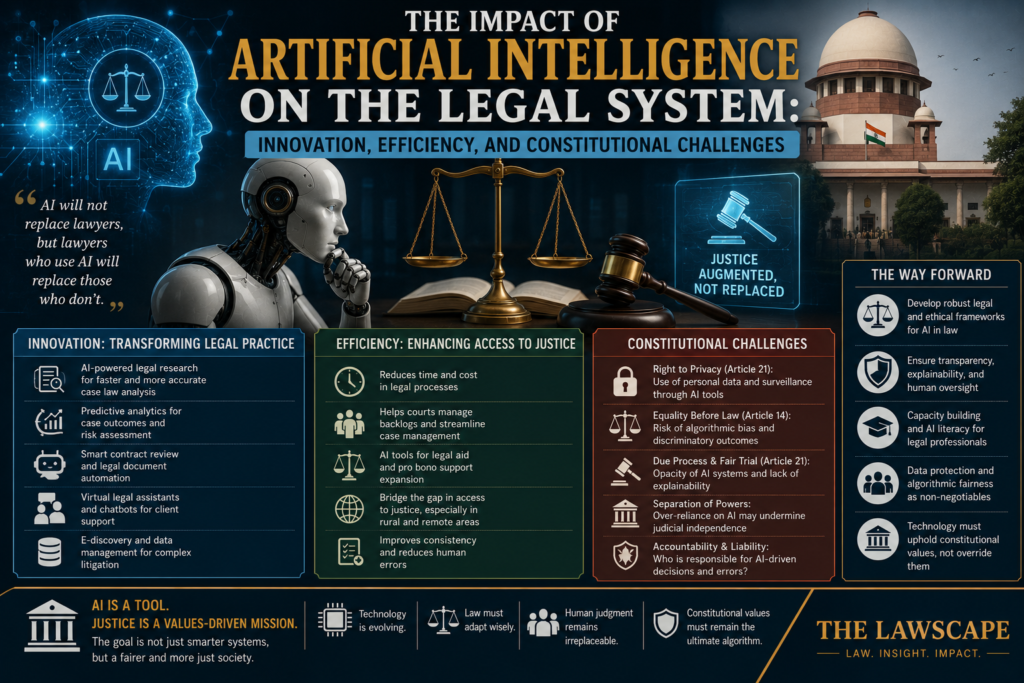
The Impact of Artificial Intelligence on the Legal System: Innovation, Efficiency, and Constitutional Challenges

The Impact of Artificial Intelligence on the Legal System: Innovation, Efficiency, and Constitutional Challenges Author: Nandani SinghStudent, LLOYD LAW COLLEGE, GREATER NOIDACo-Author: Shivam KumarStudent, Lloyd law college —————————————————————————————— 💡 3 Quick Takeaways Introduction Artificial Intelligence (AI) is among the most transformative technologies of the twenty-first century, reshaping industries across healthcare, finance, education, governance, transportation, and

The Impact of Artificial Intelligence on the Legal System: Innovation, Efficiency, and Constitutional Challenges Read More »

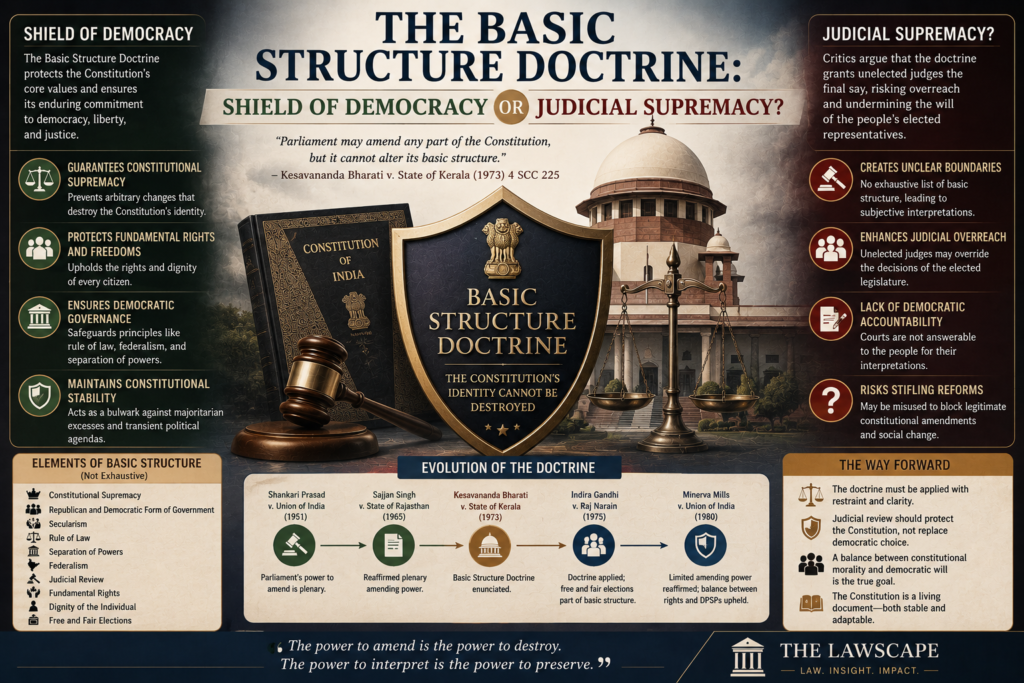
The Basic Structure Doctrine: Shield of Democracy or Judicial Supremacy?

The Basic Structure Doctrine: Shield of Democracy or Judicial Supremacy? Author: Avni SoodStudent, Army Institute of Law, Mohali, Sec 68 —————————————————————————————————— 💡 3 Quick Takeaways Introduction One of the most enduring questions in constitutional law concerns the scope of Parliament’s power to amend the Constitution. Can an elected majority alter every constitutional principle, including democracy,

The Basic Structure Doctrine: Shield of Democracy or Judicial Supremacy? Read More »

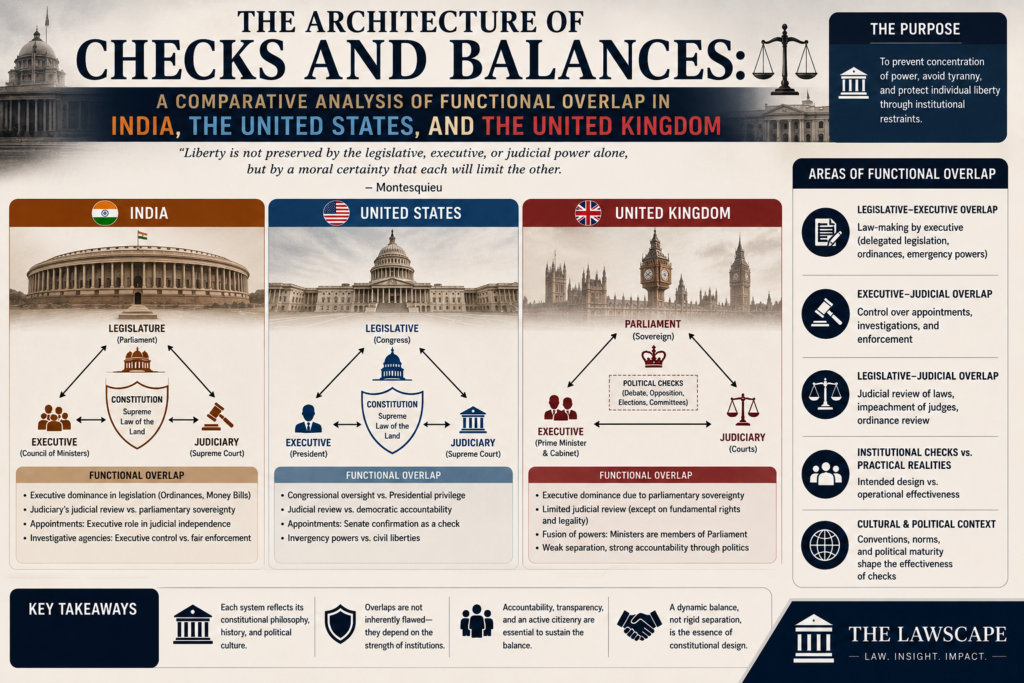
The Architecture of Checks and Balances: A Comparative Analysis of Functional Overlap in India, the United States, and the United Kingdom

The Architecture of Checks and Balances: A Comparative Analysis of Functional Overlap in India, the United States, and the United Kingdom Author: Namanroop KaurStudent, Khalsa College Of Law, AmritsarCo-Author: Iqroop KaurStudent, Guru Nanak Dev University —————————————————————————————————- 💡 3 Quick Takeaways Introduction The doctrine of checks and balances is designed to ensure that different organs of

The Architecture of Checks and Balances: A Comparative Analysis of Functional Overlap in India, the United States, and the United Kingdom Read More »

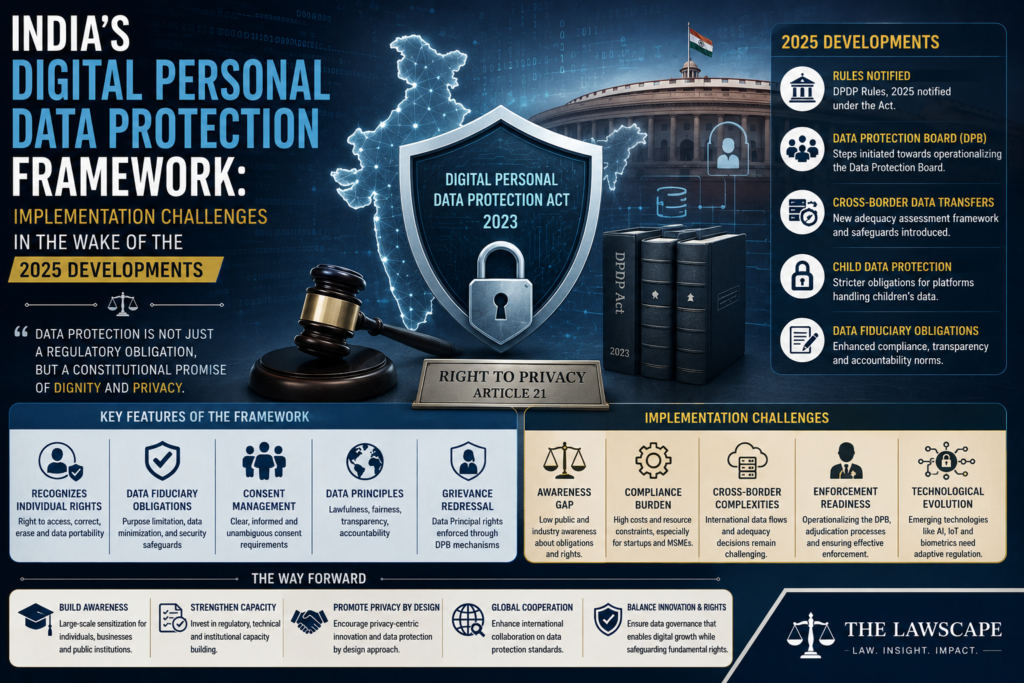
India’s Digital Personal Data Protection Framework: Implementation Challenges in the Wake of the 2025 Developments

India’s Digital Personal Data Protection Framework: Implementation Challenges in the Wake of the 2025 Developments Author: Ayushi RathoreStudent, acropolis institue of law indore ———————————————————————————————- 💡 3 Quick Takeaways Introduction India is undergoing a rapid digital transformation that has fundamentally altered the way individuals communicate, conduct financial transactions, access public services, and participate in economic activity.

India’s Digital Personal Data Protection Framework: Implementation Challenges in the Wake of the 2025 Developments Read More »

Rising Divorce Cases in India: A Socio-Legal Analysis

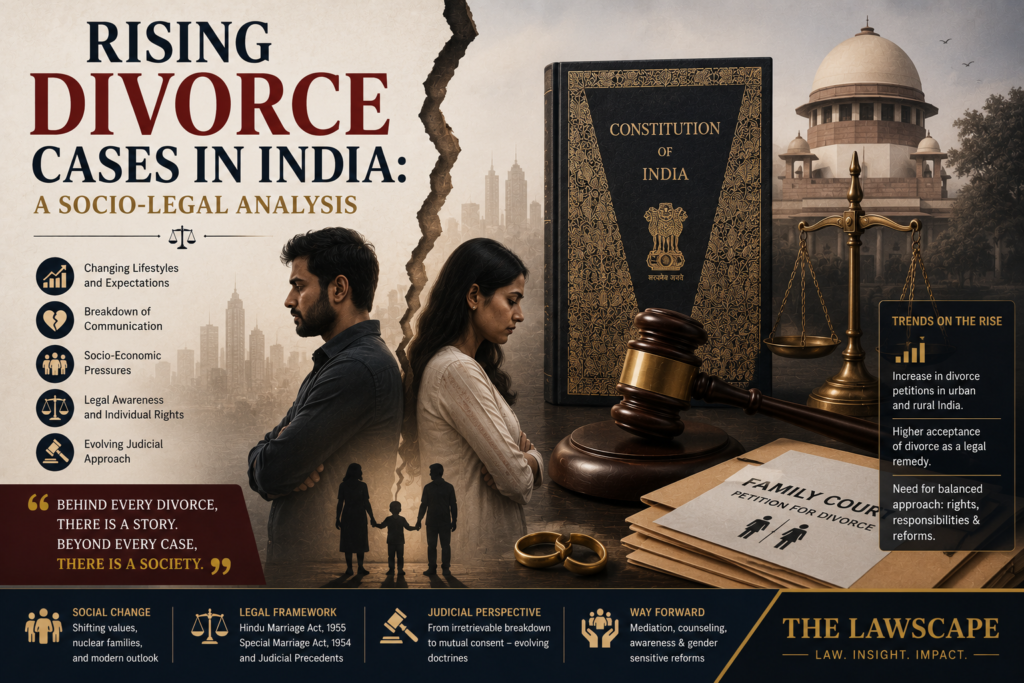
Rising Divorce Cases in India: A Socio-Legal Analysis Author: Devangana MaheshStudent, Mar Gregorios College of Law, Thiruvananthapuram ———————————————————————————————————- 💡 3 Quick Takeaways Introduction Marriage in India has traditionally been regarded not merely as a contractual relationship but as a sacred institution deeply rooted in religion, culture, and social norms. Divorce, by contrast, was historically discouraged

Rising Divorce Cases in India: A Socio-Legal Analysis Read More »

Rights of LGBTQ+ Communities Under Indian Law: Equality Beyond Identity

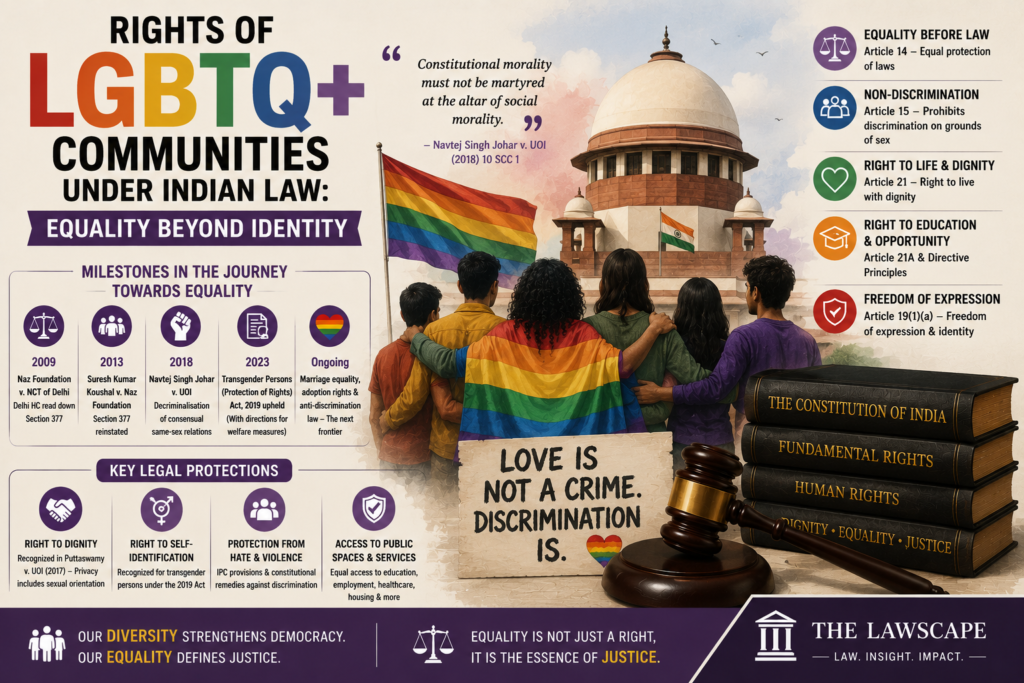
Rights of LGBTQ+ Communities Under Indian Law: Equality Beyond Identity Author: Divyanshi ShakyaStudent, Shri Ramswaroop Memorial University ————————————————————————————- 💡 3 Quick Takeaways Introduction “The family, marriage, procreation and sexual orientation are all integral to dignity of an individual.” — Dr. D.Y. Chandrachud, Former Chief Justice of India Equality, freedom, and dignity are among the most

Rights of LGBTQ+ Communities Under Indian Law: Equality Beyond Identity Read More »

Policing by Algorithm: Bias, Accountability, and the Crisis of Equal Justice

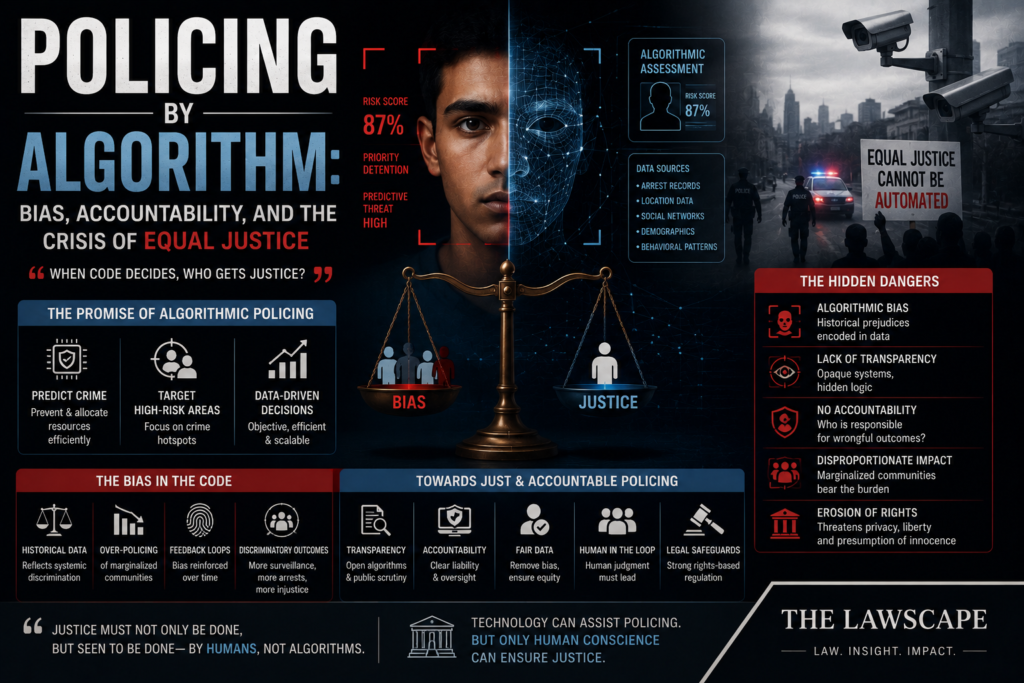
Policing by Algorithm: Bias, Accountability, and the Crisis of Equal Justice Author: Priyam PratikStudent, Faculty of Law, University of Allahabad ————————————————————————————— 💡 3 Quick Takeaways Introduction Predictive policing has become an increasingly significant feature of modern law enforcement. Across numerous jurisdictions, machine-learning tools are now used to determine patrol deployment, assess pretrial detention risks, and

Policing by Algorithm: Bias, Accountability, and the Crisis of Equal Justice Read More »