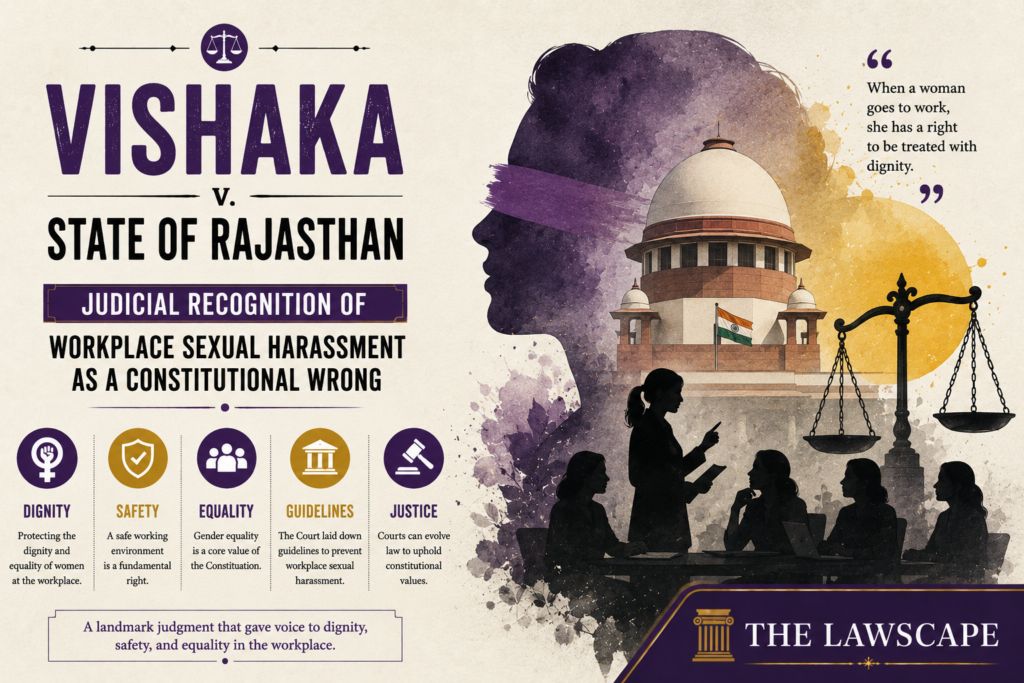
Vishaka v. State of Rajasthan: Judicial Recognition of Workplace Sexual Harassment as a Constitutional Wrong

Vishaka v. State of Rajasthan: Judicial Recognition of Workplace Sexual Harassment as a Constitutional Wrong Author: Aditi Singh PariharStudent, Shambhunath Institute of Law, Prayagraj ————————————————————————————– 💡 3 Quick Takeaways 1. Vishaka v. State of Rajasthan recognised workplace sexual harassment as a violation of women’s fundamental rights under Articles 14, 15, 19, and 21 of the
Vishaka v. State of Rajasthan: Judicial Recognition of Workplace Sexual Harassment as a Constitutional Wrong Read More »

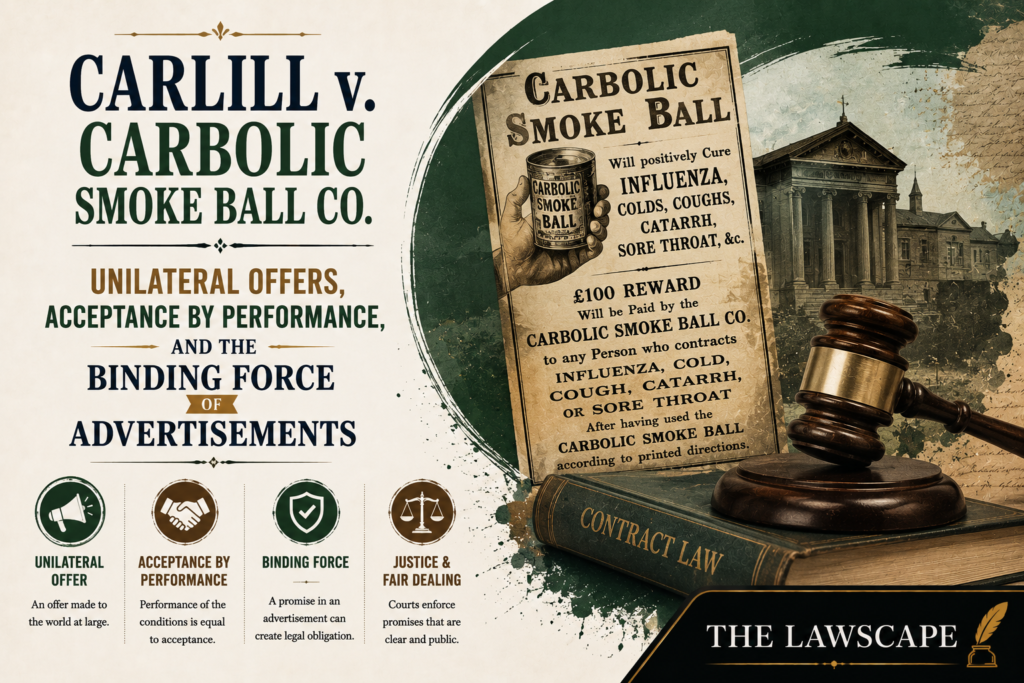
Carlill v. Carbolic Smoke Ball Co.: Unilateral Offers, Acceptance by Performance, and the Binding Force of Advertisements

Carlill v. Carbolic Smoke Ball Co.: Unilateral Offers, Acceptance by Performance, and the Binding Force of Advertisements Author: Amandeep KaurStudent, University of Nicosia, Nicosia ———————————————————————————— 💡 3 Quick Takeaways 1. Carlill v. Carbolic Smoke Ball Co. is a landmark contract law case establishing that an advertisement can amount to a binding unilateral offer when it

Carlill v. Carbolic Smoke Ball Co.: Unilateral Offers, Acceptance by Performance, and the Binding Force of Advertisements Read More »

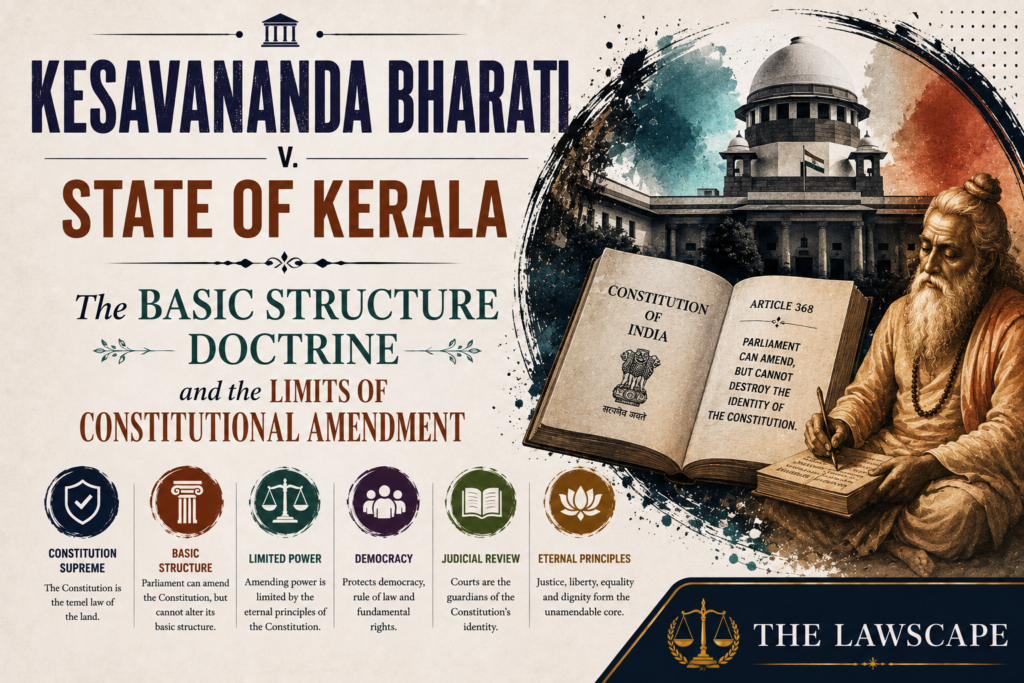
Kesavananda Bharati v. State of Kerala: The Basic Structure Doctrine and the Limits of Constitutional Amendment

Kesavananda Bharati v. State of Kerala: The Basic Structure Doctrine and the Limits of Constitutional Amendment Author: Natasha NayakStudent, KIIT School Of Law, Bhubaneswar —————————————————————————————— 💡 3 Quick Takeaways 1. Kesavananda Bharati v. State of Kerala is the landmark judgment in which the Supreme Court evolved the Basic Structure Doctrine to limit Parliament’s amending power

Kesavananda Bharati v. State of Kerala: The Basic Structure Doctrine and the Limits of Constitutional Amendment Read More »

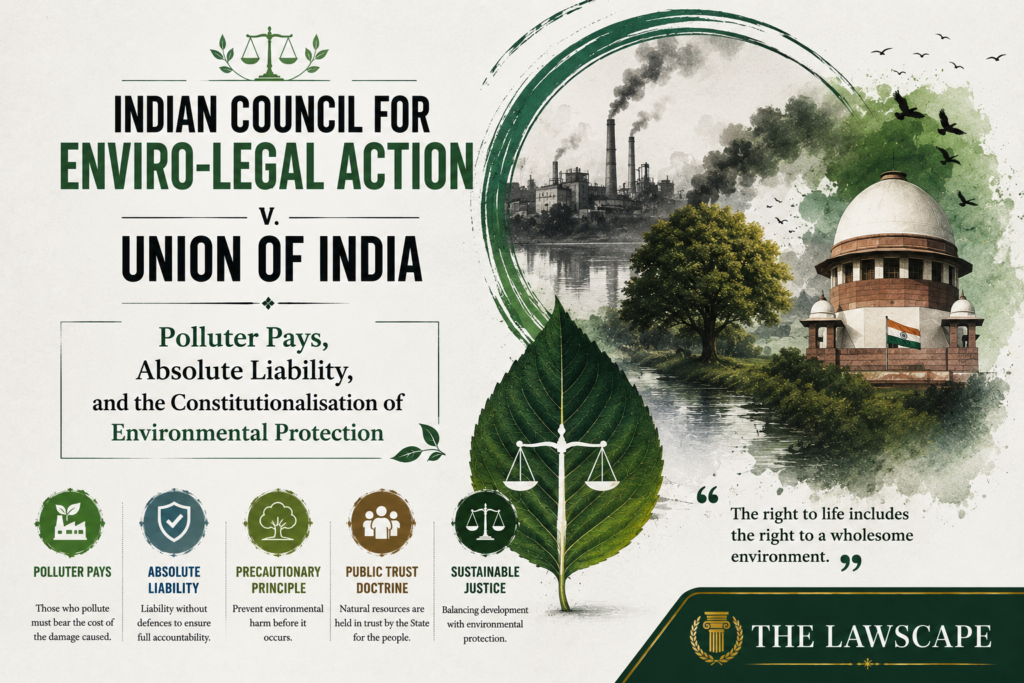
Indian Council for Enviro-Legal Action v. Union of India: Polluter Pays, Absolute Liability, and the Constitutionalisation of Environmental Protection

Indian Council for Enviro-Legal Action v. Union of India: Polluter Pays, Absolute Liability, and the Constitutionalisation of Environmental Protection Author: Aayushi ChaudharyStudent, Asian Law College, Noida ————————————————————— 💡 3 Quick Takeaways 1. Indian Council for Enviro-Legal Action v. Union of India is a landmark environmental law judgment in which the Supreme Court firmly applied the

Indian Council for Enviro-Legal Action v. Union of India: Polluter Pays, Absolute Liability, and the Constitutionalisation of Environmental Protection Read More »

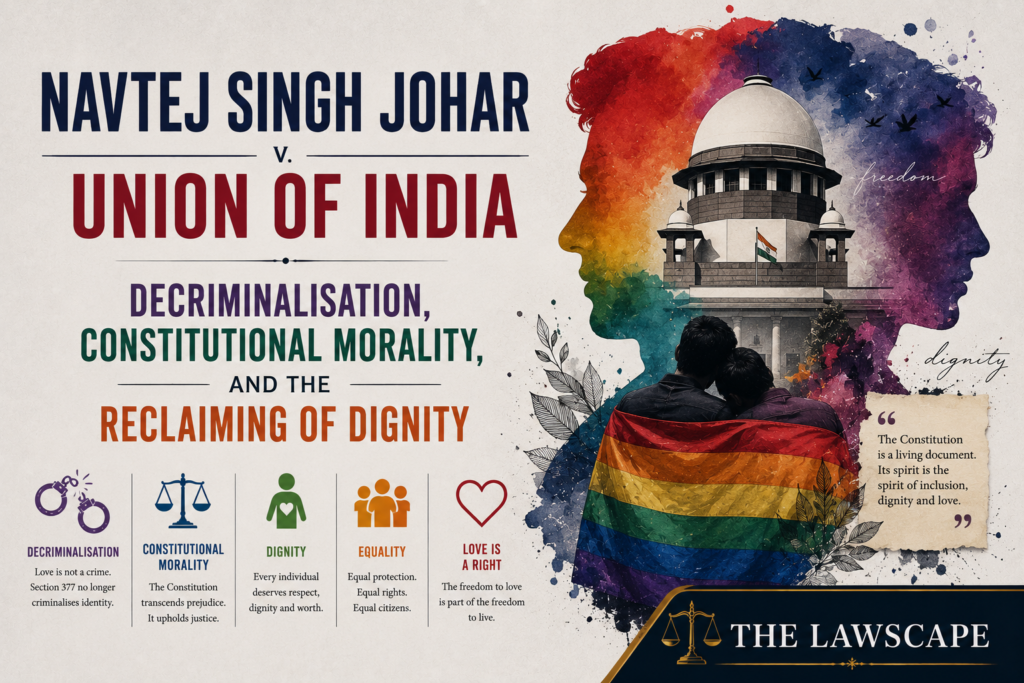
Navtej Singh Johar v. Union of India: Decriminalisation, Constitutional Morality, and the Reclaiming of Dignity

Navtej Singh Johar v. Union of India: Decriminalisation, Constitutional Morality, and the Reclaiming of Dignity Author: Hitesh BhootraStudent, Aishwarya College of Education (Law) —————————————————————————————— 💡 3 Quick Takeaways 1. Navtej Singh Johar v. Union of India partially struck down Section 377 of the Indian Penal Code to decriminalise consensual same-sex relations between adults.2. The Supreme

Navtej Singh Johar v. Union of India: Decriminalisation, Constitutional Morality, and the Reclaiming of Dignity Read More »

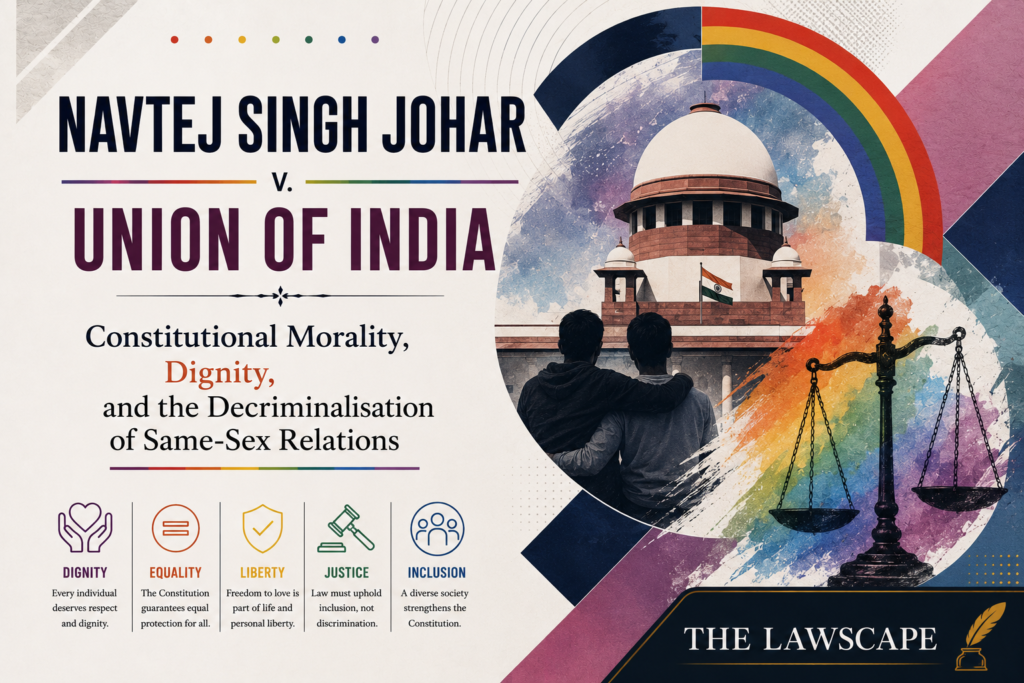
Navtej Singh Johar v. Union of India: Constitutional Morality, Dignity, and the Decriminalisation of Same-Sex Relations

Navtej Singh Johar v. Union of India: Constitutional Morality, Dignity, and the Decriminalisation of Same-Sex Relations Author: Bhavya SumanStudent, Llyod law college ———————————————————– 💡 3 Quick Takeaways 1. Navtej Singh Johar v. Union of India partially struck down Section 377 of the Indian Penal Code by decriminalising consensual same-sex relations between adults in private.2. The

Navtej Singh Johar v. Union of India: Constitutional Morality, Dignity, and the Decriminalisation of Same-Sex Relations Read More »

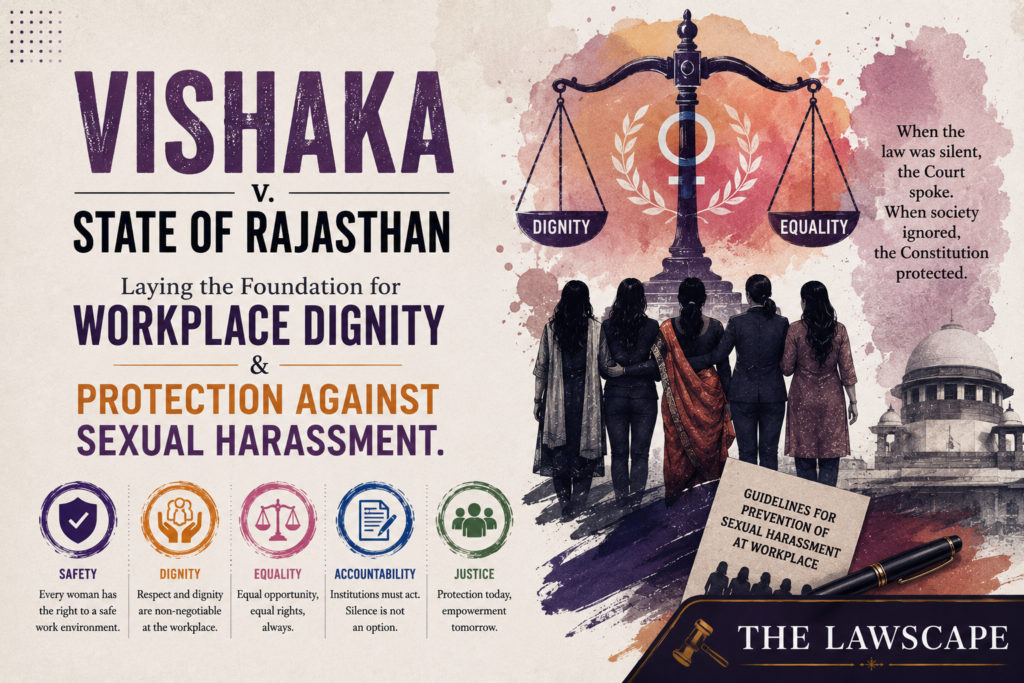
Vishaka v. State of Rajasthan: Laying the Foundation for Workplace Dignity and Protection Against Sexual Harassment

Vishaka v. State of Rajasthan: Laying the Foundation for Workplace Dignity and Protection Against Sexual Harassment Author: Anjel Shristi MinzStudent, Viniba Bhave University, University Law College, Hazaribagh, Jharkhand 💡 3 Quick Takeaways 1. Vishaka v. State of Rajasthan recognised sexual harassment at the workplace as a violation of women’s fundamental rights under Articles 14, 15,

Vishaka v. State of Rajasthan: Laying the Foundation for Workplace Dignity and Protection Against Sexual Harassment Read More »

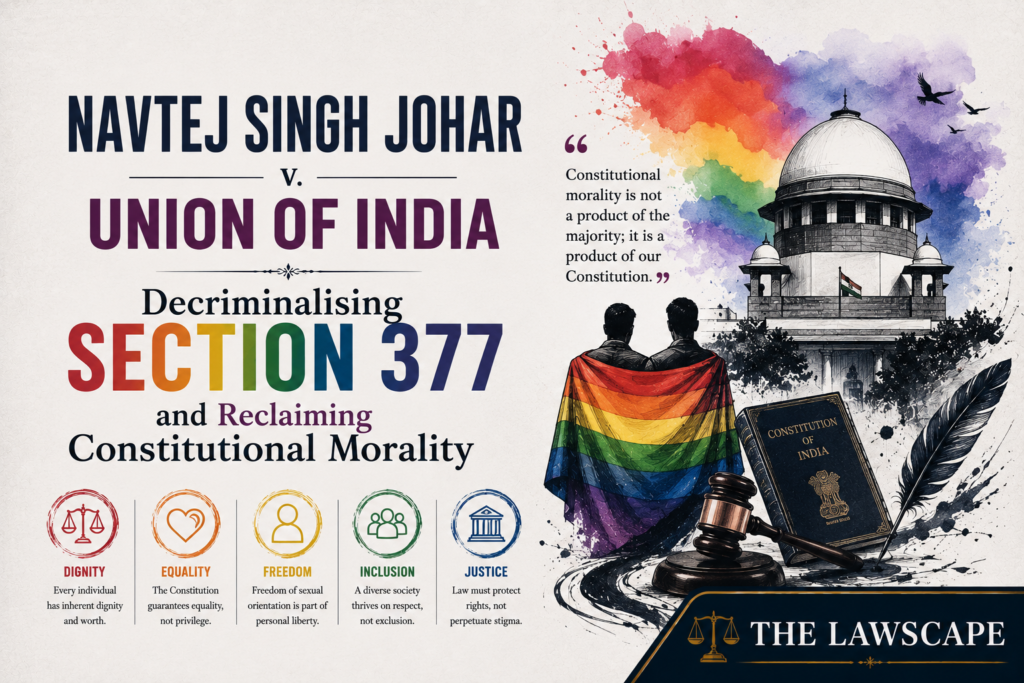
Navtej Singh Johar v. Union of India: Decriminalising Section 377 and Reclaiming Constitutional Morality

Navtej Singh Johar v. Union of India: Decriminalising Section 377 and Reclaiming Constitutional Morality Author: Mallika KumariStudent, Amity University Patna ———————————————————————– 💡 3 Quick Takeaways 1. Navtej Singh Johar v. Union of India marked a constitutional turning point by partially striking down Section 377 of the Indian Penal Code and decriminalising consensual same-sex relations between

Navtej Singh Johar v. Union of India: Decriminalising Section 377 and Reclaiming Constitutional Morality Read More »

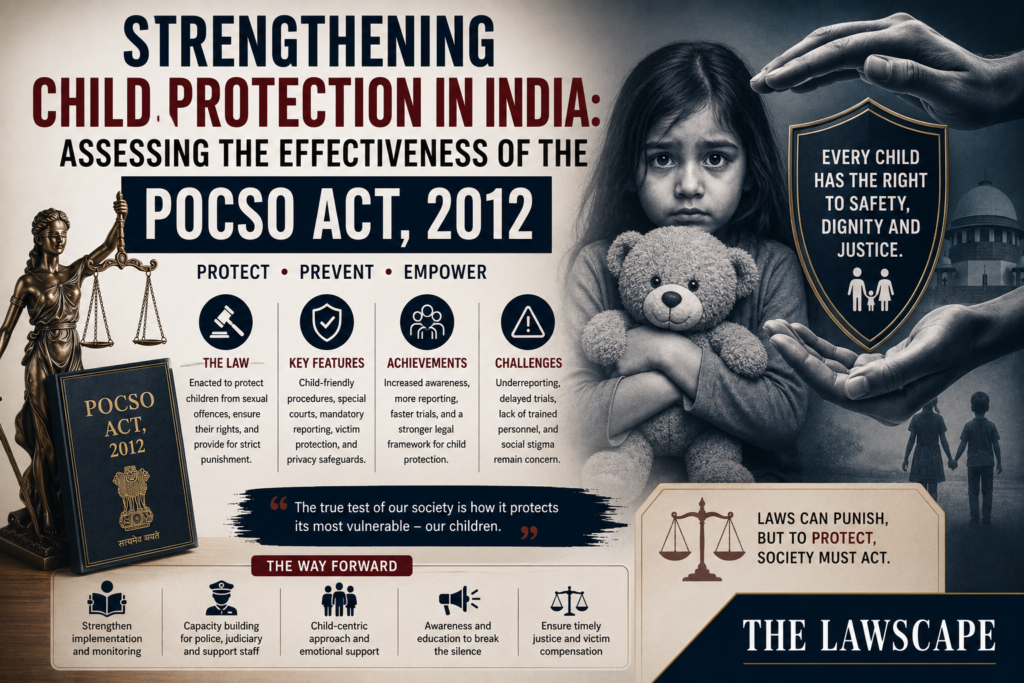
Strengthening Child Protection in India: Assessing the Effectiveness of the POCSO Act, 2012

Strengthening Child Protection in India: Assessing the Effectiveness of the POCSO Act, 2012 Author: Devika KrishnaStudent, SREE NARAYANA GURU college of Legal studies ———————————————————————————————————- 💡 3 Quick Takeaways Introduction “We owe our children a life free of violence and fear.” — Nelson Mandela Children constitute one of the most vulnerable sections of society and require

Strengthening Child Protection in India: Assessing the Effectiveness of the POCSO Act, 2012 Read More »

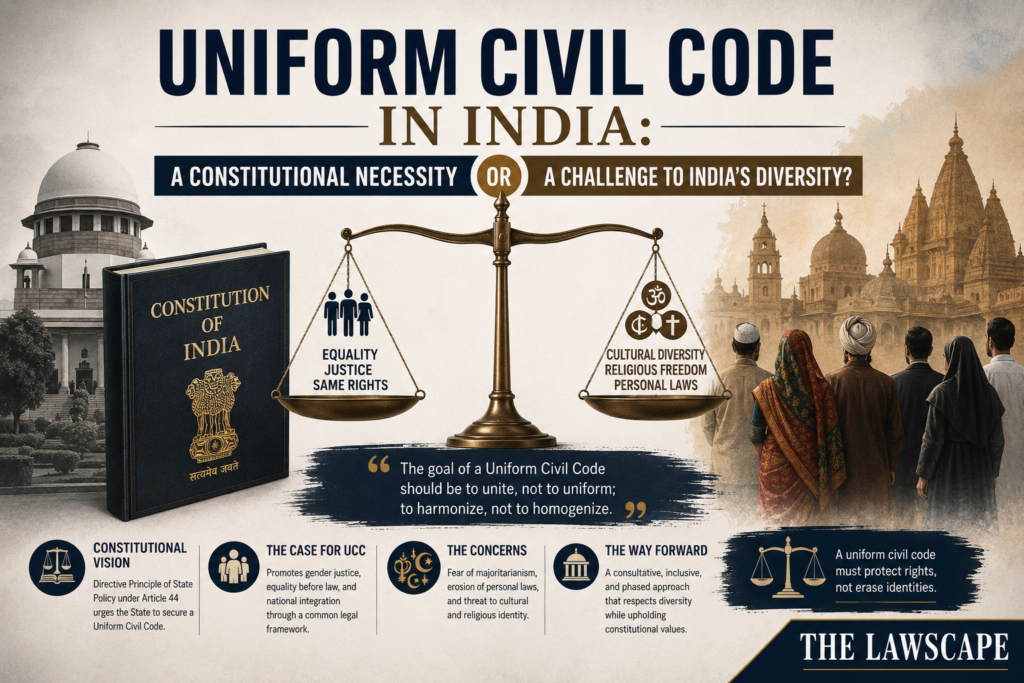
Uniform Civil Code in India: A Constitutional Necessity or a Challenge to India’s Diversity?

Uniform Civil Code in India: A Constitutional Necessity or a Challenge to India’s Diversity? Author: Sanskriti MishraStudent, NIMS School of Law, NIMS University, Jaipur ——————————————————————————————————— 💡 3 Quick Takeaways Introduction The debate surrounding the Uniform Civil Code (UCC) remains one of the most contested issues in Indian constitutional discourse. Supporters argue that a common civil

Uniform Civil Code in India: A Constitutional Necessity or a Challenge to India’s Diversity? Read More »