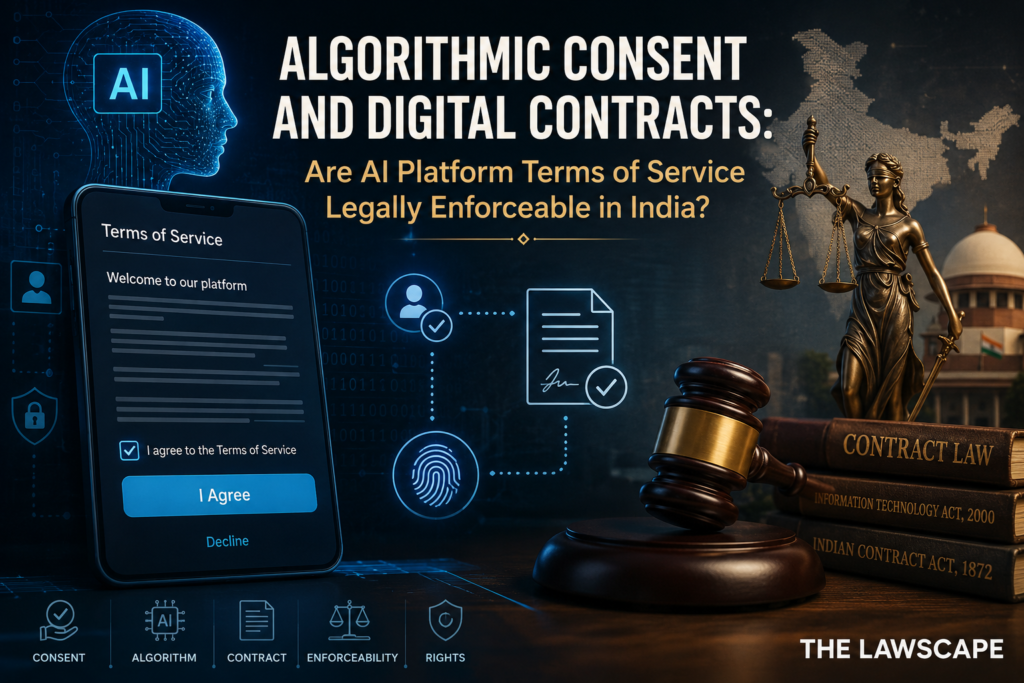
Algorithmic Consent and Digital Contracts: Are AI Platform Terms of Service Legally Enforceable in India?

Algorithmic Consent and Digital Contracts: Are AI Platform Terms of Service Legally Enforceable in India? Author: Shravani BhanuseCo-Author: Shrushti BhaltadakStudent, Maharashtra National Law University, Mumbai ———————————————————————————————————————– 💡 3 Quick Takeaways 1. AI platforms increasingly rely on broad Terms of Service to justify new forms of data use that users neither expected nor expressly consented to.
Algorithmic Consent and Digital Contracts: Are AI Platform Terms of Service Legally Enforceable in India? Read More »

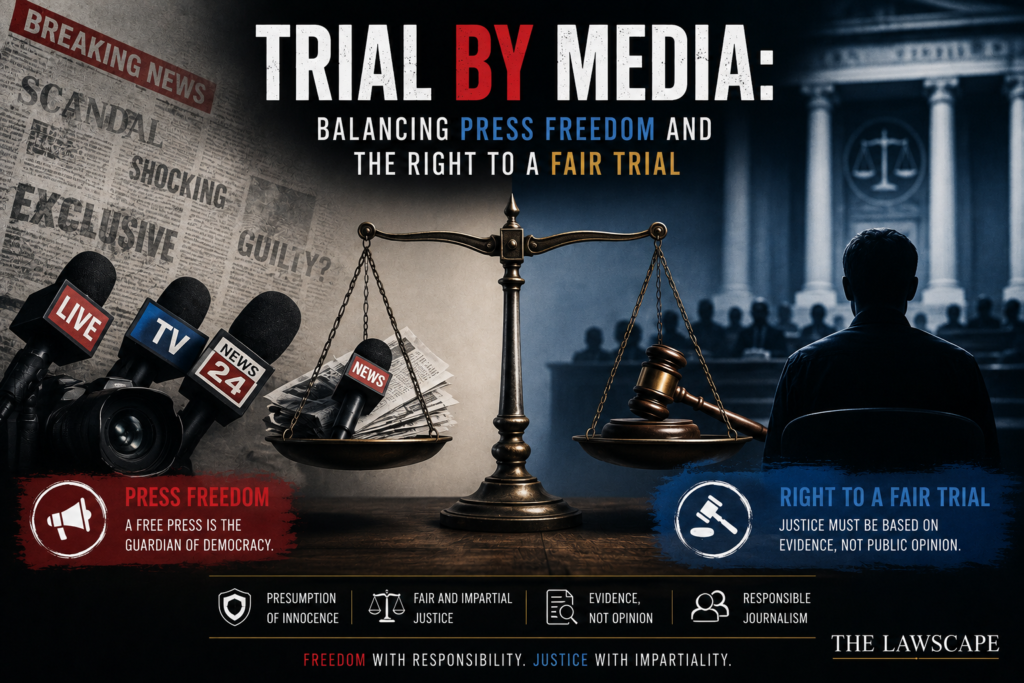
Trial by Media: Balancing Press Freedom and the Right to a Fair Trial

Trial by Media: Balancing Press Freedom and the Right to a Fair Trial Author: Simran SinghStudent, Bharati Vidyapeeth, New law college, Pune ——————————————————————————————————- 💡 3 Quick Takeaways 1. Trial by media threatens the constitutional principle that every accused person is presumed innocent until proven guilty.2. Freedom of the press under Article 19(1)(a) must be balanced

Trial by Media: Balancing Press Freedom and the Right to a Fair Trial Read More »

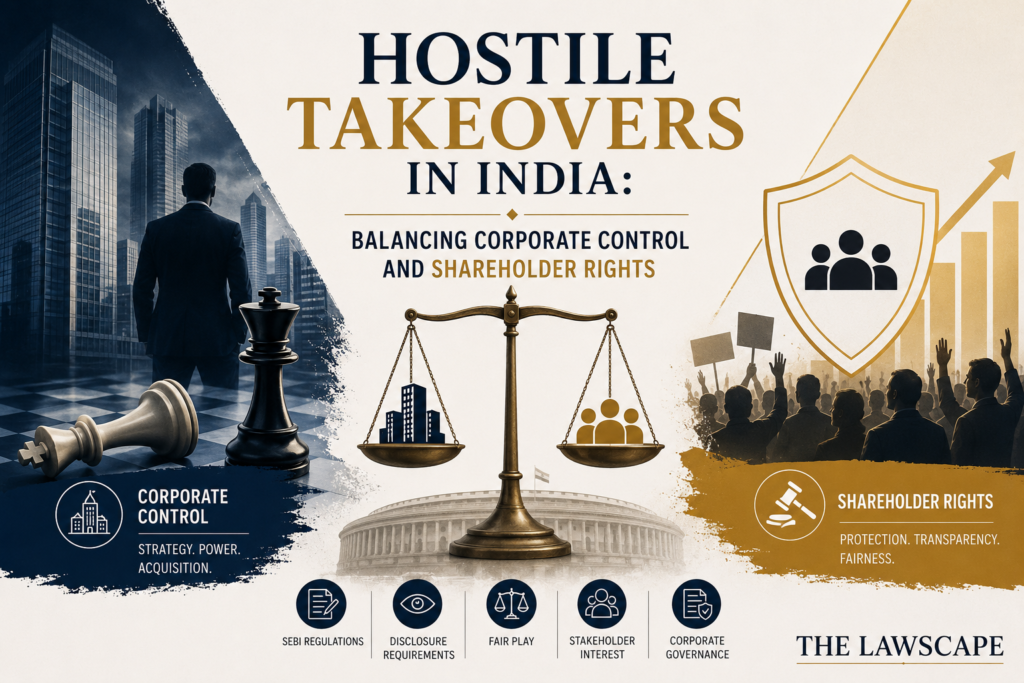
Hostile Takeovers in India: Balancing Corporate Control and Shareholder Rights

Hostile Takeovers in India: Balancing Corporate Control and Shareholder Rights Author: Aafreen KamilStudent, Andaman Law College, Sri Vijaya Puram ——————————————————————————————————— 💡 3 Quick Takeaways 1. Hostile takeovers remain uncommon in India due to promoter-driven ownership structures, regulatory safeguards, and market realities.2. The SEBI Takeover Regulations, 2011 provide the principal legal framework governing substantial acquisitions and

Hostile Takeovers in India: Balancing Corporate Control and Shareholder Rights Read More »

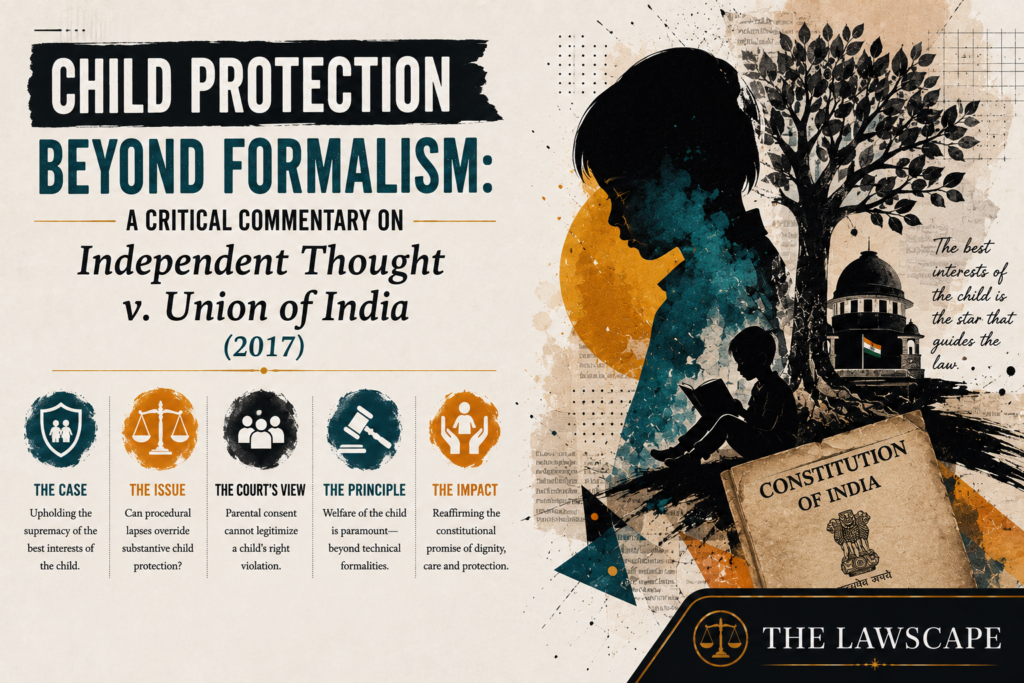
Child Protection Beyond Formalism: A Critical Commentary on Independent Thought v. Union of India (2017)

Child Protection Beyond Formalism: A Critical Commentary on Independent Thought v. Union of India (2017) Author: Sanskriti MishraStudent, NIMS School of Law, NIMS University, Jaipur ———————————————————————————- 💡 3 Quick Takeaways 1. Independent Thought v. Union of India removed the marital rape exception for wives between fifteen and eighteen years of age by reading down Exception

Child Protection Beyond Formalism: A Critical Commentary on Independent Thought v. Union of India (2017) Read More »

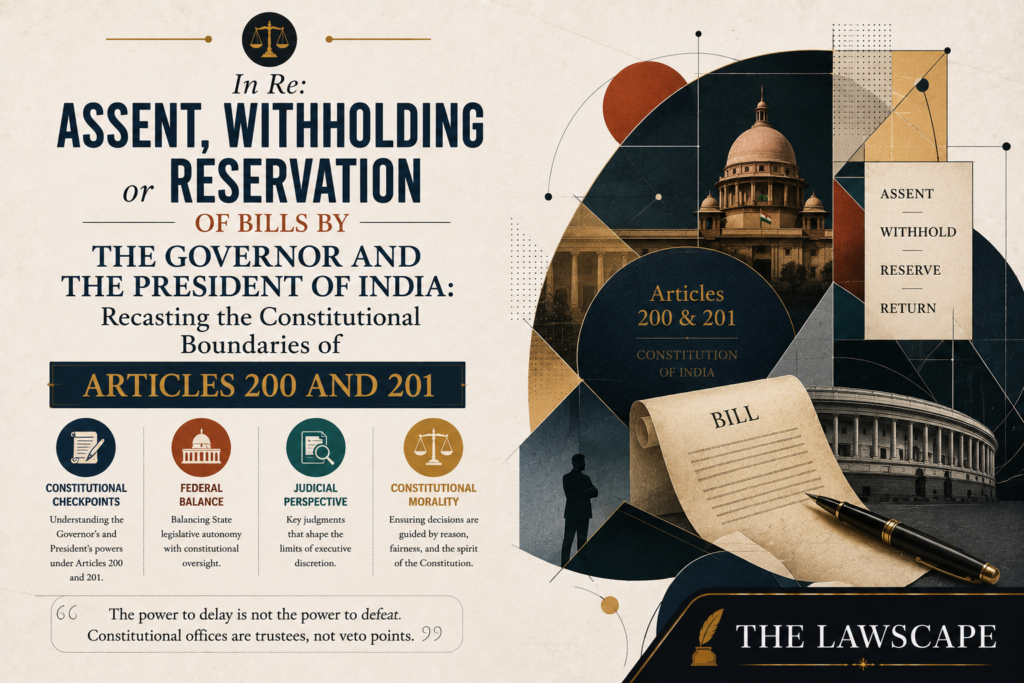
In Re: Assent, Withholding or Reservation of Bills by the Governor and the President of India: Recasting the Constitutional Boundaries of Articles 200 and 201

In Re: Assent, Withholding or Reservation of Bills by the Governor and the President of India: Recasting the Constitutional Boundaries of Articles 200 and 201 Author: Srishti singhStudent, Gujarat national law University, silvassa ——————————————————————————————- 💡 3 Quick Takeaways 1. The Supreme Court’s advisory opinion in In Re: Assent, Withholding or Reservation of Bills by the

In Re: Assent, Withholding or Reservation of Bills by the Governor and the President of India: Recasting the Constitutional Boundaries of Articles 200 and 201 Read More »

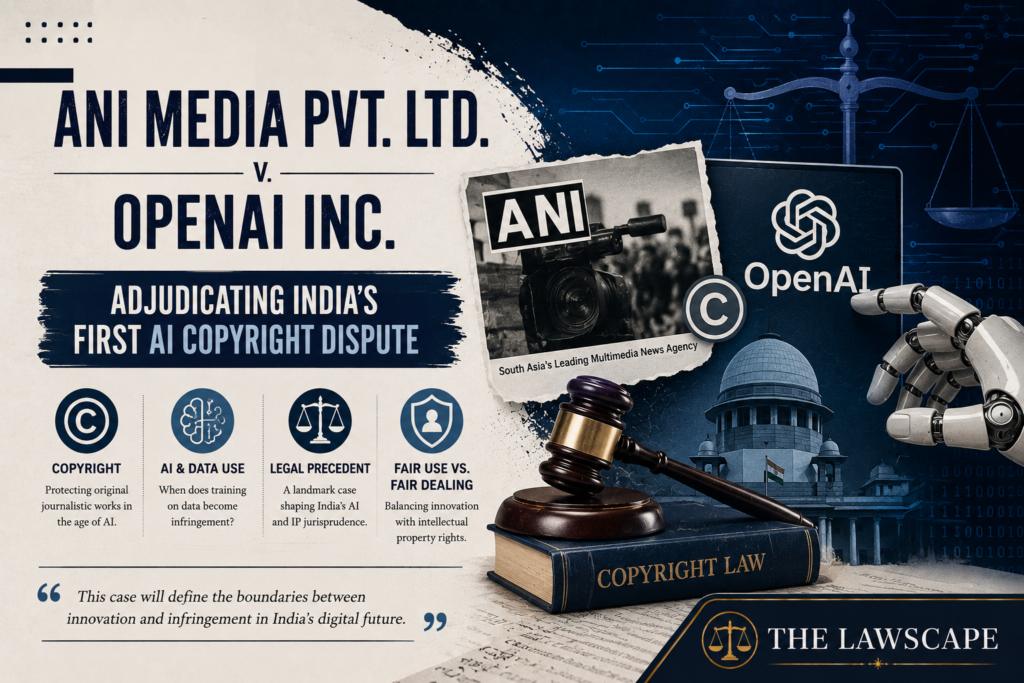
ANI Media Pvt. Ltd. v. OpenAI Inc.: Adjudicating India’s First AI Copyright Dispute

ANI Media Pvt. Ltd. v. OpenAI Inc.: Adjudicating India’s First AI Copyright Dispute Author: Nikhil SainiStudent, Manipal University Jaipur —————————————————————————————— 💡 3 Quick Takeaways 1. ANI Media Pvt. Ltd. v. OpenAI Inc. is India’s first major copyright dispute to directly examine whether AI training on copyrighted journalistic content is permissible under the Copyright Act, 1957.2.

ANI Media Pvt. Ltd. v. OpenAI Inc.: Adjudicating India’s First AI Copyright Dispute Read More »

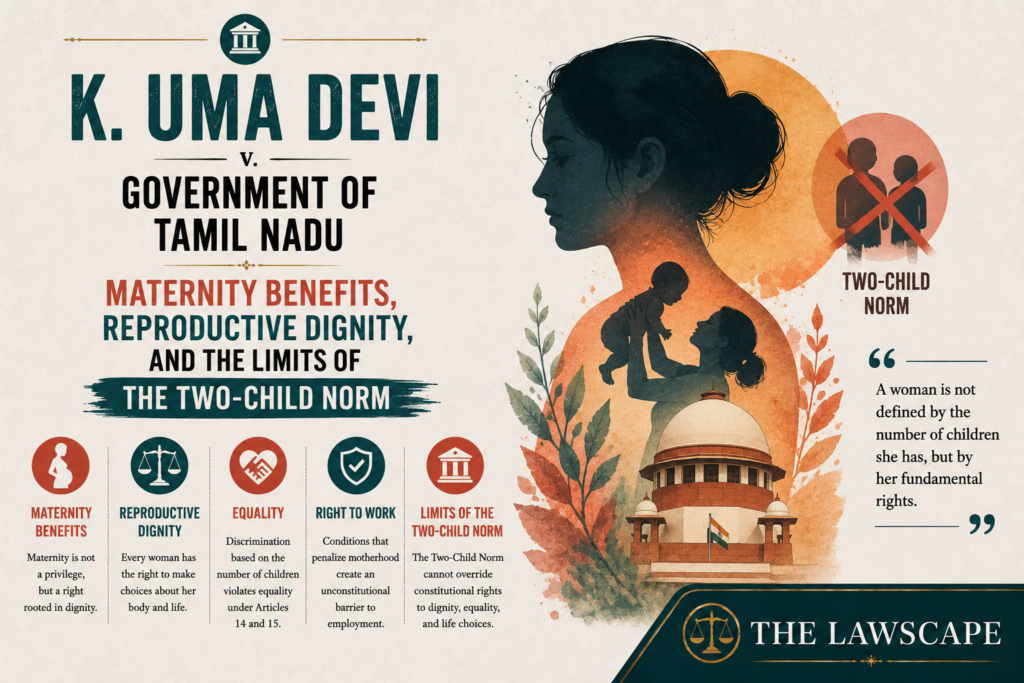
K. Uma Devi v. Government of Tamil Nadu: Maternity Benefits, Reproductive Dignity, and the Limits of the Two-Child Norm

K. Uma Devi v. Government of Tamil Nadu: Maternity Benefits, Reproductive Dignity, and the Limits of the Two-Child Norm Author: SUNKARI VAISHNAVIStudent, PG COLLEGE OF LAW HYDERABAD ——————————————————————————————– 💡 3 Quick Takeaways 1. K. Uma Devi v. Government of Tamil Nadu reaffirmed that maternity benefits are not a mere statutory concession but are closely tied

K. Uma Devi v. Government of Tamil Nadu: Maternity Benefits, Reproductive Dignity, and the Limits of the Two-Child Norm Read More »

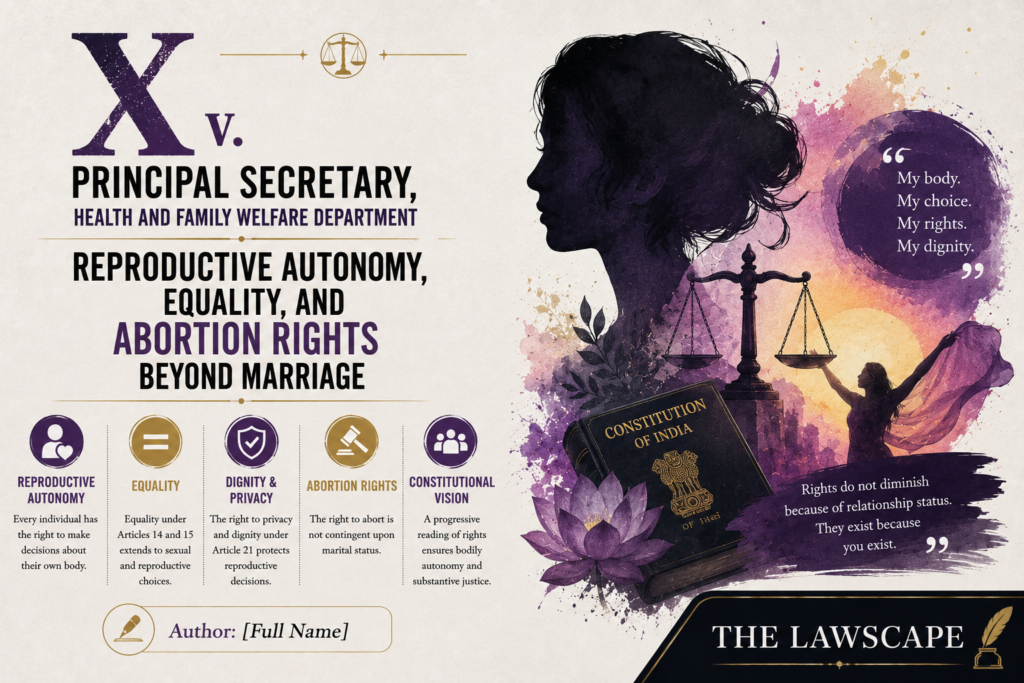
X v. Principal Secretary, Health and Family Welfare Department: Reproductive Autonomy, Equality, and Abortion Rights Beyond Marriage

X v. Principal Secretary, Health and Family Welfare Department: Reproductive Autonomy, Equality, and Abortion Rights Beyond Marriage Author: Kartik m KhanaganniStudent, R.L.Law College, Belagavi ———————————————————————————- 💡 3 Quick Takeaways 1. X v. Principal Secretary, Health and Family Welfare Department affirmed that unmarried women are entitled to seek termination of pregnancy under the Medical Termination of

X v. Principal Secretary, Health and Family Welfare Department: Reproductive Autonomy, Equality, and Abortion Rights Beyond Marriage Read More »

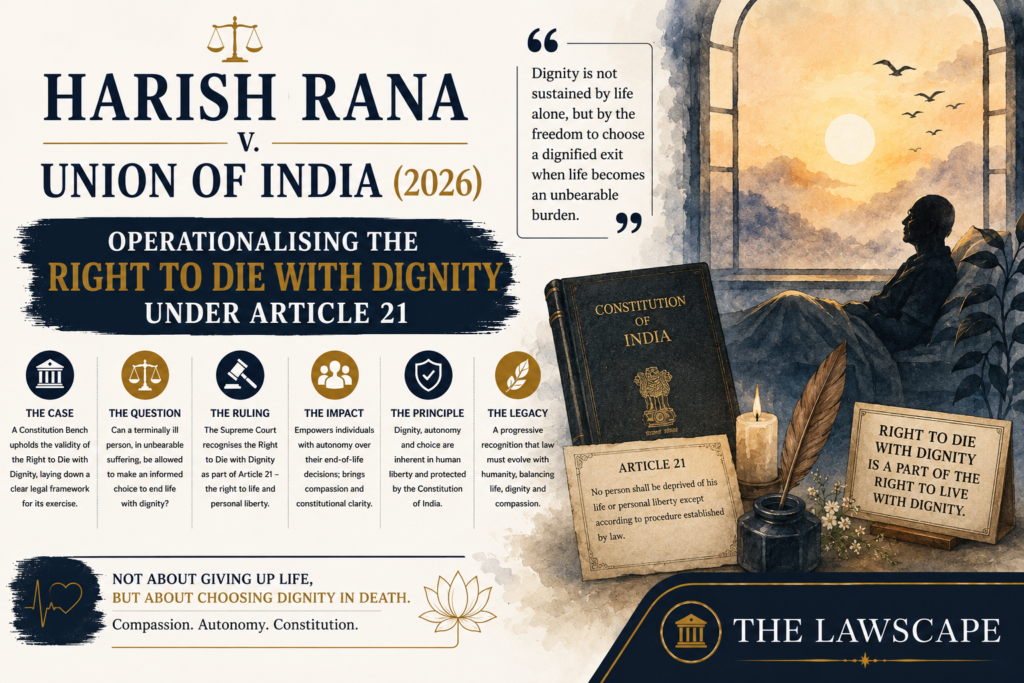
Harish Rana v. Union of India (2026): Operationalising the Right to Die with Dignity under Article 21

Harish Rana v. Union of India (2026): Operationalising the Right to Die with Dignity under Article 21 .Author: Hiba IliyasStudent, UNiversity of Lucknow, Lucknow —————————————————————— 💡 3 Quick Takeaways 1. The Supreme Court recognised Clinically Assisted Nutrition and Hydration (CANH) as withdrawable medical treatment rather than basic care.2. The judgment transformed the constitutional right to

Harish Rana v. Union of India (2026): Operationalising the Right to Die with Dignity under Article 21 Read More »

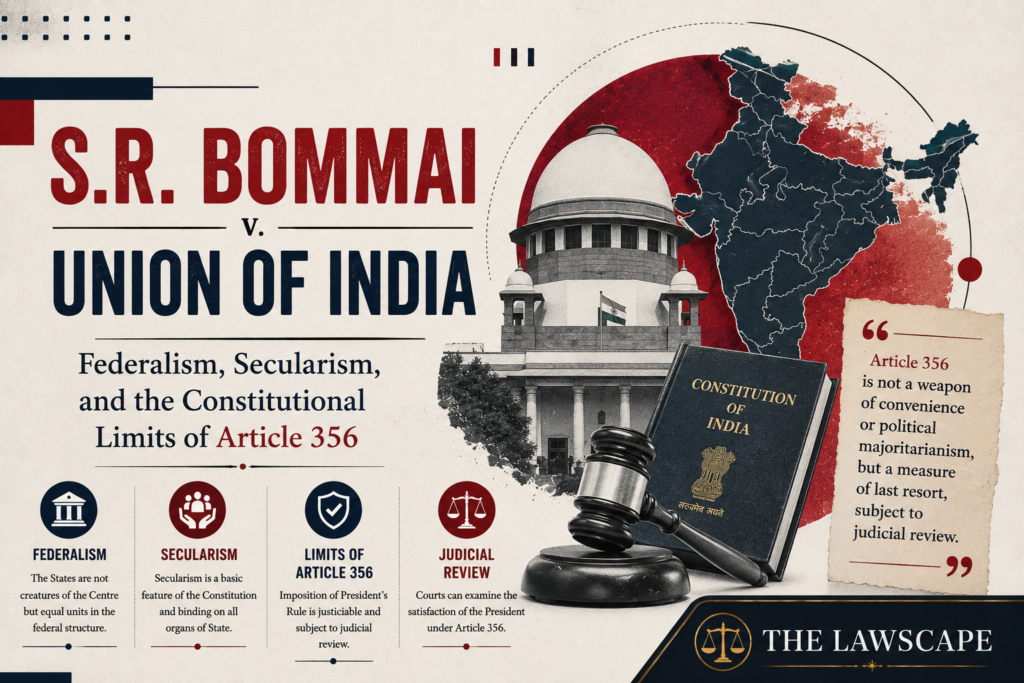
S.R. Bommai v. Union of India: Federalism, Secularism, and the Constitutional Limits of Article 356

S.R. Bommai v. Union of India: Federalism, Secularism, and the Constitutional Limits of Article 356 Author: Sanvi OliStudent, IMS Unison University, Dehradun ——————————————————————————— 💡 3 Quick Takeaways 1. S.R. Bommai v. Union of India transformed the constitutional understanding of Article 356 by subjecting Presidential Proclamations to judicial review and limiting the arbitrary use of President’s

S.R. Bommai v. Union of India: Federalism, Secularism, and the Constitutional Limits of Article 356 Read More »