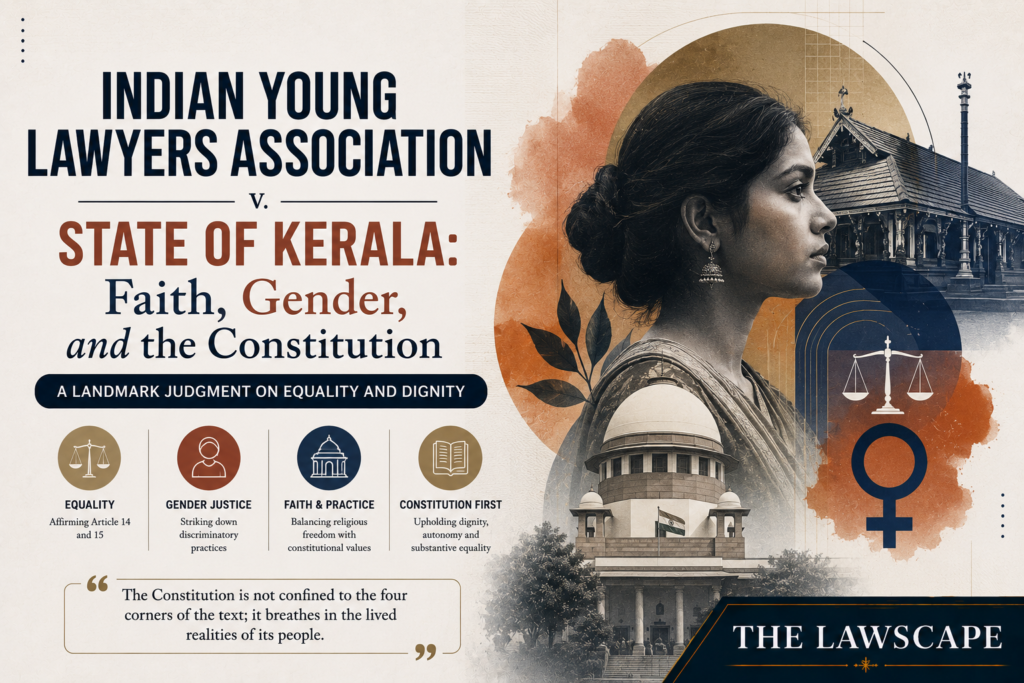
Indian Young Lawyers Association v. State of Kerala: Faith, Gender, and the Constitution

Indian Young Lawyers Association v. State of Kerala: Faith, Gender, and the Constitution Author: Yadu Krishna K GStudent, Bharata Mata School of Legal Studies, Aluva, Kerala ————————————————————————————————- Author: [Full Name]Student, [Institution Name] 💡 3 Quick Takeaways Introduction There is a hill in Kerala called Sabarimala. On it stands a temple dedicated to Lord Ayyappa. For […]

Indian Young Lawyers Association v. State of Kerala: Faith, Gender, and the Constitution Read More »
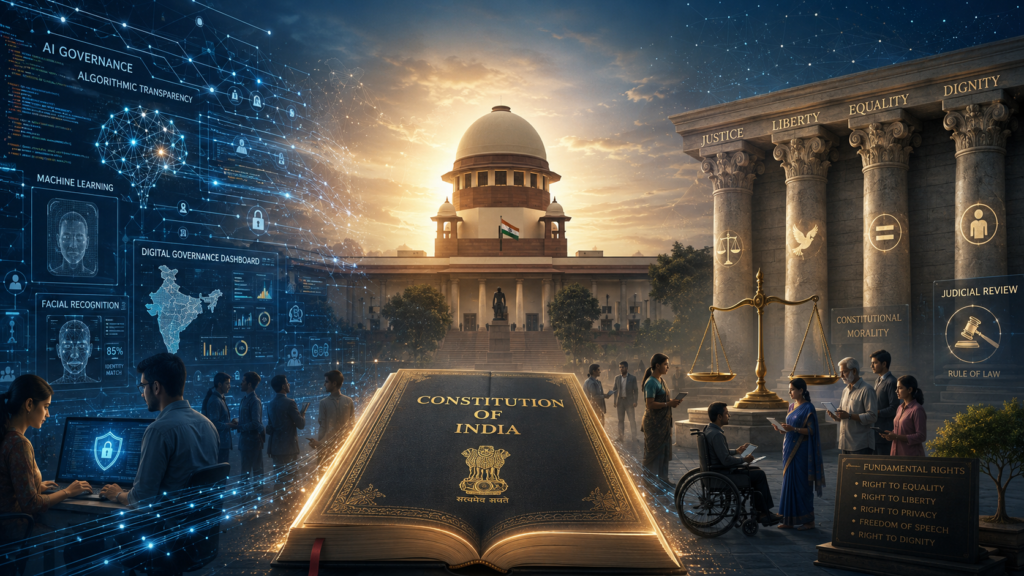

AI Governance and the Indian Constitution: Assessing India’s Constitutional Readiness for Algorithmic Regulation

AI Governance and the Indian Constitution: Assessing India’s Constitutional Readiness for Algorithmic Regulation Author: Sanvi OliStudent, IMS Unison University, Dehradun ————————————————————————- 💡 3 Quick Takeaways “The real question is, when will we draft an artificial intelligence bill of rights? What will that consist of? And who will get to decide that?”— Gray Scott Abstract Algorithmic

AI Governance and the Indian Constitution: Assessing India’s Constitutional Readiness for Algorithmic Regulation Read More »

When Courts Are Not Enough: How Alternative Dispute Resolution Is Quietly Reshaping Justice

When Courts Are Not Enough: How Alternative Dispute Resolution Is Quietly Reshaping Justice Author: Muskan KashyapStudent, DEEN DAYAL UPADAHYAY UNIVERSITY GORAKHPUR UTTAR PRADESH ———————————————————————————————————————————- 💡 3 Quick Takeaways Abstract Courts across the world are struggling under the weight of mounting case backlogs. With more than 50 million cases pending in India alone and similar delays

When Courts Are Not Enough: How Alternative Dispute Resolution Is Quietly Reshaping Justice Read More »

Uniform Civil Code in India: Constitutional Aspiration and Socio-Legal Challenges

Uniform Civil Code in India: Constitutional Aspiration and Socio-Legal Challenges Author: Hrishikesh DeokarStudent, ———————————————— 💡 3 Quick Takeaways Keywords: Uniform Civil Code, Personal Laws, Secularism, Fundamental Rights, Gender Justice Introduction The Uniform Civil Code (UCC) remains one of the most debated constitutional and socio-legal issues in India. Article 44 of the Constitution directs the State

Uniform Civil Code in India: Constitutional Aspiration and Socio-Legal Challenges Read More »

Article 32: The Heart and Soul of the Indian Constitution

Article 32: The Heart and Soul of the Indian Constitution Author: Shristi SinghStudent, R.D. University, Jabalpur (Madhya Pradesh) 💡 3 Quick Takeaways “If I was asked to name any particular article in this Constitution as the most important, an article without which this Constitution would be a nullity, I could not refer to any other

Article 32: The Heart and Soul of the Indian Constitution Read More »

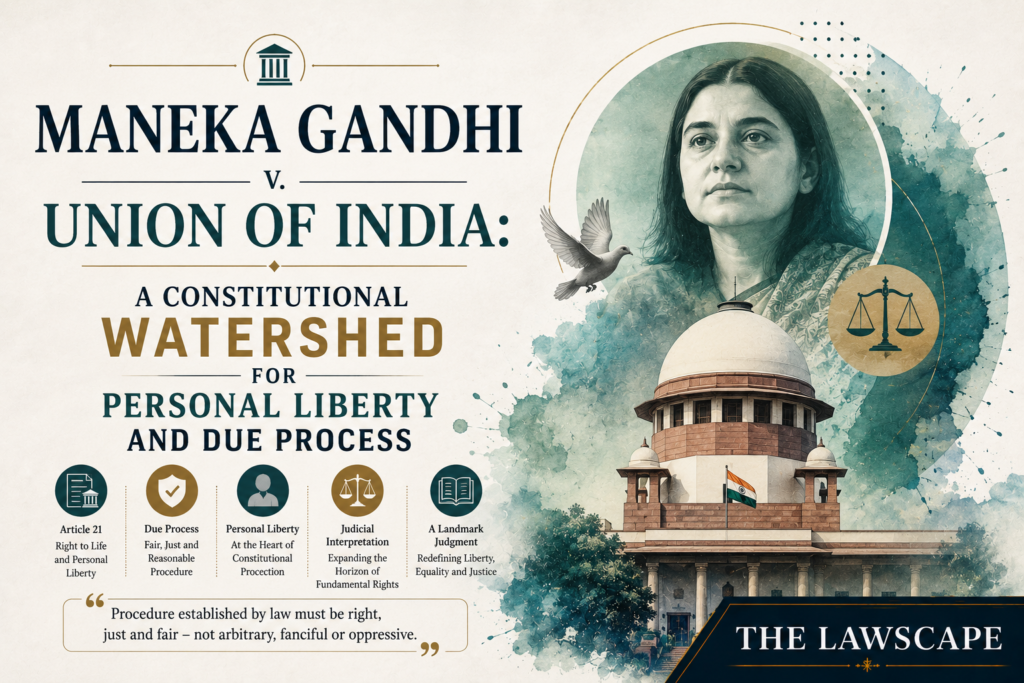
Maneka Gandhi v. Union of India: A Constitutional Watershed for Personal Liberty and Due Process

Maneka Gandhi v. Union of India: A Constitutional Watershed for Personal Liberty and Due Process Author: MUSKAN KASHYAPStudent, DEEN DAYAL UPADAHYAY UNIVERSITY GORAKHPUR UTTAR PRADESH ——————————————————————————————————————————- ] 💡 3 Quick Takeaways Introduction The case of Maneka Gandhi v. Union of India (AIR 1978 SC 597) stands as one of the most transformative judgments in the

Maneka Gandhi v. Union of India: A Constitutional Watershed for Personal Liberty and Due Process Read More »

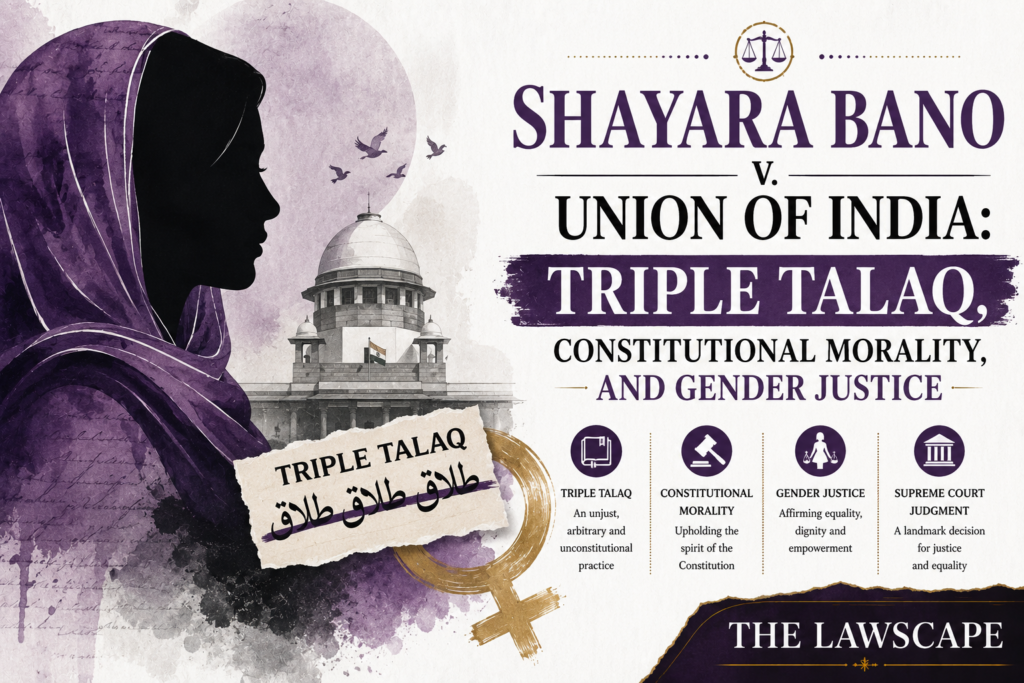
Shayara Bano v. Union of India: Triple Talaq, Constitutional Morality, and Gender Justice

Shayara Bano v. Union of India: Triple Talaq, Constitutional Morality, and Gender Justice Author: Hrishikesh Deokar —————————————————————————————————- 💡 3 Quick Takeaways Introduction The decision in Shayara Bano v. Union of India is one of the most significant judgments concerning gender justice and constitutional rights in India. The case dealt with Triple Talaq, or Talaq-e-Biddat, which

Shayara Bano v. Union of India: Triple Talaq, Constitutional Morality, and Gender Justice Read More »

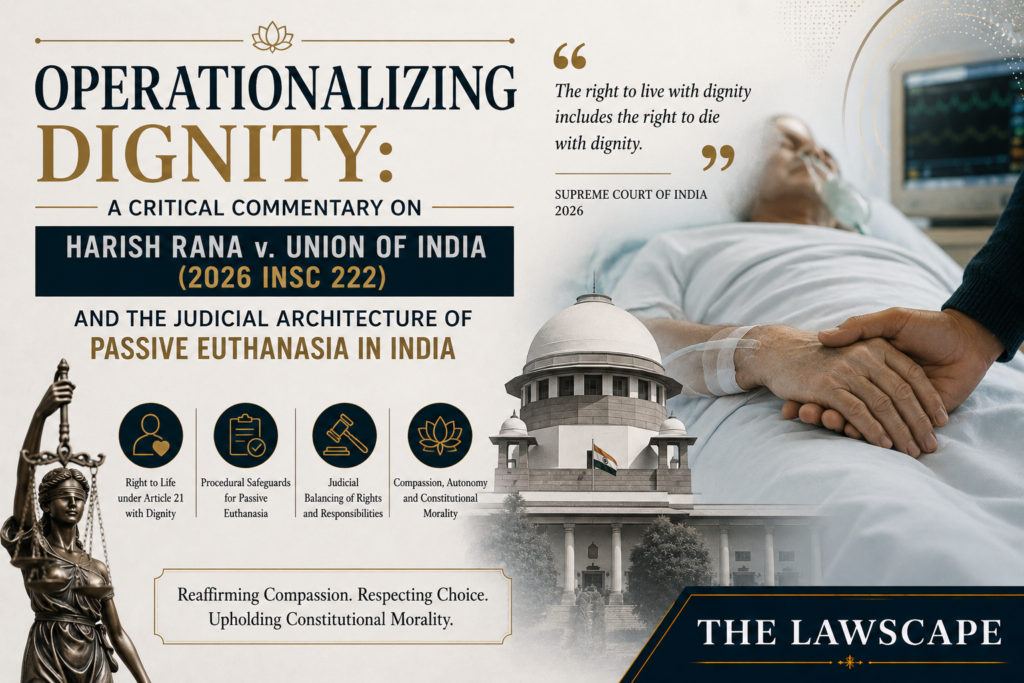
Operationalizing Dignity: A Critical Commentary on Harish Rana v. Union of India (2026 INSC 222) and the Judicial Architecture of Passive Euthanasia in India

Operationalizing Dignity: A Critical Commentary on Harish Rana v. Union of India (2026 INSC 222) and the Judicial Architecture of Passive Euthanasia in India Author: Anitta Lilly JosephStudent, Kochi ————————————————————————————– 💡 3 Quick Takeaways Abstract The Supreme Court of India’s landmark ruling in Harish Rana v. Union of India (2026 INSC 222) constitutes the first

Operationalizing Dignity: A Critical Commentary on Harish Rana v. Union of India (2026 INSC 222) and the Judicial Architecture of Passive Euthanasia in India Read More »

Privacy in the Digital Age: Is Indian Law Doing Enough? Author: Lisa Vipin KhonaStudent, D.M. Harish School of Law (DMHSL), Worli ————————————————————————————— 💡 3 Quick Takeaways 1. The recognition of privacy as a fundamental right in *Justice K.S. Puttaswamy v. Union of India* transformed India’s constitutional approach to digital rights. 2. Surveillance powers must operate

Read More »

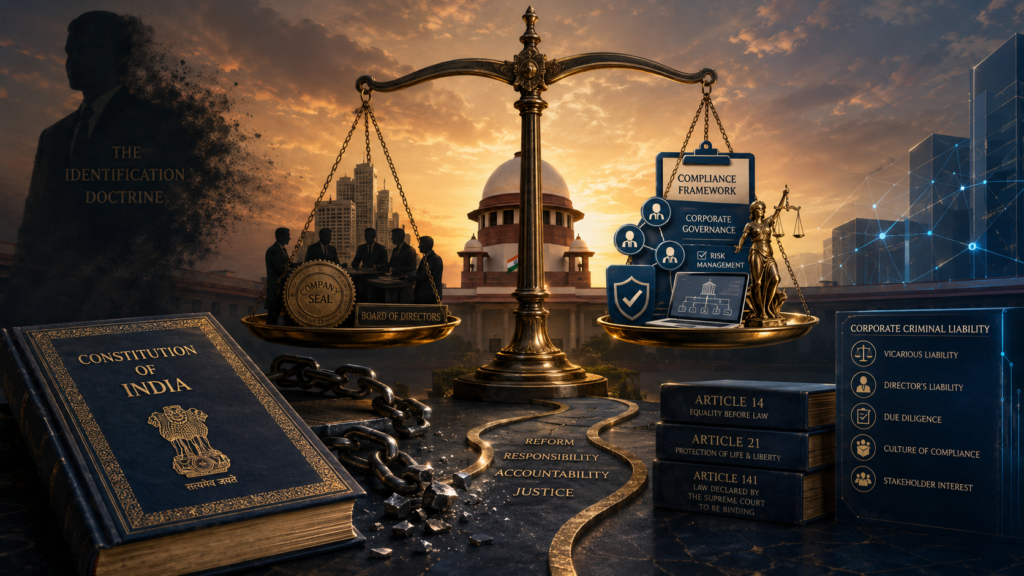
The Identification Doctrine’s Twilight: Reforming Corporate Criminal Liability in India

The Identification Doctrine’s Twilight: Reforming Corporate Criminal Liability in India Author: Anitta Lilly JosephStudent, Kochi —————————————— 💡 3 Quick Takeaways Abstract Corporate criminal liability in India continues to rest on the identification doctrine—a principle requiring courts to locate a singular “directing mind” whose mental state can be attributed to the company. Conceived in early twentieth-century

The Identification Doctrine’s Twilight: Reforming Corporate Criminal Liability in India Read More »